What inspired you to begin writing about animals and the relationships humans have with them?
Animals have been a constant throughout every part of my life—home, work, and everything in between. I’ve always been struck by how quietly and powerfully they shape us. Writing about the human–animal bond wasn’t a decision so much as an inevitability. It’s the world I know best, and it’s where I feel most honest on the page.
How have your experiences in vet clinics and shelters influenced your storytelling?
Working in clinics and shelters strips away the romanticism and reveals the full spectrum of reality—love, fear, resilience, and endings. It taught me to write with accuracy and compassion. You see the worst moments and the best in the same hour, and that balance deeply influences how I approach every story.
Can you share a particularly memorable animal encounter that shaped your perspective?
There was a ginger tabby with no tail—an “old soul” type of cat—who arrived at a shelter where I was working. He walked straight up to me as if he already knew who I was. The connection was instantaneous. Encounters like that remind you that some animals choose you, not the other way around, and I carry that truth into my writing.
What themes do you most enjoy exploring in your books—love, loss, resilience, or something else?
Grief and resilience sit at the centre of almost everything I write. But underneath those themes is something even simpler: continuity. How an animal’s presence echoes long after they’re gone, and how the relationship changes shape rather than ending. But also how powerful our animal bonds can be - the unconditional love, the acceptance, the ability to help us be less selfish and to see good in the world.
How do you balance emotional depth with factual accuracy when writing about animals?
I’ve always believed accuracy enables emotion. When you understand how animals behave, what they need, and what stress looks like in them, the emotions that emerge on the page feel grounded, not embellished. I stick closely to evidence-based information, then let the heart of the story sit on top of that foundation.
Have you ever found yourself writing a story based on a real-life rescue or rehabilitation experience?
Many times. The stories often begin with a real moment—an intake exam, a frightened dog calming under a gentle hand, a sick animal rallying when no one expected it. I never write exact replicas out of respect for privacy, but those real interactions often become the emotional seed of a chapter or vignette.
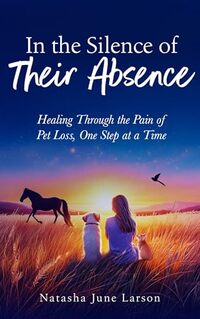
What do you hope readers take away from your book, In the Silence of Their Absence, about the human–animal bond?
That their grief is legitimate. That losing a pet isn’t “just losing an animal”—it’s losing a companion, a routine, a comfort, a constant. I want readers to feel understood and supported, and to walk away knowing that their love didn’t end with the last heartbeat.
How do you approach writing for readers of different ages—children, teens, or adults?
The emotional truths stay the same, but the delivery changes. With children, it’s about clarity and reassurance. With teens, it’s about honesty—never talking down to them. With adults, I let the complexity stay. Regardless of the age group, I strive to communicate in a manner that respects their intelligence and emotional capacity.
Which of your animal characters is closest to a real pet you’ve cared for?
I'm not sure I can answer this, as I currently only write non-fiction, although I have been considering venturing into fiction with some animal-based tales.
How do you handle the emotional challenges of writing about difficult animal experiences?
I give myself permission to step away when I need to. Writing about loss, trauma, or end-of-life care isn’t easy, even after years in the field. But I remind myself that these stories matter. If they help one person feel less alone, the emotional labour is worth it.
Do you have a favorite type of animal to write about, and why?
Cats tend to dominate my pages, simply because I understand them on a cellular level. But I’m drawn to all species that show complexity—whether that’s a dog who’s survived hardship, a senior horse with gentle wisdom, or a bird with more personality than seems possible.
How has working with animals taught you lessons that you incorporate into your writing?
Animals teach stillness, patience, and observation. They force you to get out of your own head and into the moment. They also teach you to listen without assuming. Those lessons translate directly onto the page—slower pacing, deeper attention, and a gentler understanding of what you are trying to communicate.
Can you share any behind-the-scenes stories from your time in sanctuaries or shelters?
Every shelter has its “unexpected hero” moments—quiet animals who become anchors for frightened newcomers, older pets who surprise everyone with their ability to adapt, staff members going above and beyond with no recognition. Those are the moments I treasure. They’re not dramatic, but they’re deeply human.
Are there any upcoming projects or stories that explore new aspects of the human–animal connection?
Yes. I’m currently putting the finishing touches on my next book, which explores a more holistic approach to animal care, combining traditional veterinary care with alternative practices to help pet guardians provide the best care for their furry, feathered, shelled, or scaled companions.
How has your experience been with AllAuthor?
It’s been really positive. Their platform is supportive, their communication is clear, and they give emerging authors a genuine opportunity to be recognized. I appreciate the way they champion writers at every stage of the journey.