What first drew you to study French literature and, later, the Bourbon dynasty in such depth?
My passion for history. I’ve always been fascinated by the intersection of power, personality, and culture—and few periods capture that better than the Bourbon era. My early studies in French literature exposed me to the voices and ideals that shaped the Enlightenment and, ultimately, the Revolution. From there, it was a natural step for me to explore how the Bourbons lived, ruled, and fell in such dramatic fashion.
How did your time in Paris influence your research and your perspective as a historian and writer?
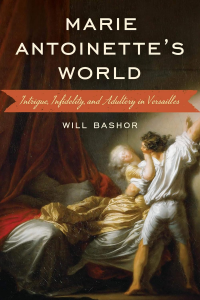
Living in Paris allowed history to come alive for me. Walking through the same streets where my subjects once strolled gave me a visceral sense of their world—including Marie Antoinette’s journey from her prison cell to the scaffold. Researching the archives in Paris was equally transformative—it deepened my appreciation for the texture of history, the small details that never make it into textbooks but reveal so much about the human side of the past. For example, I was able to find newspaper clippings referring to Marie Antoinette’s hairdresser, Leonard Autie, which was the catalyst for my bestseller.
You’ve published in outlets like BBC History Magazine and France Today. How do you adapt your writing style when moving from academic research to more popular history writing?
It’s all about accessibility and rhythm. In academic writing, precision and analysis take center stage; in popular history, storytelling is key. Having a Masters in Creative Writing, I’ve learned to maintain accuracy while weaving narrative and emotion—inviting readers to experience history as if they were there. It’s like shifting from portrait painting to filmmaking: same subject, different lens.
While researching Marie Antoinette’s Head, you gathered letters, newspapers, and journals—what was the most surprising discovery you made?
I was struck by how often Léonard Autié, Marie Antoinette’s hairdresser, was written off as a mere frivolity of court life. In truth, he was a keen observer of politics and power. His proximity to the queen allowed him to witness the currents of intrigue that defined Versailles. His life revealed how even “minor” figures could shape—and survive—revolutionary times. I think the most surprising discovery I made was the existence of three Leonards, all brothers—like a dynasty or the Bonapartes calling themselves Napoleon.
What are the challenges of blending historical accuracy with creative storytelling?
The challenge lies in resisting the temptation to fill in gaps with fiction. I always let the sources guide me, even if that means accepting ambiguity. At the same time, a historian must make choices about what to emphasize. The art is in constructing a narrative that remains faithful to evidence while capturing the emotional truth of the era. In doing so, I always try to support questionable material with other sources to collaborate it or even at times to refute it.
How do you decide which historical figures deserve a spotlight in your work?
I’m drawn to figures who lived at the crossroads of history—those who witnessed great change but weren’t necessarily the main players. They often have the most revealing stories. Whether it’s a confidant, a servant, or a courtier, I look for individuals whose experiences illuminate the larger forces of their time. I recently wrote a historical novel about Comte Louis de Vermandois, the illegitimate son of Louis XIV who was publicly whipped by his father for being gay… even though the king’s brother, Monsieur, was openly bisexual.
What role do memoirs play in your research, and how do you handle their subjectivity or bias?
Memoirs are indispensable—they gave me insight into how people wanted to be remembered. But I treat them as performance as much as testimony. Comparing multiple accounts, checking dates and motives, and reading between the lines often uncovers more truth than the text itself claims to tell. Working with apocryphal works can provide some insight but only if the information can be verified elsewhere.
The Bourbon dynasty had many eccentric personalities—who fascinates you the most, and why?
Monsieur, the Duke of Orléans—Louis XIV’s younger brother—has always fascinated me. Openly gay in a court obsessed with appearances and conformity, he lived his truth with remarkable audacity. Beneath his flamboyance was a shrewd observer of power and politics who understood the dangers of Versailles better than most. His resilience and wit in navigating a world that both mocked and relied upon him make him a complex and—being skilled at battle—courageous figure of the Bourbon dynasty.
If you could sit down for a conversation with one Bourbon royal or courtier, who would it be, and what would you ask them?
I would choose Louis, comte de Vermandois—the illegitimate son of Louis XIV and Louise de La Vallière. His short and tragic life has always moved me. Appointed Admiral of France at a young age, he was later disgraced for his involvement in a scandal tied to his sexuality and sent away from court, where he died before turning seventeen. I would ask him what it felt like to live under the immense shadow of the Sun King, torn between privilege and rejection. His story reflects the unforgiving nature of Versailles, where even a king’s son could fall victim to the very moral code his father enforced.
What do you think modern readers can learn from the lives of royals and courtiers of 18th-century France?
They remind us that image and perception have always been powerful forces. The Bourbons lived in a world where appearances could make or destroy a reputation overnight—something that feels strikingly modern. Their struggles with identity, influence, and public scrutiny echo our own digital age.
As a professor, how do you bring your passion for French history into the classroom?
I try to make the past tangible. I often use primary sources—letters, engravings, fashion plates—to transport students into the world of Versailles or Revolutionary Paris. When students see that these figures laughed, worried, and schemed much like we do, history suddenly feels alive and relevant—especially when you mention Louis XIV holding court while sitting on his "chaise percée" (or "chaise de toilette").
How does teaching influence your writing, and vice versa?
Teaching reminds me to communicate clearly and to anticipate questions. My students often push me to reconsider assumptions or dig deeper into motives. Writing, on the other hand, sharpens how I teach—it reminds me that history isn’t just a collection of facts, but a series of stories that connect us to who we are.
Do you have a set writing routine, or does your process change depending on the project?
I’m fairly disciplined. I tend to write early in the morning when my mind is clearest. Research and revision come later in the day. But every project has its own rhythm—sometimes the sources dictate the pace, sometimes the story takes over and refuses to let me rest. I’ve written several screenplays which have won competitions, but they require much work but receive little attention if they are not picked up by an agent.
What new historical figure or event are you most excited to explore in future books?
I’m increasingly drawn to the lesser-known figures who moved between the Old Regime and Revolutionary France—the survivors, the adapters. There’s something fascinating about how individuals navigated the collapse of their world and reinvented themselves amid chaos. I’ve begun researching Napoleon II, the natural son of Napoleon Bonaparte, who never ruled France but was briefly the titular Emperor after his father’s second defeat. A pawn in a game of diplomacy, he died of tuberculosis at the age of 21.