Genre:
Thriller Supernatural Suspense Science Fiction Horror- Country: United States
- Books: 1
- Profession: IT and Writing
- Member Since: Jun 2025
- Profile Views: 2,335
- Followers: 80
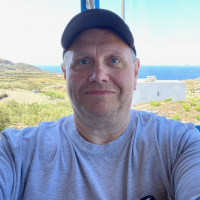
I am an IT guy from North Carolina that loves science-fiction. So many great writers out there and had been filled with my own stories since I was a child. I decided several years ago to write the book I have always wanted to write.
E J Josephson's Books
Stay in the loop on books by E J Josephson. See upcoming and best-selling books by the author here. You'll also find the deals on books by E J Josephson.
** Please note that the information or price displayed here may not be the updated. Make sure to double-check the latest book price before buying books.
** Also, there might be other books by E J Josephson not listed on AllAuthor.
| Book |
|---|
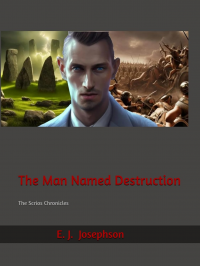
The Man Named Destruction: The Scrios Chroniclesby Eric James JosephsonPublish: May 27, 2025Thriller Historical Fiction Science Fiction Horror |
E J Josephson Interview On 31, Oct 2025
 "Eric Josephson is a proud father of three—and with his partner Melissa and her three children, he’s happily building his own version of the Brady Bunch. An avid reader of fiction and horror, Eric credits author Jonathan Maberry as one of his greatest inspirations. Eric’s experiences abroad and love of storytelling continue to shape his writing. He’s thrilled to share his work with readers and looks forward to many more creative adventures ahead."
Well, I am still an IT professional, and I love it. I'm part of one of the world's best companies. I'm on a team focused on assisting a major client. My writing journey began roughly three and a half years back. At work, I write a lot, and I'm passionate about writing easy-to-understand documentation. Science-fiction has been a constant love since childhood. I've always wanted to write the book I always wanted to read. It was around ten years ago when I first discovered my love for Audible. Through Audible, Ray Porter's resonant voice introduced me to Jonathan Maberry's thrilling tales.
Jonathan Maberry, the most generous author on the planet, provided master-classes and online resources that helped me get here. Honestly, his class on editing saved me.
Just a side note, in my younger days, I immersed myself in various MMORPGs like Dungeons and Dragons and Call of Cthulhu. Back then, the Dungeon Master hid behind a screen, and the game unfolded entirely in our minds. Rolling a 20 and a map on the table may have been the weekend's best moments. I believe this experience helped me with writing all these years later. At a young age, I was practicing how to carry multiple perspectives in my head concurrently.
How did your childhood experiences with nightmares influence the storyline of your first book?I was a kid with a fantastic imagination. I was never alone outside while playing, even by myself. I would create a cast of characters around myself. Nighttime brought with it a series of bad dreams. The villain in the dreams showed up again and again. He might chase or bother me or even try to snatch my little brother. In my dream, I'd either flee or battle it. This book is based on the concept of this creature and some vivid dreams. The first was a dream set in World War 2. At around the age of five, my dream involved an anti-aircraft gun and a sky full of parachutes with men dangling from them. I shot them down with the enormous gun. In the next part of my dream, the villain lay dying on my bed, riddled with cartoonish holes that made him resemble Swiss cheese. The question "Why did you kill me?" was traumatic, and he kept asking it.
In the second dream. I might have been at a garage sale. I grabbed an object on the outside table and inspected it. Looking in, I saw an old farm. As I shifted position, the image also moved. The slaves working the field showed it was a much older time. Then I saw that the people in the photo were moving. As I moved the object away from my eye, the familiar view of the surroundings came into focus... I realized I was without a doubt in the same place. I then re-examined the Oculus (the original name of the book) and looked in a different direction. Then I saw my villain dressed as a slave owner. Shocked, I stared at him as he looked me in the eye through the Oculus and said, "Ah, this is when you see me." I woke up screaming.
You mention that you never write empty chapters. Can you explain your process for ensuring every chapter has purpose?Thanks Mr. Maberry! I outlined the book and defined the key character arcs before writing it. I have to admit; I wrote quite a few failed chapters. They were either integrated into significant chapters or omitted. I wanted to prevent the reader from being confused. I hoped to prevent the "What the hell was that?" reaction.
Many of your stories are based on lesser-known historical incidents. How do you choose which events to incorporate?I'm a history enthusiast. I went to Patch Barracks for school while living near Stuttgart, Germany, during part of my high school years. It was the European Command Center. I was going to school one morning on a military bus, when the Marine barracks in Bierut were bombed, and watched "The Day After" on base and noticed that one of the first things destroyed in the movie… was our base.
I don't believe we were home much on weekends during the two years. We spent all our time traveling. Paris, Munich, Salzberg, London, Nice… you name it. I was immersed in history. The Battle of the Teutoburg Forest took place a couple of hours north of where I lived and was a fascinating event in history. Rome lost three legions to a rebellion led by a Roman citizen and soldier, who was born in Germania.
History has many places where the story ends at the headline, leaving me plenty of room to write. I research the parts I used to remain connected to history and avoid major changes. I want readers to ponder, "Hmm, that could be true."
Side note: The town I lived in was called Weil Im Schönbuch. During my time there, I encountered an elderly German gentleman on a bus. He spoke English very well, and practiced it on me. We discovered our first names were Eric and Erich after a few random bus rides. Hartmann was his last name; he was surprised I knew who he was. He was "the most successful fighter ace in the history of aerial warfare." He was also an amiable person who talked freely about his WW2 involvement and his misguided membership in the NAZI party. I knew who he was but had no genuine appreciation for how unique an experience that was.
What kind of research went into transforming historical events into a science-fiction narrative in "The Man Named Destruction"?I conducted a lot of research and background reading. I did a lot of research online, but also consulted experts to ensure accurate Gaelic terms and pronunciations for the Audible version, and I was impressed by their generosity. For instance, Roibeard O Maolalaigh, who is a Gaelic professor at the University of Glasgow. He wasn't obligated to, but he still replied to my emails and recorded the terms from my book for my narrator, Alex Corbett Ashby.
How do you balance historical accuracy with creative freedom in your writing?I tried to be as accurate as I could and not change what really happened. I did shorten the battle at Teutoburg Forest from several days down to one decisive battle, but that was more out of not wanting to get bogged down. The tale recounted Arminius' life, from his childhood imprisonment as the son of a Germanic king, to his transformation into a Roman soldier, earning citizenship and progressing to general, before his ultimate betrayal of Rome, culminating in the destruction of three Legions. Historians credit that act as still affecting politics in that region and as a contributing factor to two thousand years of wars.
A major, painful chapter discussed in the book is the tragedy of the SS Cape Arcona, which occurred at the end of WW2. Just a few days before the war ended, the British RAF tragically bombed several ships in the Baltic region. The vessels were filled with those who had survived concentration camps. The British government to this day, won't be providing details on the tragedy. I stay true to England's stance in the book, using the event's impact on a main character who planned and ordered the bombing.
You describe your writing as "character-centric." How do you develop characters that feel real and relatable?I invest considerable time in their backstory. Most of their history is in the book, while some remains in my character notes. I revisit the characters throughout the book, detailing their responses to the events. I sometimes examine their history as they think about something from the past. My readers frequently tell me they love several characters; however, Peter gets mentioned often. Peter is the main character's closest friend. He is funny, witty, childish, lovable, devious and tragically fragile. Each character has their own personality. They each have their strengths and weaknesses. I was worried if I could make each person unique when I started writing, but it came naturally to me somehow. A character’s reaction to a situation is important, and the side stories dedicated to each, push the narrative of the book forward while adding depth.
No one is perfect in your books. Why do you focus on flawed characters, and how do readers respond to them?I'm a walking embodiment of my past failures. I believe we all are, and overcoming those flaws shapes us. I think we all understand this, yet in so many stories, the characters never make mistakes, and everything goes well for them. Sometimes, even perfect choices can lead to failure. Readers have said that they feel like they become friends with the characters. Readers imagine the characters and their likely responses. It's my goal to do that. Knowing a person allows you to recognize when something is wrong by their actions. As an author, this level of understanding enables me to create stress or conflict by portraying a character's behavior that is inconsistent with their personality.
How do recurring themes from your personal life, like your childhood nightmares, influence your other works?Since this is book one, we will need to wait and see. The events within this book are just a portion of the long story I have planned for these characters. While a standalone story, this book is just the first chapter in a series of fun narratives.
What are the biggest challenges you face when writing science-fiction grounded in history?Honestly, the only struggle is locating tales that align with the narrative's trajectory. History is full of tiny, shadowy spots. My goal is to write within the history without changing it. Hopefully, future readers will be motivated to investigate or go to these places.
How do you approach plot twists or unexpected outcomes that mirror real-life unpredictability?Scrios and the other characters are driven by their own motivations, making them unique. Though aware of the arc's framework, my characters' authentic behaviors shape the story, and the writing process becomes fluid as it progresses. Their interactions are authentic and a genuine expression of their personalities. If something seems too simple, consider there's a hidden complexity at play. Someone is benefiting from things unfolding as they are.
Are there any historical events or forgotten incidents you're currently excited to explore in future stories?I have compiled an extensive list of conceivable historical interactions. As the story advances, spanning the present and future, echoes of the past will persist. Book one's conclusion aligns with the start of the Covid 19 outbreak. The world changed for many of us, and it's still not back to normal. Transportation and other societal strains become enormous. I'm excited to learn more about how that will impact this team.
How do you want readers to feel after finishing one of your books?I hope they had a good time. I want them to feel satisfied after reading the whole story. My goal is to make them want to learn about the survivors. I hope it helps them see the book's passion, and that an indie book can stand with any published book.
What advice would you give to aspiring writers who want to combine history and science-fiction in their work?Be creative, be respectful and don’t leave any footprints in the sands of history.
Would you recommend AllAuthor to fellow authors, and if so, what services or tools on the platform have you found most useful in growing your business?AllAuthor is a great service. Setting up Twitter messaging to stay in the public eye is very helpful. The support from the platform is wonderful, and I find the messages about my novel to be full of insight. I extend my deepest gratitude for this opportunity.
Ask E J Josephson a Question
Have brimming questions to ask author E J Josephson? Ask whatever you like, but keep it appropriate.
** Please note that unanswered questions will not appear on the page. Refrain from posting promotional messages.