Genre:
Poetry Biographies & Memoirs- Country: United States
- Books: 4
- Profession: event specialist and author
- Born: 19 March
- Member Since: Jun 2022
- Profile Views: 5,631
- Followers: 136
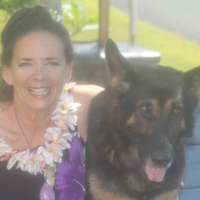
Sheri Smith considers herself lucky to have TWO passions. She is a caterer since 1990 and has been writing in her spare time since she was a kid. Poetry, screenplays, and more. Currently working on Mama Drama and is releasing When We Wrote Letters (by decade).
Sheri Smith's Books
Stay in the loop on books by Sheri Smith. See upcoming and best-selling books by the author here. You'll also find the deals on books by Sheri Smith.
** Please note that the information or price displayed here may not be the updated. Make sure to double-check the latest book price before buying books.
** Also, there might be other books by Sheri Smith not listed on AllAuthor.
| Book |
|---|
An Ancient Spell From a Distant Time: Passionate Love Poems To Capture The Heartby Sheri SmithPublish: Nov 22, 2021Poetry |
 MAMA DRAMA: A Journey with Bipolar and Dementia, Finding Light Through Loss and Griefby Sheri SmithPublish: Mar 21, 2025Biographies & Memoirs |
 |
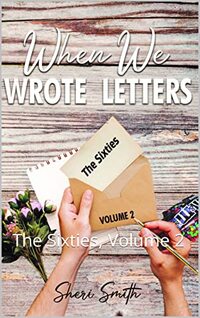 When We Wrote Letters: The Sixties, Volume 2by Sheri SmithPublish: Sep 16, 2022Biographies & Memoirs |

Sheri Smith Interview On 23, May 2025
 "Sheri Smith is a lifelong creative with a passion for both storytelling and hospitality. From her early days on Broadway and in a beloved M&M commercial to serving in the Navy and later founding a successful Southern California catering business, Sheri’s journey has been anything but ordinary. Today, she runs Chocolate Fountain SoCal, catering everything from intimate weddings to major events, while continuing to write, pupsit, swim daily, and pursue new artistic passions."
I wouldn’t say they developed simultaneously — my passion for writing began much earlier. I learned to read and write at three or four years old. My mom left me with our Asian neighbors while she worked, and since they were homeschooling their children, I picked things up quickly. I loved reading, and writing just felt like a natural extension of that.
My passion for catering came from loving food and loving to eat. But beyond that, cooking satisfied my creativity. I could experiment, invent, make something delicious — and watch people light up from something I made. That creative joy eventually became a business when I realized I could turn meals into moments. Catering became my way of feeding people on a grander scale, creating events that felt like love stories told through food.
Writing circled back later — not intentionally, but as a way to process the rollercoaster of entrepreneurship, family, grief, and everything in between. It started as journaling and turned into a deeper practice of storytelling. Writing gave me the space to explore the why behind the work.
Now, the two are inseparable. The events fuel the stories, and the stories give the events their heart.
Can you share a memorable experience from your years as a caterer that has influenced your writing?There was an event early in my catering career where everything that could go wrong did — the rentals were late, the kitchen setup was not what we were promised, and it poured when the forecast did not predict rain. It rained on what was supposed to be a sunny outdoor wedding. I was drenched, scrambling, improvising, and somehow we pulled it off. The couple never saw the chaos. They danced, laughed, and called it the best day of their lives. That experience stuck with me — not just for the stress, but for the story. Writing helps me honor the hidden parts of the work: the resilience, the resourcefulness, the behind-the-scenes moments no one sees. It reminds me that success isn’t always about how perfectly things go, but how gracefully you recover when they don’t go well or as planned. That moment, and others like it, show up in my writing all the time — not just as anecdotes, but as metaphors for life.
What sparked your decision to start working on “Mama Drama,” and what can readers expect from this project?“Mama Drama” started as a way to make sense of complicated relationships, with my ex-husband, my mother, and myself as a dog mama. I didn’t set out to write a book. I was journaling, trying to process the chaos, grief, betrayal, and absurdity that came with caregiving, family expectations, and generational dysfunction. But the more I wrote, the more I realized the story wasn’t just mine. So many people carry silent burdens around caregiving, mental health, and unresolved family wounds.
Readers can expect raw honesty, humor, and a lot of heart. It’s not a self-help book. It’s a lived-help book — filled with real stories, hard-earned wisdom, and the messy in-between where healing often begins. It’s about learning to let go of judgment, rewrite your own narrative, and find grace in places you never thought to look.
Your book, “When We Wrote Letters,” sounds intriguing. What inspired you to explore letters and their impact across different decades?As a kid, I started collecting letters when I got them and put them in a Rubbermaid trunk. For years, I took the trunk with me everywhere I moved. Ultimately it was stuffed with every letter ever written to me—a treasure trove of memories dating back to the ‘60s. Also report cards and other memorabilia. They capture moments in time, serving as a window into my life and the relationships that shaped it, preserving both personal history and cultural shifts across decades.
I decided to scan everything; to get rid of the “paper” and as I worked through the collection, I found myself laughing and reminiscing over each one. Many of the people who wrote these letters are still in my life today. I decided to publish them and called the series When We Wrote Letters. When the website asked what genre the book belonged to, I researched and found out that a biography is a detailed account of a person's life written by someone else. It typically includes significant events, achievements, experiences, and personal details, often providing insights into the person's character, relationships, and impact on the world. So, it’s part biography, part time capsule. I chose to organize it into books by decade. The letters from the ’60s and ’70s were so abundant I had to split them into two volumes. I felt there were simply too many pages to fit into a single book. In the end, this project is a love letter — to the people who wrote to me, and to a slower, more intentional form of connection.
As someone who has written poetry and screenplays, do you approach each writing form differently? How so?Yes. I really just go with the flow. Each form has its own rhythm, and I let that guide how I approach it. Poetry comes from a deeply emotional place for me.
It wants to be felt. Screenwriting, on the other hand, is more visual and dialog driven. It’s about showing, not telling. The pacing, the beats, the words shapes how I write for the screen. But even then, I don't overthink it at first. I let the form lead, then refine it after the first wave of inspiration.
At the end of the day, no matter the format, I write from instinct, then shape it into what it needs to become.
You’ve been writing since childhood. How have your writing style and voice evolved over the years?When I was a kid, writing was pure expression — no filters, no rules. I just wrote what I felt, whether it was a poem, or a story. Then, during my years at a private girls’ school from 8th through 10th grade, writing became mandatory and graded. I got a lot of practice.
As I got older, life gave me more to say — and more to process. I think my voice became braver, and more honest over time. Now, my writing is less about perfection and more about connection. I write to reflect, to heal, to make sense of things. Not just for myself, but for readers who might see themselves in my words. My style is still direct, emotional, and conversational — but now it carries the weight and wisdom of everything I’ve lived through. Which was a lot.
How do you balance your career as a caterer with your writing projects, and do you have a particular writing routine?Great question. I always say: if it were easy, everyone would be doing it! I balance it by scheduling every hour of the day to make sure I get done what needs to get done. I wake up early — usually around 6 a.m., sometimes earlier — and I always start my day with meditation.
If there’s one thing I’m most grateful for, it’s discovering meditation. I try to meditate and swim every single day, and if I skip either, I feel it — anxious, unsettled, out of alignment. I started with mindful meditation while living in Hawaii and later learned Transcendental Meditation after returning to the mainland. I encourage everyone to learn about it and it changed my life.
As for writing, I don’t have a set routine. I write when the spirit moves me. But now that I’ve finished Mama Drama, I can see the value in establishing more structure, especially with a few new projects bubbling up inside me. I think a routine might help them escape a little faster.
What do you find most fulfilling about the creative process, whether it's in the kitchen or with words?For me, it’s the moment something clicks — when all the ingredients, whether literal or emotional, suddenly come together and I feel it. In the kitchen, it might be a flavor combo I’ve never tried that just sings. In writing, it’s when a sentence lands in a way that feels like truth. I love that spark, the flash of instinct meeting intention.
But even more fulfilling than that is connection. Whether I’m plating a dish or telling a story, I’m reaching for someone. I want them to feel something. I want it to linger. The creative process ( messy, surprising, exhausting as it can be) becomes worth it the moment someone says, “That meant something to me.” Or they laugh, or their face says “YUM”!
That’s the payoff. That’s the magic. Whether it’s a bite or a line of dialogue, that moment of resonance is everything.
Are there any key themes or messages you hope to convey in your work, particularly in “When We Wrote Letters: The Sixties, Vol. 1”?Absolutely. One of the main themes is the power of human connection — not through screens or instant messages, but through handwritten words that took time, care, and intention. These letters are filled with emotion, awkwardness, affection, confusion, clarity — all of it. They’re proof that relationships were nurtured slowly, and communication had weight.
At its core, When We Wrote Letters is about honoring a form of expression that meant something. I hope readers find themselves in these pages, or are reminded of people they once knew, or maybe even feel inspired to pick up a pen again. But somehow I doubt that.
The most important message I want to convey now and moving forward it about living aloha.
ALOHA=LOVE! Not just a word – a way of life. Treat others as you wish to be treated. And BE GRATEFUL. The more grateful I am, the more blessings I receive.
What role do letters, both handwritten and typed, play in your personal life, and why do you feel they are significant for the stories you're telling?Letters have always been sacred to me. They’re tangible proof that someone paused their life to connect — to think, to feel, to express. Handwritten or typed, each one holds a moment in time. That is why I kept all of them. They matter to my storytelling because they’re unfiltered windows into people and relationships. They reveal things people might not say out loud, especially in the moment. And when you read them decades later, they don’t just show you who you were, they remind you of what mattered.
How has the world changed in terms of communication and personal connections over the decades, and how does this reflect in your writing?It’s changed dramatically. We’ve gone from waiting days or weeks for a letter to be composed then arrive to its destination, to sending a text in seconds. In the past, communication took effort. You had to sit down, reflect, and choose your words. There was intention. There was vulnerability. It felt more meaningful.
Today, we’re more “connected” than ever, but often in shallow ways. We scroll and move on. I don’t say that as a critique. I use technology but I do think something was lost in the shift. I’m drawn to the slower pace, the weight of words, and the intimacy that used to define how we stayed close across time and distance.
By sharing letters and personal stories, I hope to recapture some of that richness and to remind people of the beauty in taking your time, choosing your words, and putting something lasting into the world.
What challenges do you face when writing across different genres like poetry, screenplays, and novels?Not one challenge in particular. Each genre has its own rules. Poetry allows for emotion without explanation. It’s abstract, instinctual, and often deeply personal. Screenplays, on the other hand, are about structure, dialogue, and restraint. You have to show, not tell. Every word has to earn its place. Novels (or memoir, in my case) let you explore inner worlds more fully, but they demand stamina, clarity, and commitment.
The biggest challenge is shifting gears between them. What works in one form can fall flat in another. It’s easy to get attached to a certain rhythm or voice, but each format asks you to listen differently. That can be uncomfortable, but also exciting. Ultimately, I try not to force anything. I let the form reveal itself, and I follow where the story wants to go.
Do you have a favorite poem or screenplay you’ve written? What makes it stand out to you?I’ve only written and published one book of poetry and written one screenplay so far, so each holds a special place. If I had to choose a favorite poem, it would be the very first one in An Ancient Spell since it sets the tone for the entire collection. I love that it feels like an invitation and a warning all at once. It speaks to the magic of words — how they can cast a spell, stir emotion, and maybe even change your life if you let them. It’s not just a poem; it’s a challenge to the reader.
An ancient spell from a distant time One hundred tributes and you’ll be mine. My inspiration is the essence of you As you read, it all comes true. So if you do not want me for all time, Don’t read the poem after ninety-nine.
What’s next for you after Mama Drama and When We Wrote Letters? Any upcoming projects you’re excited about?Thanks for asking! People Make Plans, A Novel, Based on the Original Screenplay. Unless you're in the industry, most people don’t read scripts. So, I'm turning it into a novel, told in prose, to bring the story to a wider audience. I'm excited to explore the characters and emotional arcs in a deeper, more immersive way.
Also, My Culinary Love Story is being pitched for development — fingers crossed it makes its way to the screen.
As an active member of AllAuthor, how has it helped you connect with readers, and what advice would you offer other authors looking to engage with their audience through such platforms?Honestly, I’m still pretty new to AllAuthor — and I’ll admit I’m a bit technically challenged, so I’m still figuring it all out. But my advice? Join all the platforms you can. That’s what I did. Just dive in, explore, and don’t be afraid to ask for help! Especially if you don’t have a tech-savvy kid nearby who was born with a device in their hand! Connecting with readers is a learning process, and these platforms can open doors — once you figure out which buttons to push.
Ask Sheri Smith a Question
Have brimming questions to ask author Sheri Smith? Ask whatever you like, but keep it appropriate.
** Please note that unanswered questions will not appear on the page. Refrain from posting promotional messages.