You describe having “no roots” for much of your life. How has a constantly shifting sense of home shaped your voice as a writer?
Meeting so many people has made me perennial curious about backgrounds and motives and ambitions. As I never succeeded in learning the real answers, I had plenty of practice creating answers to suit the actions of the people concerned.
Growing up in many towns and countries, what did you learn early on about people and cultures that still influences your storytelling today?
The fact that among human beings there are more deep similarities than one would expect from the obviously different local ways of life.
Was there a particular place from your childhood or travels that first sparked your desire to write?
Junior school. The inevitable homework “write an essay about bla-bla-bla”. I loved it!
You’ve lived in cities as varied as London, Singapore, Mumbai, Paris, and Milan. How do these vastly different environments show up—directly or indirectly—in your work?
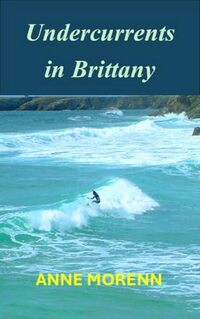
Currently I am setting stories in Brittany, which means that I include the region as I see it, using my perception of the way in which it differs from other places where I’ve lived.
Brittany is more than a backdrop in “Second Chances in Brittany”—it feels like a catalyst for change. How does the region shape Sarah’s healing and her growing influence on others?
Places can impose rules of their own, and people are to some extent shaped by the place where they live or work. But essentially Sarah’s personality remains unchanged. She’s a woman used to a professionally busy life and she beds herself into Brittany by finding useful things to do and congenial friends to meet. A second marriage means she throws herself into Gérard’s home and business with the same zeal for getting things put right that she displayed when sorting out organisations and offices in her previous life.
“Second Chances in Brittany” explores liberation after emotional control and loss. What inspired you to tell Sarah’s story, and how did you approach such a sensitive transformation with hope rather than bitterness?
There is no bitterness because this story is not my life story. It does include tiny elements of many, many lives I have learnt about in talking to female friends and work colleagues. There are a lot of husbands and bosses and officials resembling James in some way, and our society often seems created by men for men, with women a secondary consideration (if at all).But that does not necessarily prevent a woman achieving a lifestyle within the constraints which gives her some comfort and satisfaction, and it doesn’t prevent some women breaking free of all constraint. Hope can be acted upon. Bitterness is the worse possible destroyer –it should never be allowed to fester. It has to be surmounted and pushed into the background.
In “Pasts Present in Brittany”, Jane faces professional, cultural, and personal isolation. What drew you to write about a woman navigating both a foreign system and her own inability to trust?
Jane is essentially two stories woven together. Watching people starting up in professions or in Europe taught me that everyone moving to a foreign country misunderstands at least one detail, and similarly anyone joining a profession gets something wrong. I’ve done both, so have my friends, and so does Jane. But the backbone of this story is Jane’s lack of trust. Forged in childhood, it will take some effort to overcome, and until it is it will enhance the effects of all the little mistakes and stop them being overcome. It causes bitterness against the universe. It leads to self-hatred. It takes real strength of character to defeat that.
Do you see Sarah and Jane as reflections of different responses to independence and second chances?
In many ways, yes. They are at different stages of life, Sarah in retirement, Jane just beginning work, but they both lack complete control over their lives. And they both get a second chance.
You mention gardening scented flowers—does working with the land and nature influence your creativity or provide inspiration?
It gets me away from the desk, depressing international news, the housekeeping. A time to breathe, a time to think. And it’s not my garden, it’s a communal one. I can’t grow fruit and vegetables for myself, but I can grow flowers whose scent and colour give something back to my neighbour sas they pass through.
Food and cooking local produce seem important to you. Do sensory experiences like taste and smell play a role in how you build scenes or settings?
Food is a serious subject in the whole of France. Part of the experience of moving to Brittany was the insistence of Bretons on fresh food and on methods of cooking which give the maximum taste. The markets here are crowded and the quality of the produce is astonishing. I now find it difficult to describe anyone eating without stating what’s on the menu–it’s important!
Participating in local clubs and festivals suggests strong community ties. How has becoming part of a close-knit community affected your perspective as an author?
It’s always been part of my life. Every commercial project tends to create a small community holding firmly together for the duration. But in Brittany community is THE way of life. It may be in the genes; it’s certainly instilled by the schools. Celebrations involve the whole village, eating together, dancing together. A welcoming and supportive climate.
Do you feel that your writing is a way of creating roots where life once offered none?
I don’t. I didn’t feel the roots growing while I stayed temporarily in other cities, but the frail threads are there, and now I have the time to look back I can enjoy them. Life is never past, it travels with you.
Looking back, do you think constant movement was a challenge, a gift, or both for your development as a writer?
A gift, certainly. Whenever I moved to a new location and a new job I wrote letters describing it, and continued passing on everything new I learned. I spent a lot of time travelling and in hotel rooms –sometimes I learned a foreign language, sometimes I read other author’s stories, sometimes I made up some of my own. It was a solitary life but filled with hundreds of other people and a wide range of views of life.
How do you balance your global life experience with writing stories that feel intimate and grounded?
It wasn’t a global life. It was a succession of small, interesting, demanding jobs and communities, each needing to be learned thoroughly before passing on, each full of stories which stayed in my mind.
What has your AllAuthor experience been like so far? What are some highlights?
It has led to becoming known among book-reading communities. I had expected to stay anonymous, just an observer, but I’ve started to become drawn in. It’s disconcerting, but it’s new –it’s always enjoyable to have something new to learn.