Can you share how writing became a part of your grieving and healing process?
Grief is like air in that it expands to fill the container. When my wife died, life changed dramatically. For months, while she was ill, she was my total world. I had set aside everything else to be with her day and night, to be there for her, and to be available for her. Suddenly, that responsibility was gone, and I was alone. I had promised her that I would keep myself busy, and I told her I would write the stories she loved to read. Even now, after a year and a half, that sentence brings tears to my eyes. Is it possible to continue to be more and more in love with someone even after they die? I needed my characters to help me carry my grief. They needed to experience it with me in ways I could not. So, we embarked on a journey together, and that gave me a way to share what I was feeling with others, including strangers and loved ones alike. Healing is a strange way to describe what one goes through when grieving. Grief is like a sore that never fully heals. It makes you want to scratch it to peel away the scab, or cover it to keep it from becoming worse, but is always there. Letting my characters experience grief and have to go on gives me the strength to do the same. I have had people write to me to tell me they have been touched by the story, leaving them with a sense of hope that loved ones never leave us but remain with us as spirits and memories.
You mentioned that your wife inspired you to write stories she would love—what genres or themes did she enjoy most, and how do they influence your work today?
My wife read everything. She belonged to two book clubs, so she always had multiple books that she needed to reread to be ready for one of her book groups. Some would be literary fiction, while others could be non-fiction spiritual guides. Her favorites were historical fiction, and the Elizabethan era was her go-to period. The ones she shared with me were what I would have called Women's fiction. They were stories of strong women overcoming adversities to help keep the family together. She would read passages to me in bed to get me interested in the story. Devil in the White City, All the Light We Cannot See, Where the Crawdads Sing, The Four Winds, Life of Pi, and West With Giraffes are just a few of the ones she hooked me on. There are others. What I gleaned from these was how the characters came to life and captured my imagination from the start of the story. I couldn't put the books down. I wanted to know what was going to happen to the characters. They were real. I try to breathe life into my characters, hoping they will draw the reader in and hold the reader's interest.
How has grief changed the way you see storytelling and the role it plays in people’s lives?
It occurred to me that grief is not addressed well in most stories. Death is glossed over, and by the next chapter, you wouldn't know the person was ever alive. That isn't how grief works. It is a constant, nagging reminder, with unexpected triggers that appear for no apparent reason and at any time. Silly things can set you off. Storytelling plays a huge role in people's lives and, at times, we fail to take advantage of the power it has in evoking emotions. We get so caught up in moving the plot forward with conflicts that we forget the characters may have internal battles going on as well. How a character deals with those conflicts can help readers understand what is happening to them.
What was the most difficult part of writing after such a profound personal loss?
The writing wasn't the hard part. It was and remains cathartic, helping me release deep emotions. Rereading and rewriting those words required me to relive those feelings and emotions. I was back where I was when I wrote them, and that is both healing and a strain. I have to keep reminding myself that this is for my wife. The stories need to be the kind that would make her want to lean over and read the paragraph to me in bed.
Was there a specific moment when you realized writing could be your way forward?
I knew from the moment I sat at the keyboard that this was my new calling. I set out to write one book that Kathleen would have loved to read, one story worthy of her book clubs, and I wound up with a series. I need to keep writing. Now, the call to continue comes from my characters who want to tell their stories. I know that sounds strange, but they can be pretty demanding at times. I have always loved to write. Storytelling is in my blood. I used to struggle to find time to write, beginning with my first portable typewriter. Now, with nothing keeping me from writing, I need to get as many stories out into the world as I can with whatever time I have left.
Do you find that writing about fictional worlds or characters helps fill the emptiness grief leaves behind?
It fills the time, if not the emptiness. The therapy is two-fold. I get to help fictional characters navigate struggles and make difficult decisions that affect their lives, while gaining the courage and strength to do the same in my own life.
How do you balance writing for yourself with writing for readers who may also be navigating grief?
I don't think about the grief when I write. I focus on the characters, knowing they will have to deal with all sorts of issues in their quest for whatever it is they seek. The grief may hit them and me like waves against the bow of a ship, but the goal is to keep piloting forward. Writing gives me destinations to reach with the time I have left. Without the adventures of my characters, I would give in to the sadness and sorrow, draining me of the energy I need to stand and walk for myself.
What advice would you give to someone who wants to use creativity—writing, music, or art—as a tool to cope with grief?
Go for it! I listen to music or audiobooks when I walk, and I walk to stay mobile. I get ideas from the people I see and the places I go. I get inspired to learn new things, such as AI or how to play the violin. I set ridiculously tough goals for myself because I can. I walked into a music store recently and said, "This is going to sound crazy, but I want to learn how to play the violin." What is my goal? To be able to play The Devil Went Down to Georgia. Talk about a difficult goal to achieve!
Were there certain authors or books your wife loved that you still draw inspiration from while writing?
I am in awe of Kristin Hannah. Her latest novel, The Women, blew me away. However, I have recently discovered some authors that my wife never read, whom I know she would have loved. When the characters come to life and stay with me, I am inspired to write. The question I ask people who have read my novels is, who is your favorite character in my book and what is it you like about them? Invariably, they will also tell me which character they didn't like, and that is great feedback as well. I would hate to create forgettable characters.
How do you keep your wife’s memory alive in your creative process?
Kathleen is with me with every word I write, and that has been the case since before we married. She read everything I wrote, from my daily reflections on scripture to Sunday sermons, to short stories and novels. Her feedback kept me going for a long time. Now, I don't get to watch her face as she reads, but I know she is with me. People ask me if any of my characters are based on her, and they really are not. Not directly, that is. There is a bit of her that slips into each of my characters, just as there is a bit of me and many of the people I know that makes its way into my psyche when I write. I did write one novel that I was more intentional about bringing her into it, including parallels to her life, but that didn't work as well as I had hoped. So, now, I let the characters become real on their own.
What inspired to you to write your book, “Jigsaw Man“?
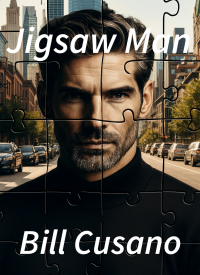
Jigsaw Man was an experiment in writing a puzzling character that even I didn't know much about. The inspiration came from my daily walks through town. The opening of Jigsaw Man is a bit cryptic. It is written in first person, present tense, so the action is happening as we read, and all we get are observations. We are in the character's head, and he isn't letting us in. The premise was simple. Imagine a homeless man who is invisible to nearly everyone around him. No one would even know he was homeless, because he dressed like anyone else. We see that in the first chapter, where he describes how the people around him are dressed and how they act. He notices them, but they don't notice him, or so he thinks. When he walks onto a crime scene and becomes part of the story, he is no longer invisible. Oh, and did I mention that he lost the love of his life and wanted to die?
Has your perspective on life, love, and loss shifted in ways that readers might notice in your stories?
I may sound like I have it all together, but I don't. My readers can see that in my stories, especially Jigsaw Man, because the character is male. I let him deal with my questions about life, love, and loss, taking the despair to an extreme, a place where I wasn't willing to go. I think characters can play an important role in the healing process, if it is a process. I find that I have become an advocate in using writing as a form of therapy for people who are dealing with depression and grief. I recently offered to work with people from my grief group if they want to write about their feelings.
What role do hope and resilience play in the stories you create now?
What I've noticed is that I don't write about people who give up. There is always something propelling them forward. For me, that force is the Holy Spirit, whom I rely on daily for strength and courage. It helps me a great deal to have the image in my mind of my wife smiling and encouraging me to continue. If she likes it, my readers will enjoy it too.
Looking ahead, what stories or projects are you most excited to work on as part of honoring that promise you made to her?
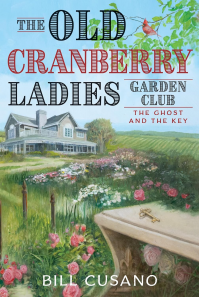
I am continuing with The Old Cranberry Ladies Garden Club series, following the family saga from the 1800s forward. I do have some other ideas in mind that she hasn't seen. (She knew of two of my characters from the debut novel from a writing workshop I attended in 2010.) I can also go back and rework one or more of my old novels, and that may develop into something she would like. But I am not limiting myself.
When did you join AllAuthor? What has your experience been like?
I joined AllAithor in May, 2025, so I am new to this platform. I have enjoyed the help in marketing my books, and I am wrestling with the barrage of requests to help me with book promotions and other services targeted at new authors. It would be nice if we could filter out all but desired requests and contacts, but I see there is a lot more that I can get involved in than I have so far.