Genre:
Visionary Fiction Science Fiction Fantasy- Country: United States
- Books: 2
- Profession: Author, Leadership Coach, Teacher
- Born: 10 August
- Member Since: Jun 2026
- Profile Views: 1,512
- Followers: 65
Helps individuals across the globe hone their leadership through examination and practice. Advocates for the reduction of nuclear weapons. Author: Abby's Quest (leadership development) and Unicursal (threats regarding nuclear war, climate change, AI).
Chuck Powell's Books
Stay in the loop on books by Chuck Powell. See upcoming and best-selling books by the author here. You'll also find the deals on books by Chuck Powell.
** Please note that the information or price displayed here may not be the updated. Make sure to double-check the latest book price before buying books.
** Also, there might be other books by Chuck Powell not listed on AllAuthor.
| Book |
|---|
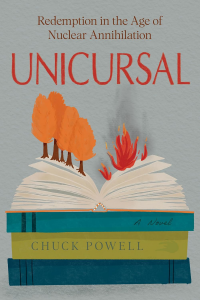
Unicursal: Redemption in the Age of Nuclear Annihilationby Chuck PowellPublish: Jul 14, 2026Science Fiction |
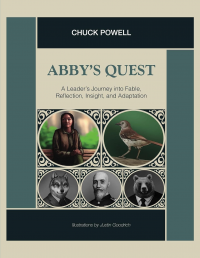 Abby's Quest: A Leader’s Journey into Fable, Reflection, Insight, and Adaptationby Chuck PowellPublish: Apr 24, 2018Fantasy |
Chuck Powell Interview On 19, Oct 2026
 "Chuck Powell helps individuals worldwide strengthen their leadership through learning and practice while advocating for nuclear disarmament. His books, "Abby’s Quest" and "Unicursal", explore leadership development and global threats, including nuclear war, climate change, and artificial intelligence."
The Air Force gave me a strong foundation in leadership and provided me opportunities to lead at multiple levels. Working in healthcare, I realized the power of higher purpose (caring deeply and genuinely about patients and coworkers). My PhD in Leadership taught me to look at leadership from multiple vantages and to apply a more collaborative leadership style. Finally, teaching leadership in a graduate program and leadership coaching have furnished me with leadership examples across many professional settings around the world. All of those experiences have led me to realize a great leader is authentic, selfless, has great empathy, is willing to adapt, and never stops learning.
Your leadership philosophy emphasizes both examination and practice. Why do you believe leadership development requires more than simply learning leadership theories?From all the work I’ve done with individuals and groups, I have come to realize that we become better, no matter the vocation, by doing, by practice. We study, then we practice and adapt from trial and error, refining our area of interest, maximizing our efforts. Regarding my books, Abby’s Quest focuses more on examination than practice, while Unicursal goes hard on practice.
What are some of the most common misconceptions you encounter when coaching people who want to become better leaders?First, leaders often assume that what has worked previously in a prior setting will work just as well in a current setting. Sometimes that is true, but more often there needs to be adjustment based on unique circumstances. The other assumption leaders make is that they alone have the knowledge or ability to resolve a challenge. Margaret Wheatley advocates that we move from a Heroic Leadership model (know it all/do it all) to a Host Leadership model (inviting others in to help us lead best). I have seen the hero leaders crash and burn while the host leaders and those around them thrive.
You founded Encompassing Leadership Associates to help individuals and organizations develop their leadership capabilities. What does “encompassing leadership” mean to you?Everyone has the capacity to lead and anyone may be called upon to lead. In today’s world of continuous flow of information, rapid change, and overall complexity, we need to involve and empower others to lead. Bringing in all who may have a stake results in better outcomes and deeper engagement.
Your military service gave you firsthand experience during the Cold War. Looking back, what lessons from that period do you think remain particularly relevant to today’s world?When facing conflict, we can choose to come together and listen to differing perspectives. That we can solve profound challenges when we collaborate on shared aims. When we operate with civil persistence, we accomplish great things.
Your work with nonprofits focuses on reducing the threat of nuclear weapons. What initially motivated you to become involved in nuclear-risk reduction, and what keeps you committed to the cause?My last three years in the Air Force related to the potential launch of nuclear weapons. Later when I was researching my dissertation, I interviewed leaders dedicated to eradicating nuclear weapons. I saw firsthand the power of what I consider the ultimate common purpose (reducing the threat of worldwide destruction via nuclear arms). I saw how the research participants had given decades of their lives for a meaningful cause. One even said to me, “What if you end up doing this work some day?” And so I have. What keeps me committed is the beauty of the earth and the understanding of what nukes could do to its inhabitants. Also, I have found great reward in serving others.
In “Unicursal”, you explore the possibility of a nuclear war through the efforts of a deeply flawed individual trying to prevent it. Why did fiction feel like the right vehicle for exploring such a serious real-world threat?The threat of nuclear weapons is not on the radar of most people. I wanted to try a new methodology for getting others to engage in a very important conversation; something entertaining, yet jarring…a humorous and disturbing wakeup call.
Your protagonist is described as deeply flawed. What attracted you to writing a character who is imperfect rather than a conventional heroic figure?Nobody is perfect and if they imply they are, run. I wanted to tell a story that portrayed personal redemption, a concept that I truly love and get to see on a daily basis, sometimes in myself. I hope to deliver another message: we heal and grow when we engage in great purpose.
“Unicursal” addresses not only nuclear war but also climate change and artificial intelligence. What connections do you see between these seemingly different threats facing humanity?These threats are all fueled by us, the human race. They can only be mitigated by us. Each endeavor requires collective effort and engaged leadership. In the 1980s, a grassroots movement started a trend that helped reduce nuclear weapons from almost 70,000 to the current total of approximately 12,000. In the 1980s, leadership came together across the globe to address the role of chlorofluorocarbons, CFCs, in the damage to our ozone layer. Now we face old and new threats to our existence. These will require leadership and grassroots efforts again. As for other connections, AI has considerations for both initiating and preventing nuclear detonations. Climate change would be massive in the event of nuclear war.
The possibility of nuclear conflict can feel overwhelming or distant to many people. What do you hope readers will understand differently about nuclear weapons after reading Unicursal?We have over 12,000 nuclear weapons around the world. Right now, many nuclear powers are engaged in growing and upgrading their arsenals. Within minutes, those nuclear weapons can end our existence. No one, no matter who they are, is truly immune from their destructive power. Even 100 nuclear detonations (roughly the size of the arsenals of several nuclear powers) can create massive climate change, famine, and economic ruin. We are all at risk and it will take a large number of us to eliminate the danger. As I said earlier, it has been successful before. There are some great individuals and organizations around the world who are dedicated to ridding the world of nuclear weapons, but they need help.
How much of your own experiences—from the military to leadership and healthcare—found their way into the characters, situations, or themes of Unicursal?First, the names and circumstances have been changed to protect the innocent… and the guilty. There is plenty of inspiration from world history and personal journey to work up composites, both serious and tongue in cheek. Anyone can draw upon our perspectives of life or leadership. My portrayals ranged from the mundane event of being hassled about stealing olives from a food bar (mistaken identity!) to the suppressed fear, while being underground as I watched the Cold War come to dramatic conclusion, of launching nuclear missiles.
Your earlier book, “Abby’s Quest”, focuses on leadership development, while Unicursal moves into the territory of geopolitical and existential threats. What inspired such a significant shift in subject matter?Unicursal originates from a sense of urgency and pervasive scope, because nuclear weapons, climate change, and AI pose real-time existential threats to multiple species, including our own. Leadership plays a big role in Unicursal however. It will take leaders, formal and informal, from all walks, to address and resolve our biggest threats. This means you, reader.
As someone who has worked both inside organizations and with individuals, what leadership qualities do you believe are most important when humanity faces complex, high-stakes problems such as nuclear proliferation or AI?Leaders require systems thinking: a big picture, relatedness, long-term vs. narrow and short-term considerations. Nuclear weapons reduction is a complex ball of yarn that impacts a myriad of other issues. When we get rid of nukes, we must also consider conventional/space/cyber/bio/chemical warfare capabilities, AI, and lost industries. Our leaders will also require a willingness to put personal/national gain secondary to global safety. Finally, our leaders must have the desire and ability to unite us in important endeavors that safeguard the planet, provide better living conditions, and facilitate our ability to reach our individual and collective potential.
If you could have policymakers, business leaders, military professionals, or ordinary citizens take away one idea from “Unicursal”, what would you want that idea to be?Nuclear weapons have become pacifiers or security blankets for leaders and enables them to bypass conflict and conflict resolution. Or to paraphrase Steinbeck, we are using the threat of mass murder in an attempt to prevent mass murder. These weapons inhibit dialog and meaningful agreement between countries. A familiar trend is developing with AI, an unwillingness to do the hard work, by all of us to do the right thing, the smart thing. One could make a similar argument about the climate.
How has been your experience with AllAuthor?Working with AllAuthor has far exceeded my expectations. In terms of quality and value, they are excellent. Additionally, it has been a delightful experience to work with them. They have my strongest recommendation.
Ask Chuck Powell a Question
Have brimming questions to ask author Chuck Powell? Ask whatever you like, but keep it appropriate.
** Please note that unanswered questions will not appear on the page. Refrain from posting promotional messages.