What first drew you to the mystery genre, and what continues to inspire your work in it?
I appreciated the puzzle at the heart of interesting characters’ interactions, often in a milieu with which I was unfamiliar. I continue to be inspired by all the writers I read, especially the mystery writers, just as I was inspired to make my first attempt decades ago.
Your books blend humor with mystery. How do you strike the right balance between the two?
I would say that I don’t usually think much about balancing humor and mystery. Only sometimes do I worry that the humor might be inappropriate to certain subjects. But then, I wrote a funny mystery about the dangers of toxic waste incineration (Four Fatal Elements), so I could be a poor judge of what’s appropriate. When someone told me, “I loved the book – it was just the kind of mindless entertainment I needed,” I was a little worried that they’d overlooked the serious message.
Nancy Drew was an early influence for you—how has she shaped your approach to writing mysteries?
I’m sure she’s shaped my approach in ways I don’t even recognize. But in addition to the appeal of the character interactions in Nancyland, I was drawn to the opportunity to learn something about a subject I didn’t know anything about – golf, doll collecting, antiques. I do a lot of research for my books.
Your novels span different time periods and settings. What research process do you follow to bring authenticity to your stories?
As I say, I do a lot of research. That has been vastly facilitated by the development of the Internet. I used to call up the reference librarian or trek to the library with a motley list of questions covering everything from architectural terms to historical dates. On the other hand, the web also presents the illusion that there is no such thing as an unanswerable question, so I can spend hours trying to nail down a detail. And sometimes, the research threatens to become an end in itself. After months of archival research reading the memoirs of women pilots in WWII, I had to force myself to stop reading and start writing the book (Eight Miles High).
You’ve written both series and stand-alone novels. Which do you prefer, and what are the challenges of each?
Writing a series offers the appeal of working on familiar ground, with characters I know well and like. The challenge is to avoid repeating myself, to keep the series fresh. On the other hand, it can be exciting to start building a world from the ground up and creating its inhabitants. I would say that most of my standalones have been written with the idea of extending them into series if the opportunity presented itself.
What was the most surprising lesson you learned when transitioning from teaching literature to writing fiction?
I can’t think of anything especially surprising. Writing certainly informed my reading of literature and made me more conscious of craft in the works I was teaching.
As an academic and an author, do you find that literary analysis influences your storytelling, or do you keep them separate?
Oh, I definitely think it has influenced my storytelling, and so has teaching writing, especially when I catch myself doing something I’ve criticized in other writers’ work. But literary analysis has provided me with insight into models I might like to emulate, helping me to understand not only what the writers are doing but how and why.
Can you share a particularly challenging moment in your writing career and how you overcame it?
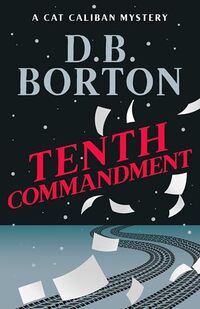
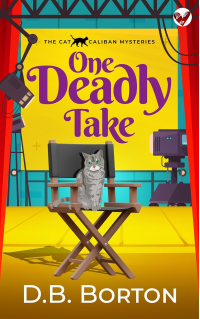
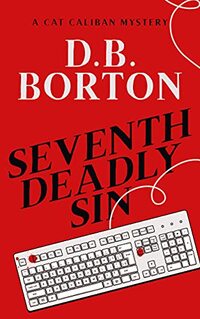
One low point for me as for many writers was a period when my first contract ended. At that time, Berkley had published six books in the Cat Caliban series – a good run, I knew – and didn’t want anymore. My agent didn’t seem to have good ideas for where to go next. During a shared cab ride, another writer advised me to get a new agent and start a new series, so I did. I returned to the Cat Caliban series later, but at the time, I needed to move on.
You’ve lived in various regions of the U.S. How have these places influenced your writing and the settings of your books?
I’m always interested in capturing the spirit of the places I’ve written about. Bayou City Burning was especially rewarding for me because it was an exercise in nostalgia – a return to the place and time I grew up, Houston in the 1960s (fitting, then, that it featured my first girl detective). The history was just waiting to be discovered, but I wanted readers to be immersed in the heat and humidity as that history unfolded. The Cat Caliban series is set in Cincinnati, where I lived in the 1980s and where I live again now. As a river city on the boundary between North and South, it also has a rich history that I enjoy exploring. I hang out with historians.
What advice would you give to aspiring mystery writers looking to develop their own unique voice?
I guess my first advice would be to read a lot. Novice writers always worry that reading will make their voices derivative, but I think you first need to know what’s possible.
Cat Caliban and Gilda Liberty are two distinct protagonists. What inspired their creation, and do you see yourself in either of them?
Speaking of reading, Cat Caliban had her origin in a specific popular mystery series of the 80s featuring an older woman detective. I was so frustrated and so annoyed with the extent to which this character was stereotyped, I set out to create a protagonist that defied the stereotype. (Some readers object to Cat’s language, but that was necessary to combat assumptions about the verbal timidity of older women.) When I created her, I was in my thirties (to the disappointment of my fans), so she was aspirational for me. Now that I’m older than she is, and crabbier than I used to be, readers may see some resemblance. My mother and her friends believed that Cat was based on her. Gilda Liberty was a byproduct of my interest in film, which I was teaching at the time in a small town with an independent movie theatre. Gilda was younger than I was, and I don’t much see myself in her. The protagonist closest to me was probably Dizzy Lark in Bayou City Burning, though I didn’t have a hard-boiled father for a role model.
Your recent novels - “Second Coming, Smoke”, and “Bayou City Burning” - each explore different themes. Is there a common thread that connects them?
My most recent novels are the latest books in the Cat Caliban series. I’m not sure these three standalones have much in common, except for their sense of humor.
When you’re not writing, what hobbies or activities help fuel your creativity?
I garden, read, and practice aikido, a Japanese martial art.
How has your experience with AllAuthor been?
I am mostly familiar with the cover-of-the-month contest, which I’ve entered but never won. It seems to be a professionally presented resource for readers and authors.