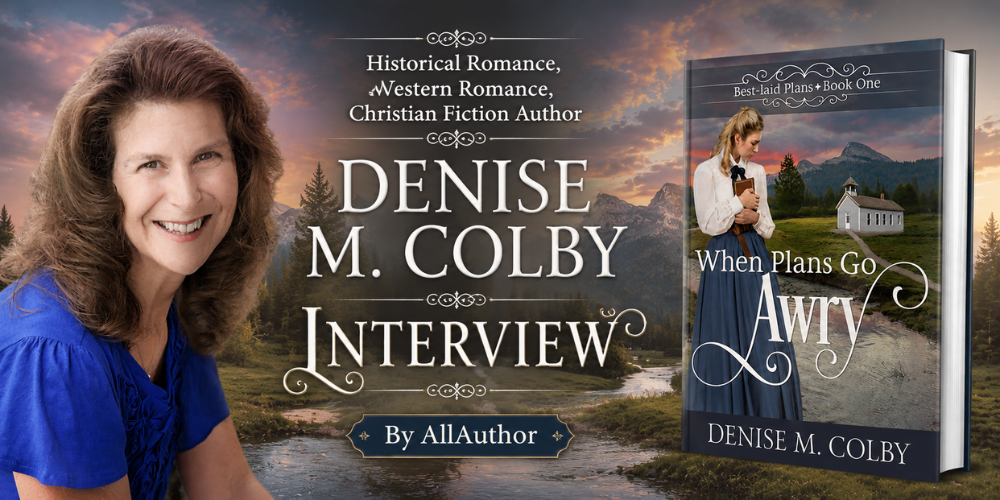
What first sparked your fascination with the 1800s, and how does that passion shape your storytelling?
I have always loved history, and I loved hearing my relatives share stories about my family and its history. Cultural Anthropology was one of my favorite classes in college. I tend to lean towards reading more historical than anything else. I grew up with the Little House on the Prairie books as well as the Love Comes Softly series. Those stories definitely have an influence on what I write. I loved the escape to a different time from my own. I still do
What drew you specifically to writing historical romance as your genre of choice?
Because I read historical romance, I wanted to write what I read. I also had my first story idea arise when visiting the one-room schoolhouse in Sacramento, California. What would’ve it had been like to be a teacher at that time, and how would she find love given all the rules she had to follow that were completely different than a man’s.
How do you balance historical accuracy with creative storytelling in your novels?
Writing historical is a lot harder than I thought. It’s interesting, and also difficult to explain, but I think I had to learn history is part of the background in setting more than anything else. I had to write from my characters POV in the history. So sometimes it’s an event from history. But as I’ve had to do with every book, I adjust to fit my story timeline and world I’ve created. So even though the event might be historical And that is okay in fiction. Took me a while to learn and figure this out. I don’t know if I still do it well or not. I have studied maps in Sacramento to be as accurate as possible with the locations of hotels, mercantiles, and other places. And there were many different floods that happened and Sacramento did raise itself up a level to combat that.
Can you walk us through your research process when developing a new story set in the 1800s?
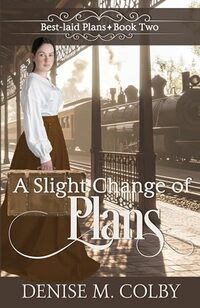
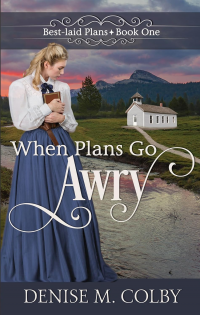
When I first started, I checked out a lot of children’s history books about one-room schoolhouses, California teachers, the west, and more. I read them, took notes. And let some of the information I gathered drive the scenes I wrote. I loved finding an idea or event to bring into the story world I created. For instance, in When Plans Go Awry, I added Mark Twain’s Jumping Frog story into the book. I was studying a historical map of California with all sorts of tidbits in it and learned he was writing for a local paper in 1869 and I thought it would be fun to tie his writing into my storyworld.
Another example was when I learned that Catherine Beecher did create schools to teach young women to go out and educate the young in rural places and incorporated her as my young teachers’ teacher set in Cincinnati near where she was actually located.
How has your love for journaling influenced your writing style and voice?
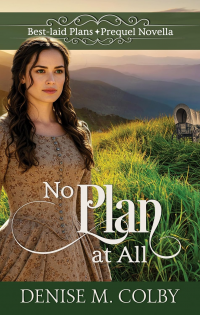
I love to journal. Whether it’s writing in my prayer journal, or journals to document things (historian here!) or to write out feelings to understand myself more, I wanted to include this aspect in my books. I gave each teacher a journal to document their journey. They each are different personalities, so what they share in their journal entries are different. I tried to use my own journaling experiences to help drive what could be written in their journals. I tend to share a lot, so I hope I’m able to share their heart within their entries. In No Plan at All, since the heroine is not a teacher, I had the hero have a journal. I had fun changing it up and writing journal entries from a man’s point of view.
In what ways do your faith and time spent reading God’s word inspire your stories or characters?
A lot. I wouldn’t be doing this without God’s nudges. He and I have had lots of conversations throughout this entire journey and still do. Sometimes a sermon message resonates, and I want to include that in a character’s journey. Other times a Bible verse I come across speaks to me in a way that I want to share, so I build it into something the character is experiencing.
What challenges have you faced when bringing historical settings and characters to life?
When I first started, I checked out lots of books at the library and scoured used book sales and found many that helped give me information I sought. People lived differently in the 1800s and had vastly different social rules. It’s why I love to read historical, but not everyone will understand the why behind it because they have never heard of certain concepts before (which is why I chose them in the first place). Like, the rules schoolmarms had to follow would be unthinkable now. What’s the big deal she can’t be seen with a male not her relative? Or why can’t she be in an ice cream parlor? She’s not allowed to be courted, but a male teacher could? Those sort of things. Wording must be clear, so readers understand what is going on.
Sometimes I write something too modern and have to look up what year a phrase started. When I wrote Alex in No Plan at All, he is from Scotland, so I had to choose words that gave his accent but could be understood. I never realized how challenging that would be, but I loved how it came out.
Do you have a favorite character or story you’ve written so far? What makes it special to you?
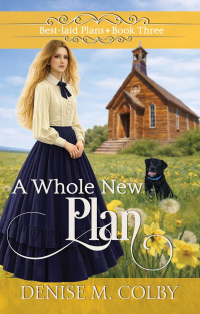
Bert. The rooster everyone loves! I wanted an animal in my story but something different. In my research I stumbled on roosters and their personalities. Roosters are talkative, outspoken, open, honest, and loyal. They like to be at the center of attention. Then I learned that a rooster was an early symbol in Christianity (and why roosters were found atop many church weathervanes in old churches in Europe). I read in many cultures, the rooster’s crowing at the dawn of each new morning became a symbol of the Christian’s victory of light over darkness. The rightness of all that together confirmed I was on the right track. And gave me ideas how to write him. And so, Bert came out of that. I named him Bert because I wanted a B name after my mom (Beverly). Bert went to the top of the list because of my love for Mary Poppins and Dick Van Dyke’s character. I never expected him to become so beloved, but I’m grateful and happy he is. My son drew him for me, and it’s been so much fun to put that image on buttons, bookmarks, stickers, and now a t-shirt.
How do your interests in music, theatre, and film influence your writing and creativity?
I love a good story but I was never one to analyze them. I just wanted to enjoy them, and I knew what I liked and didn’t like. So I wanted to build something I would want to read. As a dancer and choreographer, I love telling stories through movement. When I became an assistant Director for my son’s middle school productions, I learned a lot about putting together the story as a whole, working with the students to bring out more emotion, expression, and timing. I started writing my first novel around this time and it definitely gave me courage to try this new thing I never expected to do. I sometimes act out movement to help me write it better.
What role does family life play in your writing routine and inspiration?
When I started writing I had no idea what I was doing or how much work it would be. One of the things that kept me going was the fact my kids were watching. I wanted to model for them to never to give up on your dreams. It may take time and hard work, but if you do those things, you will succeed. Huge motivator. And my husband’s support during deadlines has been amazing—he does the cooking, cleaning, and other household duties so I can write. I’m not sure he gets much out of the bargain, but he doesn’t complain and he’s there at each of my book signings helping me wherever I need it. I couldn’t do this without him.
You choose a word each year to focus on—how has this practice impacted your personal growth and your writing?
When I first started choosing a word, I picked Hope as my word. I wanted to write about hope and also, I had hope of being a writer. My second word was Believe. I needed to believe in myself to keep writing. But I also wanted to believe in God more (faith) and trust Him in the process. Since then each word has been a new layer in my journey. I didn’t see that till a few years in. Strength, Steadfast, Purposeful, Courage, Wisdom, Work, Change, Grow, Flourish, and this year, Balance. Each year and each word is special. They all are part of my story—in my writing, in my faith walk, and in my personal life.
Can you share one of your most meaningful “word of the year” experiences with your readers?
There really is a succession to each word. I have no idea how the year will pan out and what challenges would come my way personally. The year I chose courage it was because I wanted courage to put my writing out there. Well, covid happened that year and then I needed courage in a different way. It was an important word that year.
Another example was when I chose the word Work. It was a weird word to choose, but I needed to focus on putting in the work. It helped me step up my “game” in my writing, in my health, and other things. Then the next year I chose Change. I needed to accept change and also be comfortable with changing things in my story that weren’t working. When I was searching for the next word, I realized all those changes I made helped me and my writing Grow and once you grow a bit, you can Flourish. I never planned that but it’s cool to reflect back.
What do you hope readers take away from your historical romance novels?
Encouragement. Hope. Maybe a smile and a bit of laughter. I want my towns, and the people in them, to feel like home.
What’s next for you—are there any upcoming projects or stories readers can look forward to?
I’ve written an 8-chapter novelette that goes back before Olivia arrived in When Plans Go Awry. It’s about the first teacher who never made it to Washton. This will be a gift for my newsletter subscribers. Putting the finishing touches on it now, and I’m really excited about how it came out.
I’m also currently writing a Christmas story that fits in the timeline after When Plans Go Awry. This will be released in 2027. And I hope to write the other two teacher’s story still as I’m not ready to leave this story world quite yet. However, in the future, I do have two other series ideas I can’t wait to dive into.
How long have you been associated with AllAuthor? How would you describe your experience?
I’ve been following AllAuthor for a while now. I love seeing all the variety of covers in the cover contests and learning about new books and authors. As an author, I like the options asked for book listings to provide readers enough information to consider a book and appreciate the opportunity to be interviewed and share my story!