You were born and raised in St. Petersburg, Russia. How did that cultural upbringing shape your worldview and writing voice?
Russia is a huge country with eleven time zones, and a lot of it is rural, so its population demonstrates a variety of subcultures, dialects and traditions. I was lucky to be born in one of the major European cultural and educational centers, St. Petersburg, with lots of universities, museums, theaters and amazing architectural monuments. I was raised in the atmosphere of that high culture, and I got my BA in English and pedagogy, MA in lexicology, and PhD in linguistics at the prestigious St. Petersburg State University. I was raised on the ideals of great Russian and world literature, taught how to read and understand poetry and prose, and the art of writing during all of my schooling. However, upon my graduation, I chose to become a college professor and never thought about writing myself, so I didn’t have a writing voice back then. A teaching voice - yes, but not a writing voice.
Moving from St. Petersburg to Moscow, Idaho, in 1993 was a bold leap of faith. What inspired that decision, and how did it transform you personally and creatively?
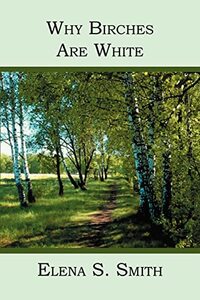
Yes, you are right, it was a bold leap of faith. Life often presents its unexpected twists and turns, and our choices can bring us to lucky destinations or to disasters, or somewhere in between. I’m not going to disclose the reasons that lead me to making choices that brought me to Moscow, Idaho since it’s described in my novel “Why Birches Are White,”and I hope people will read it, if interested. It also describes in details how moving from a big city in a different country to a small all-USA college town was a huge culture shock that transformed me as a citizen, a person, a mother and a wife.
Your fiction-documentary novel “Why Birches Are White” explores cultural intricacies. What compelled you to tell that story in a hybrid genre rather than traditional fiction or memoir?
When I moved to Moscow, ID, I found myself in a social vacuum, no relatives, no friends, no coworkers, so for the first two years, I’ve been meeting a lot of new friends. In early 1990s, it was a rare occasion for Americans to meet a real Russian, so many people expressed genuine interest in why and how I ended up in Idaho. When I told them little bits and pieces from that long and painful transition in my life, each person, without exception, would always say, “Oh My God, you have to write a book about it.” It sounded ridiculous to me at first, but then I met a university professor who nicely but firmly asked me to write at least one chapter of a possible book. I did. She loved it. It took me ten years to write “Why Birches Are White,” which was finally born in 2006. I’m so thankful to that gentle push that I needed to make my story public. Yes, it is my life story, but it had been influenced by political circumstances, historical events, and such dramatic changes that it couldn’t be a memoir. It contains a lot of true historical facts as well as major events happening in my life. I had to preserve the historical backdrop true to the facts, but as to my personal life, don’t forget — I was raised on the works of great storytellers such as Leo Tolstoy’s and Mikhail Bulgakov, so I allowed my creative imagination to intervene in the framework of the novel, and it became fiction-documentary.
Many readers were deeply intrigued by “Why Birches Are White.” What kinds of responses from readers surprised or moved you the most?
Many of my readers have mentioned how much they have learned about Russian life from this book. I often heard, “It’s an eye opener. I had no idea. What a revelation!” Americans are a brave free nation, and it is hard for them to imagine it can be so different in other big and powerful countries like Russia, where people are afraid to be brave, and their “so called freedoms” are not real. When Americans read this book, they realize how lucky they are, and many told me this book made them more appreciative of what they have, and even more patriotic. Believe it or not, but my book has made me a proud American.
After significant life changes and personal calamities, you published “Truths and Lies” in 2023. How did those experiences influence the emotional depth of that novel?
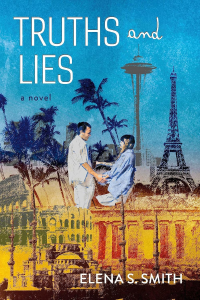
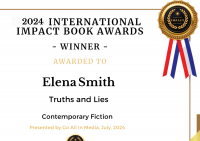
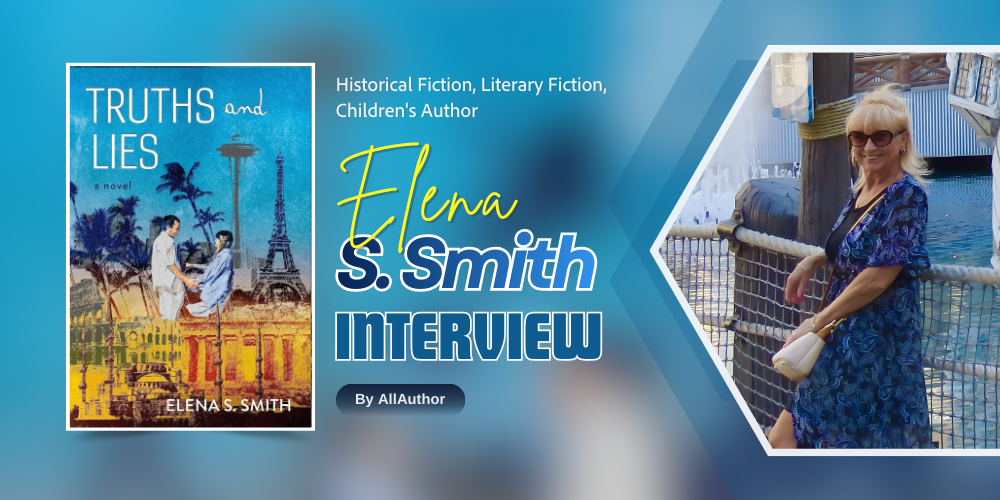
Like I mentioned before, when you think your life is set, the goals are clear, and the future is outlined, new unexpected twists and turns happen. Such new twist turned my world upside down, again, twenty years into my life as an American citizen. New struggles, unknowns, emotional volcanoes, you name it, and as a result, I had to start everything anew, again. It took me years of living in the survival mode, readjustment, and self affirmation. And when I started to feel more or less rejuvenated and capable of settling in life in a different capacity, as a single woman, a catastrophe—Covid 19–shook the world. I was alone, and secluded in my house, which is not the easiest way to live given my outgoing personality. Lots of hurt feelings was all I had in abundance in those days. Writing seemed to be a solution for staying sane. In 2023, “Truths and Lies” was born. Of course, this book is overflown with emotions.
What themes connect “Why Birches Are White” and “Truths and Lies,” even though they differ in genre and tone?
You are right. These two books are totally different in both genre and tone, and I would add in their themes as well. There’s a twenty-year long gap between the two writers, still two Elenas, but totally different persons. The older Elena perceived and described a new and changed world. The only possible theme that connects these two novels is that women can be stronger than they think they are. Both books are about strong women.
As someone who taught English, Russian, film, and culture at Washington State University for nearly twenty years, how did your academic career inform your storytelling?
Great question. Being a teacher is already a winning ticket that can take you on a storytelling ride. I met hundreds of students, many of whom became fictional personages in my stories. Being a teacher also helps to learn how focusing on details is important for a story, how only the details make it worth writing and reading.
Did teaching cultural studies change how you think about identity, belonging, and truth in your fiction?
Absolutely! I had to revisit some of my misconceptions, stereotypes, misinformation while creating and teaching a comparative culture course that through the years had become quite popular at the university. It changed my identity, for sure, and it taught me to throw the judgmental mentality inherited from my past out of the window. My heart has felt lighter and happier ever since.
In “Truths and Lies,” what does “truth” mean to you as a writer—and how flexible is it?
I deliberately won’t answer this question directly because truth in our lives changes its place, shape and form constantly, and its metamorphoses are the center of this whole story. I hope with all my heart the novel brings readers to the final assumption of what real truth is. Maybe not even an assumption but a realization. I hope.
How do you balance autobiographical elements with imagination when writing fiction inspired by real events?
It’s easy for me. I think it’s my personality. I like to embellish boring stories, and exaggerate those that are already pretty capturing, which brings them to the level of fiction. However, I leave untouched and bare of my imagination factual historical events true to my knowledge. I never create alternative facts. For me as an educator, facts are facts, and opinions and made up images are fiction.
Now that you’re retired, how has this new freedom influenced your creative process?
Honestly, my biggest fear to become a retiree was that the younger generation would dismiss me as a real and useful member of the society. I used to be so important for my students. Not only their learning depended on me but also their grades, ha ha! And where is all that air of importance now? Apparently, I was wrong. The freedom that comes with retirement is no less important than the status. The “whatever!” we hate in teenagers becomes the core of your new lifestyle. It’s the time to live for yourself. Sounds selfish…, maybe…, but — whatever! I’d never use “whatever” in the relationship with my family and friends, but it’s a great coping tool in my relationship with myself. My creative process can proceed, or be interrupted, or put on hold. I do what pleases me. Whatever! And what has been pleasing me lately is writing short stories. But it may change. Whatever…
You’ve mentioned enjoying travel, hiking, golf, and time with friends. Do these experiences spark story ideas or shape your characters?
Yes, all of my life activities, experiences, and curiosities inspire what to write about in my stories and whom to include in them as characters, with an important disclaimer that any resemblance to real people is purely coincidental.
You’re considering writing a mystery next. What draws you to the genre at this stage in your career?
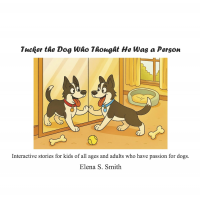
This question brings us to the classical circle, finishing with what we started with - twists and turns in life. Indeed, several years ago, I met a person on a nine-hour flight to Europe, and she told me the story of her life that deserves to become a novel. I immediately started adjusting it to fiction in my head, and I knew adding a murder to it would make it even louder and more significant. But right when I began working on it, my best friend and beloved companion of almost 17 years dog Tucker passed away. I was devastated. Grief is an all consuming, persistent and destructive emotion, and I had to find a way to pull myself out of it. The only right way to cope with my grief turned out to be writing a book about Tucker. In 2025, “Tucker the Dog Who Thought He Was a Person” was born. It’s a collection of 14 short stories about Tucker’s life and adventures for kids ages 3-12. It’s interactive with questions and small assignments for kids to reflect on what they learn in each story. (You can’t get a teacher out of me.) When I see kids smiling and laughing reading Tucker stories, I know he is wagging his tail happily up in Dog Heaven, and my heart is not in such pain anymore.
If you do write a mystery, would it explore cultural identity again, or would you venture into entirely new territory?
If I ever get back to this idea, it’ll be an entirely new territory: I’m keeping it a secret for now.
What has your experience been like using AllAuthor, and how has it helped you connect with readers or promote your work?
Honestly, it’s been a little bit of a rocky relationship. At first, I thought it was a scam. These days writers are overflown with fake promoters, agents, editors, publisher, etc., etc. But once I felt I could trust AllAuthor, I realized it helped me a lot in refocusing my marketing strategies, improving visuals for advertising, and keeping me in touch with other writers and readers. I highly recommend that people use your services. You don’t charge much, but you do deliver a lot. The customer service is responsive, too. Great job. Thank you!