How has your experience of living between the US and France shaped your voice as a writer?
I like to think it gives me a somewhat singular approach. When I read William Faulkner I will invariably be drawn to certain situations, phrases, characters and styling that I encountered in Gustave Flaubert or Marcel Proust’s work. And vice-versa. So, it allows the two worlds to clash or dovetail then open up a third iteration. Often it leaves me suspended between the two. From there I work to find the heart, the root of the truths each was after, hopefully creating something only an American “suspended” can see. The obvious problem is that there is a tendency for most readers to remain rooted in one or the other. Just makes me work that much harder.
You describe yourself as “a son of two separate mothers.” How do those dual influences manifest in your stories?
The description is both literal and metaphorical. There is my birth mother: Ruth. She was from Appalachian Mountains of NC. Extremely well-read; a librarian. When I was an exchange student in Paris, I lived with a family and became profoundly close to my “French” mother, father and sister. Their son was away and we were friends but never close. Again, it is a wonderful gift to be able to view the world from two such profoundly different prospectives. So, “home” in most of my stories takes on a rather abstract and elastic quality. It even helped me understand Homer’s “The Odyssey” in a very different light. Odysseus was never really actually trying to regain home or his kingdom. He was after the time and the man in that time that sustained the image of himself that he saw as the best version or idea of himself.
Many readers find your narrative paths unusual yet captivating. How do you come up with such offbeat and original story ideas?
I studied mythology and loved the works of Carl Jung who believed that mythology was like a wondrous projection of mankind’s collective unconscious. So, I learned not to question why certain, seemingly, random ideas or images appear in my thoughts, dreams or imagination. Like road signs or markers, I take them as an indication of where I should look, scratch and claw, perhaps excavate down and through to their roots. And so, it follows that in the process of the deep dive and on the way up through these seemingly odd and random images and thoughts, I discover even more paths, ideas and images that at first blush seemed unrelated. Can’t help but glean a story from this process. Also, I promised myself to never limit myself by what others told me was possible, believable or valid. The ancient poets never earned degrees or were chastised by critics. They simply reacted to the wealth of material that bubbled up from their own, unrestricted wellsprings. We moderns often forget that exposure to a myriad of ideas should open you up, push you out and into even wider, more expansive realms of creation. Ignore the critics. Give yourself over to you most outrageous ideas.
Do you feel your writing bridges cultural gaps between American and French perspectives? If, so how?
I am an old man now. Perhaps fifty years ago there was still a chance for that. France and America were like two siblings. One (France) very much older than the other (USA) who shared a profoundly important bond. Our two revolutions basically coincided. When I lived there it was a wonderful sort of sport the way the two countries poked and prodded one another. Now? Seems we all look for differences and leave it at that. A real shame, that.
What challenges do you face when your readers don’t fully follow your narrative paths, and how do you address those challenges?
I hope that they will take another crack at the story or book if they don’t follow it the first time. Most of what I write invites a second reading. Why? Well, because the writers who I loved and tried to emulate created works that begged for a second or third reading. In creating a world that stands independently of this one, there has to be a lot of framing, shoring, and a good foundation that perhaps go unseen the first time through.
Can you share an example of a story or scene where your dual culture identity deeply affected the plot or characters?
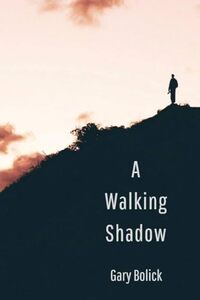
In “A Walking Shadow” when Jonas is talking to his best friend and tells him to look over in the corner, and then points out that, “Yes, that is in fact my own shadow,” that really is what I experience every day. I never look out through my eyes and “see” only America or France. I see myself wrestling with the lives and ideas I discovered in both. And yet, at times if feels as though I actually “break away” from myself and discuss it with my alter ego-shadow-unconscious self.
How do you balance staying true to your artistic vision with making your work accessible to a wider audience?
I love old cartoons. In reading and researching how they were made and who were the brilliant artists who created them, they all had the same basic mantra: make them for adults and the kids will just naturally find something they love about them.
Literature is the same. Write the best story possible for yourself. Make it so you absolutely adore it and there is bound to be something in it that other people will like. No, you cannot please everyone, nor should you try. But if you’re honest with yourself, then it is hard to imagine others won’t find something in it they love.
When you take readers on these “field trips through our collective experience,” what emotions or reactions do you hope to evoke?
Reflection, revelation and redemption. We all strive to find love, success and peace, but fail more often than not. Like Sisyphus pushing the rock up the mountain. If you can give someone a brief instant of reflection, revelation and redemption, then as the rock is falling, the trip down to start over does not seem quite as onerous.
How do you approach the research or world-building for stories that explore new or unconventional themes?
Again, it is a recurring image or idea that scratches at the back of my brain. As I dig deeper and deeper it begins to unfold and reveal itself. So, some of the research is purely practical and historical facts, landmarks, people etc. The rest involves stepping outside of my own head while making it plausible enough so the reader has a foothold.
How did you come up with the idea for your book, “A Walking Shadow?”
I have always been fascinated by mythology. In reading it and studying it I was invariably led to Carl Jung and his work on the collective unconscious. So, when I thought of my character Jonas B. Ayre exiling himself out in the desert it simply followed that the best use of both his internal voice and the visual of it would be his shadow. We all have an internal voice we listen to. So, when Jonas goes through the traumatic car crash, that profoundly unsettling event “unloosed” his internal voice and allowed it to take physical form. His unconscious became a living, breathing projection of himself.
How important is language in your writing? Do you write in English, French or both?
English with occasional smatterings of French if it advances the story.
Have you ever incorporated your personal experiences as an exchange student into your fiction? How so?
Yes, but not in the character of a student. It has been very helpful when I need to reference isolation or loneliness. Leaving home for the first time to spend a year in a foreign country is a bit overwhelming. As you learn the language and culture, develop bonds with your host family, a second set of reference points develop and emerge. I do think it has helped me fashion some very interesting and off-beat characters as there is a certain fluidity in my own personality and native allegiance. By the end of the year my “French” family said that I was 70% French. That of course has, I am sure, changed over the years.
What role do cultural identity and belonging play in the themes you explore?
Usually in the form of satire or in making a social or political point. I often find it tragic and sad when people hide behind their nationality. We are all citizens of the universe, if you will. All of our blood is red. Skin color, physical features etc. are all superficial. We are all in this together.
What can readers expect next from you? Are you exploring new territories or continuing to chart these offbeat paths?
Offbeat probably. Seems that is where I am most comfortable.
How were you introduced to AllAuthor, and would you say that this website has been helpful?
In searching for effective ways to market and disseminate information on my work, your website came up in many searches. I am very happy with my collaboration with AllAuthor. I highly recommend it to all other authors looking to reach a broader audience.