You’ve spent 35 years as a journalist—what was the most valuable lesson from that career that you now carry into your fiction writing?
Multiple lessons, really: brevity, writing with color, the ability to sit down and write without agonizing. Deadlines teach you how to concentrate and ignore distractions, and provide discipline.
How did your transition from journalism to novel writing come about, and was it a gradual shift or a bold leap?
Squeeze Playsis actually my third novel. It wasn’t really a bold leap: I had wanted to write fiction –in fact, I had started and stopped on three thrillers many years ago –but didn’t have the time or the energy when I was working full time. When I was retired, it was much easier.
In what ways has your work as a financial writer and editor influenced your approach to storytelling in your thrillers?
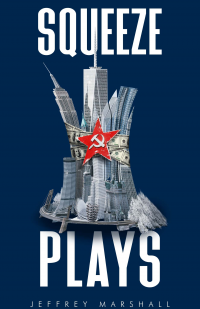
That really only applies to me latest, Squeeze Plays, where the financial milieu is paramount. My other novels were developed without any of that financial journalism expertise.
Do you find your training as a journalist makes you more detail-oriented in your fiction, or does it push you to strip prose down to essentials?
I definitely think it makes you pay more attention to detail, but I think all good writers –at least thoseI respect most –offer details that make the page come alive. I do agree that journalism can teach you to strip things down, but I think fiction writers need a bigger canvas and real imagination that transcends journalism.
You’ve written in multiple genres—historical fiction, psychological thriller, and financial thriller. How do you decide which story to tell next?
I’m not sure I can answer that! I started with the easiest genre for me, historical fiction, and the others came to me after various stops and starts. It really is less a conscious decision than a proclivity that ends up being something more concrete.
Your financial thriller includes satire of the rich and privileged. What inspired that sharp edge of commentary?
Clearly, the rich and privileged are good targets for satire, and have been through ages. It’s hard to develop satire around the downtrodden. I felt I wanted to create characters of privilege forced into situations that their station has helped create, and deal with problems that wealth alone can’t eliminate.
As a history major at Princeton, how did your academic background help shape your historical fiction?
It drew me to the period I wrote about in Little Miss Sure Shot, the late 1800s. It was a time of Manifest Destiny and tremendous growth and ferment in the U.S, and I tried to capture some of that flavor in the novel.
Psychological thrillers require a deep dive into the human mind. What drew you to that territory, and how do you approach writing psychological complexity?
I have to say I did that without any real knowledge of psychology, but I found an intriguing path to createa woman who had no real sense of empathy and kept reinventing herself, leaving a lot of damage in her wake. Again, I wrote it by constantly asking myself what someone like her could be capable of.
What role does language itself—phrasing, rhythm, wordplay—play in your creative process, given your abiding love for words?
A huge part. I love the idea of creating similes and metaphors that color the writing wordplay is a constant goal. Likewise, I try to vary the length of sentences and paragraphs and the length of chapters I think variety is somethingthat readers appreciate.And I often try to end a chapter with a phrase or image that makes someone want to turn the page.
Do you plot your novels meticulously beforehand, or do you allow the story and characters to surprise you along the way?
Absolutely that latter. I’m been asked this question many times, and I always say that I’m a “pantser” –someone who writes novels by the seat of their pants. I like to have the characters surprise me and go different directions, but that may be a form of laziness –I often find that things would be quicker and smoother if I cared to create a strong outline. But I developed a dislike for outlining in grade school that has stayed with me!
You’ve said you write not only for yourself but to entertain and engage readers. How do you balance personal satisfaction with audience expectations?
A think that at bottom, all novelists need to feel a sense of personal satisfaction in what they are creating. That should come second, after the goal of telling a compelling story and entertaining readers. It’s a balancing act, to be sure, but the audience always needs to come first. Self-indulgent writing developed from ego is likely to fail.
What do you hope readers take away from your book, “Squeeze Plays” beyond the thrill of turning the page?
I want them to feel they are in the shoes of the main characters and judging the choices they make, and experience the consequences. I also hope they come away with an appreciation of high finance and how it is being used for good orill, and how courageous journalists can expose secrets that might otherwise lie hidden.
How has been your experience working with AllAuthor?
Very good. I particularly like the clever mockup shots that put the cover in different scenes and scenarios. AllAuthor is also very effective at communicating with writers about promotions they are doing for their books.