Richard Lawrence Belford Interview Published on: 17, Apr 2026
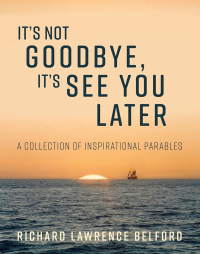
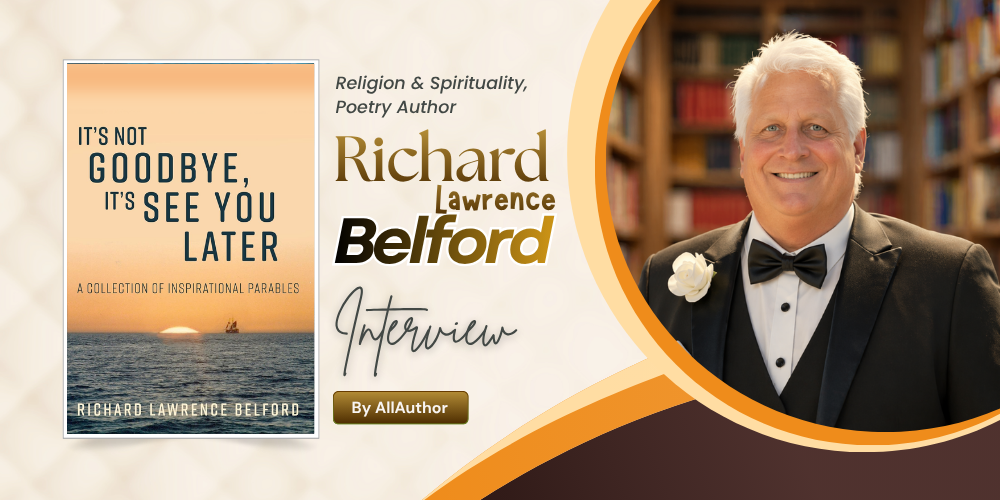 What inspired you to write It’s Not Goodbye, It’s See You Later; A Collection of Inspirational Parables?
I didn't take my writing seriously until my mother approached my father, brothers, and I about an article she had read. In it a family had decided during a one-year period to write a personal memento about how they felt about one another for their respective birthdays.
My mother thought we should do the same thing, claiming they would make wonderful keepsakes. She was right!
Your books focus on hope, grief, and acceptance. What personal experiences influenced these themes in your writing?I remember my mother telling me during one of the many occasions that we would gaze at the stars over our family’s cottage that she'd often thought since her own mother’s passing that the brightest star was actually my grandmother watching over her.
This personal experience inspired me to write “A Mother's Work Is Never Done” whose heartfelt message of hope, grief, and acceptance reminds us that even though our own mothers may no longer be with us. They will always live in our hearts.
Why did you choose parables as the storytelling format for sharing life lessons and inspiration?A parable by definition is a symbolic short story that illustrates or teaches some truth, religious principle or moral lesson.
My favourite parable is Footprints and love how its last line assures people that they are never truly alone by reminding them that someone is always watching over us, especially during our most trying times.
What message do you most hope readers take away from your stories?I have always hoped that my parables and stories behind their creation would not only inspire those who read them to always try & say; it’s not goodbye, it’s see you later, but also believe; the best is yet to come.
The phrase “I’ll see you later instead of goodbye” is powerful. What does it mean to you personally?The Egyptians believe that you die twice; once when you take your final breath and the last time someone says your name.
I personally believe that the phrase “I’ll see you later instead of goodbye” means that even if the names of those dear to my heart are never spoken in the future. I will not only also see them again, but my writings will ensure they are remembered.
Grief is often misunderstood. How do your parables help readers navigate loss and healing?The Good Grief Trust once thanked me for sharing these words; “We grieve two people when we part. It's the one we love that’s for sure, and the one we once were.” I think this might be the most misunderstood thing about grief.
* The United Kingdom’s Good Grief Trust exists to help all those affected by grief. Their vision is to help the bereaved by providing reassurance and support.
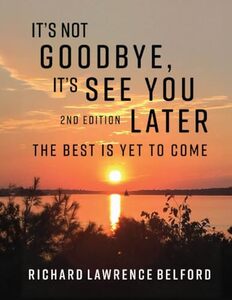
How does The Best is Yet to Come expand upon or differ from your earlier work?When I wrote the parables included in It's Not Goodbye, It's See You Later; A Collection of Inspirational Parables they were about the people I had previously lost, but I had yet to lose my father, which further impacted my understanding of grief. This became a catalyst for my writing its second edition; The Best is Yet to Come.
Can you share one parable from your collection that resonates most deeply with readers?This is a hard question to answer and really depends on the individual, because although everyone loses someone, not all losses are the same, nor do we grieve the same way or at the same pace.
So, I guess the parable that resonates most deeply with readers would depend on the relationship they had with the person they have lost, whether that be a grandparent, parent, spouse, child, brother, sister, brother in-law, sister in-law, an aunt, an uncle, a cousin, or close a friend. Now having said this, if there are lines from one of my parables that I believe resonates most deeply with my readers. It would be these from; “ Remember When.” “ Remember when. We used to fight, especially the times that I was right. And when Christmas makes you sad. Be thankful for all the ones we had." “ Remember when. It’s said and done with all the laughter and the tears. There was never anyone. I loved more throughout the years." “ Remember when. We meet again. It will be, as it was then… Remember when.”
What role does faith or spirituality play in your storytelling?This line from my parable “Until We Meet” immediately came to mind when I read this question. “It was you who said it goes by so fast. And we can never change the past. Only faith can change what’s been by the simple belief in what can’t be seen.”
Many readers look for comfort in difficult times. How do you hope your words help those struggling with loss?When I lost my beloved dog Bandit. I realized just how difficult pet loss can be and referenced the following quote from famous American broadcaster Paul Harvey’s popular radio program The Rest of the Story and its segment entitled; These Things I Wish for You. “It would be good if at least one time you can see puppies born and your old dog put to sleep.”
I therefore hope these words from my parable; “A Dog's Life” can provide some comfort to anyone struggling with this often misunderstood form of loss. ‘It doesn’t matter how long you live or how short a dog’s life can be. The only thing that matters is the day we finally see there’s a place. A dog waits for you and me.”
What was the most challenging part of writing about emotional topics like grief and acceptance?In this life no one is promised tomorrow and we often leave or are left wishing we had just five more minutes and even the magic of Christmas, a New Year or Easter’s promise can give those who grieve what they would truly love.
This makes grief one of society’s most misunderstood and profoundly difficult experiences that cannot be resolved by closure, if there’s even such a thing, but by a slow measure of acceptance that only the passage of time and words of comfort can provide. I believe my words can provide that comfort.
Who do you believe would benefit most from reading your books?I believe those who have experienced loss should support one another’s efforts to comfort others and realized after my father died that the world just went on without him, but it would never be the same for me. I hope this sentiment benefits others struggling with loss.
How has reader feedback influenced your perspective as an author?On May 3rd, 2011 in anticipation of Canada’s 144th birthday I wrote Prince William enclosing a copy of my parable “A Mother’s Work Is Never Done” in advance of his Royal Canadian Tour’s visit to my hometown of Ottawa on July 1st, 2011, on what would have also been his mother Princess Diana’s 50th birthday.
On the eve of the Prince’s trip to Canada and much to my delight I received a reply dated June 28th, 2011 from St. James Palace, thanking me for my thoughtful letter and beautiful poem. It also informed me that His Royal Highness had not only read A Mother’s Work Is Never Done, but was deeply touched by its words of support and encouragement.
It also extended Prince William's warmest thanks and heartfelt best wishes. I will never forget how incredibly gratifying it was to think I had been able to touch the heart of a son whose mother had touched so many of ours.
What projects or inspirational messages are you currently working on for future readers?I recently wrote a parable entitled; “You Can Go Home Again” about NHL hockey star Johnny Gaudreau and his brother Matthew being killed by a drunk driver.
The Centering Corporation just included it in their Grief Resource Library and I trust its inspiring message will not only comfort those dealing with a sudden, unexpected loss, but will also go onto impact the prevention of drunk driving in keeping with (MADD) Mothers Against Drunk Driving and its mission to ensure; “Impaired Driving Ends.”
* The Centering Corporation publishes Grief Digest Magazine and is the largest and oldest grief resource center in North America.
What has your AllAuthor experience been like so far? What are some highlights?The support they have provided has been invaluable. It started with them featuring the second edition of It's Not Goodbye, It’s See You Later ― The Best Is Yet To Come on their social media platforms and then including its cover in their January 2026 cover of the month contest.
I have also found their book promotion tools absolutely priceless, having enabled me to create my own Select Mock Up Banners, Seasonal Book Banners, GIF Video BookVideos, GIF Reviews and Customized Book Teasers, not to mention the use of their Tweet Scheduler and Magic Tool, as well as both an Image, and Quote Editors.
So, dare I say that my experience so far might just be further highlighted by this interview, and its potential to introduce even more people traveling grief’s path to discover “It’s Not Goodbye, It’s See You Later; A Collection of Inspirational Parables" and its 2nd edition “The Best is Yet to Come.”