Amy Tan Interview Published on: 30, May 2025
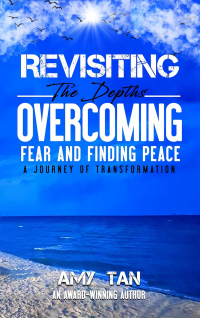
 What inspired you to write “Revisiting the Depths - Overcoming Fear and Finding Peace”?
The inspiration behind Revisiting the Depths came after I made the decision to confront a long-held fear stemming from a traumatic first dive three decades ago. In the aftermath of that journey, I felt a pressing need to give voice to what I had encountered beneath the waves. Through my storytelling, I aimed to impart these lessons, sparking a ripple of healing, growth, and reverence for our shared world.
How did your personal experience with overcoming your fear of the ocean shape the storytelling in your book?Revisiting the Depths is more than a diving encounter—it’s a journey of confronting the deeper fears I carried inside, the ones that showed up not just in the waves, but in everyday life. This encounter shaped the way I wrote Revisiting the Depths. I didn’t want to write as someone who had conquered fear, but as someone still learning to be with it. The ocean became both the landscape and the metaphor that held the story together. Through it, I invite readers to sit with their own fears, to allow the unease, and to see that peace isn’t always about calm waters—it’s about learning to float even when the sea is rough and the path isn’t clear.
What do you hope readers take away from your journey of resilience and transformation?My hope for readers is that they find a companion in their own journeys. I want to offer them a sense of connection and understanding, letting them know they are not alone in facing fear, uncertainty, and personal growth. Through the experiences and lessons shared in the books, I aspire to bring them comfort, encouragement, and a renewed sense of strength. I want readers to walk away with the belief that they, too, can overcome their challenges and discover the peace and fulfillment that comes from embracing life's depths, both the beautiful and the difficult.
Your books span personal growth, business, and cross-cultural experiences—how do these themes connect in your writing?I never really saw them as separate—personal growth, business, the places I’ve lived. They all shaped me, tested me, and in many ways, broke and rebuilt me. Revisiting the Depths was about facing the fears I carried quietly for years. Those same fears showed up in boardrooms, in leadership roles, in moments where I felt like I had to wear a mask just to survive. And my cross-cultural experiences, living between cities, between languages, and at times feeling like I belonged nowhere and everywhere at once, shaped the lens through which I see the world. They taught me humility— it was like navigating unfamiliar waters—beautiful, mysterious, fearful and humbling. Every place, every encounter became part of my lived experiences, adding depth and richness to my writing. In both books, whether I’m writing about the depths of the ocean or the depths of the heart, we are all navigating uncertain waters, trying to find our peace, our place, and our voice. And sometimes, the journey inward is the bravest journey of all.
What was the most challenging part of writing Revisiting the Depths, and how did you overcome it?The hardest part of writing Revisiting the Depths was reliving a harrowing memory from my PADI Open Water Certification, where I knelt fifty feet underwater, stripped of my equipment, feeling vulnerable and isolated in the vast emptiness of the sea. Confronting the sensation of being utterly alone, with no instructor in sight, I had to face my deepest fears and admit my vulnerability. This raw honesty, though painful, was liberating. By acknowledging my fears, I began to disarm them, each sentence a step towards reclaiming a lost part of myself. Through this painful process, I discovered a deeper strength, transforming fear into a powerful force for healing and selfdiscovery.
How has your background in corporate leadership and market expansion influenced your approach to writing?Corporate leadership and market expansion tested me in ways I never saw coming. I was constantly challenged—not just in skills, strategies, or KPIs, but in values. Ethics were on the line all the time—sometimes subtly, other times painfully clear. I saw how easy it is to lose yourself in the noise, to compromise little pieces of who you are just to fit into the system or meet the goals. That changed how I write. It made me more honest, more willing to sit with the uncomfortable. That’s why in my books; I write as much about the inner battles as the outer ones. The lessons I carry from those years remind me that leadership is not about power or control—it’s about integrity, courage, and staying anchored when everything around you feel like shifting sand. In many ways, writing became my way to process those experiences—to tell the truths I couldn’t always say in the corporate world.
In “Doing Business in ASEAN and China," you provide strategic insights—how do you see the business landscape evolving in the next five years?Doing Business in ASEAN and China was written in the early 2000s, and the world was a very different place then. There was a real sense of optimism—China had just joined the WTO, and businesses were focused on globalization, tapping into emerging markets, and expanding supply chains across Asia. Today, the business landscape has changed so dramatically that many of the old playbooks no longer apply.
Corporate leaders today face a new and unpredictable element—geopolitical tensions that cut across supply chains, markets, logistics, and boardroom decisions. We see businesses having to navigate not just economics, but uncertain political risks that are deeply intertwined. On top of that, the evolvement of AI has rewritten the rules. It’s no longer about efficiency or automation—it’s about rethinking entire business models, job roles, and the skills leaders need. The pace is rapid. If I were to reflect on the next five years, I see a landscape where adaptability, ethical leadership, adoption of technology, and geopolitical awareness will be survival essentials. And more than ever, leaders will need to anchor themselves in values, because the noise will only get louder.
What are some key lessons from your business career that have shaped your perspective on overcoming fear and finding peace?Fear, I’ve learned, is like the undercurrent beneath still waters. You may not see it, but it pulls at you quietly, tugging you into places you didn’t intend to go. In my business career, I swam in vast oceans—cross-cultures, markets, negotiations. On the surface, everything seemed calm, controlled. But beneath, fear often lurked in the depths. Fear of not being enough. Fear of losing ground. Fear of sinking under expectations. And all the silent what-ifs that kept me awake at night. There were times I clung to titles and achievements like lifebuoys, believing they would keep me afloat. But lifebuoys cannot quiet the storms that rage within. I had to dive deeper, into uncomfortable waters, to confront the hidden fears I’d avoided for years.
Leadership taught me that the higher the wave, the more crucial it is to find your anchor. In turbulent seas, when voices around me screamed for results, for compromises, for fitting in, I often felt like I was drifting further from myself. I learned that true peace is not the absence of storms—but the calm you carry within, the stillness at your core that keeps you grounded even as the waves rise.
And perhaps the hardest lesson was this: sometimes, you must swim away from familiar shores. Walk away from leadership role that no longer honor your truth. Say 'no' to waves that demand more than you are willing to give. That is courage. It reminds you that the ocean is vast, and you are free to sail toward horizons that bring you back to yourself. In the depths, I found what I feared most—but I also found peace.
How do you balance your corporate responsibilities with your passion for storytelling?I no longer see corporate responsibilities and storytelling separately. In the corporate world, I spoke in strategies, forecasts, results, costs, and profits. In my writing, I speak in stories... and scars. For years, I thought I had to choose—between the polished and the raw, the measured and the messy. But I’ve learned… real leadership holds space for both. The metrics and the messy. The head and the heart. Only then can we be the kind of leaders who make a difference—not just in numbers, but in people’s lives.
What advice would you give to professionals looking to transition into writing or share their own experiences through books?I would say—don’t overthink it. Too often, professionals stay trapped in their heads, waiting for the perfect moment, the perfect outline, the perfect words. But writing doesn’t begin there. It begins when you dare to dive—not into formulas or structures— but into your own heart. Peel back the layers, gently, patiently. Let the emotions rise. Let the stories find you, not the other way around. It’s not about writing what sounds impressive—it’s about writing what feels true. It about the whisper from your own depths. Start there. That’s where the most powerful stories live.
You’ve lived in multiple Southeast Asian countries—how have these experiences influenced your writing and worldview?Living in multiple countries has been like navigating unfamiliar waters—beautiful, mysterious, at times frustrating and lonely. It’s taught me that no matter how much you prepare, there will always be tides you didn’t expect, cultures you don’t fully understand, and moments that humble you. It opened my eyes to the layers beneath— to listen more, to assume less, to embrace the discomfort of not knowing. It shaped my writing, too. I find myself drawn to stories of belonging, of crossing borders; not just between countries, but between people, between hearts. In many ways, these experiences softened me. They reminded that home is not always a place. Sometimes, it’s a feeling you carry inside.
What role does culture play in both business and personal development, and how do you integrate it into your work?Culture, to me, is like the undercurrent that shapes everything, whether in business or in personal life. It influences how we see the world, how we make decisions, how we relate to others. In business, ignoring culture is like sailing without understanding the tides. You might get somewhere, but you’ll miss the deeper currents that move people, teams, and markets. Culture teaches us that what works in one place might fall flat in another. In personal development, culture invites us to expand our perspectives—to step out of our own narratives and see the world through different lenses. It humbles us.
In my work, I try to integrate culture as a living, breathing lens. Whether I’m leading market expansion, working with cross-border teams, or writing stories, I remind myself to approach with curiosity and respect. Because at the heart of culture is always the human story—and that’s where real connection begins.
Are there any specific authors or books that have influenced your storytelling style?My storytelling has been deeply shaped by authors who explore the human psyche and spiritual journey with honesty and depth. M. Scott Peck’s works—The Road Less Travelled and People of the Lie—profoundly influenced how I see human behavior, especially the darker sides we often don’t talk about. His insights helped me name things I had long felt but never fully understood. Paulo Coelho’s The Alchemist moved me in a different way. His use of metaphor and symbolism reminded me that stories can speak to the soul in ways plain words cannot. In Revisiting the Depths, the ocean became more than a setting—it became a mirror. It reflected fear, surrender, healing, and eventually peace.
I’m also drawn to leaders like Nelson Mandela and Lee Kuan Yew, not just for what they achieved, but how they told their stories—with conviction, clarity, and a certain vulnerability. That gave me the courage to share my own cross-cultural experiences and leadership struggles more openly.
In the end, my style leans toward introspective storytelling—personal and reflective. I write to make sense of things, to offer connection, and to invite the reader inward.
Do you have any upcoming books or projects you’re working on?Yes, I’m currently working on my next title, When the Storm Pause. It’s a story very close to my heart, and I’m allowing it the space to unfold naturally.When it’s ready, I look forward to sharing it with the world. At the same time, I’m also wearing my corporate hat—working on a fundraising initiative and leading market expansion efforts. Both paths keep me grounded—in the realities of business and in the depths of storytelling.
What has your AllAuthor experience been like so far? What are some highlights?My experience with AllAuthor has been encouraging and helpful. The tools available make it easy for me to quickly curate visuals for my social media posts, which is such a time-saver. I also appreciate the weekly mock-up book banners—they serve as gentle reminders to keep showing up for my book and my readers. The regular tweets and promotions have helped me reach audiences I might not have been able to connect with on my own. And AllAuthor has also opened doors for me to connect with other authors—to share stories, experiences, and support each other along the journey.