Kevin Heaton Interview Published on: 19, Aug 2025
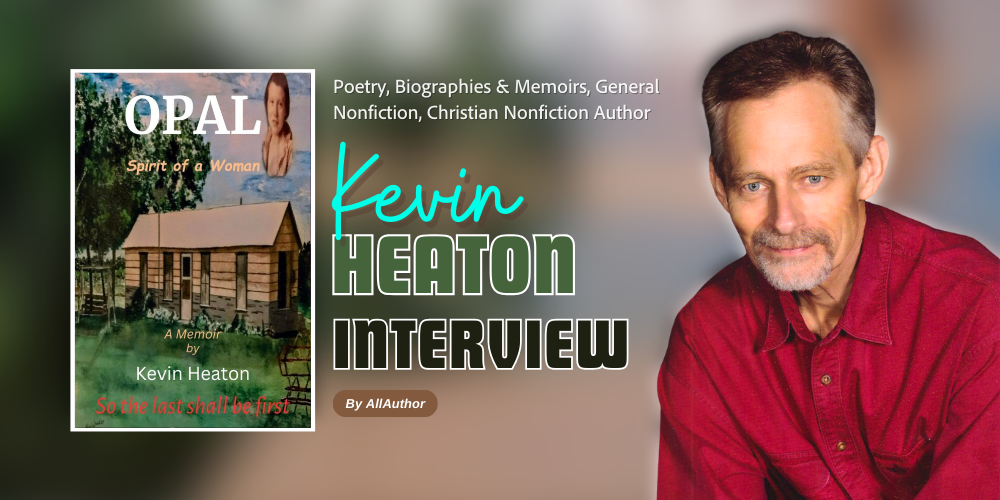 How did your experiences as a state park ranger shape your writing style and subject matter?
My experiences as a State Park Ranger proved to re enforce my preconceived notions that, given the right set of circumstances, the human animal is by far the member of the animal kingdom to be most feared.
Beyond that necessary downside; the work, if embraced as a calling more than just a means to a paycheck and pension, is rewarding to the senses in ways that no other occupation can fulfill. For example: each of the four seasons present their own smorgasbord of sights, sounds, and day-to-day goings on against a totally unique backdrop.
Spring is the time for courtship, new life, and blossoms. Summer presents that more nefarious species mentioned earlier with opportunities to stay wet and cool in any number of ways and, by necessity, charges most all other critters (beyond crows, squirrels, rats, & ants) with the task of just staying alive. Fall, for those fortunate enough to frequent woodlands of deciduous trees, is a time of brilliant natural coloring, and of creature gathering. It is a season that quickly presents the prospective author with a vast catalogue of literary birthrights. Then, there is winter. This author once described it in a poem as: 'The season of pausing.' But that pause has a purpose, which is to give the coming spring's canvas the wherewithal to once again present itself. You’ve been published in over 400 journals, with multiple Pushcart Prize nominations. What draws you to poetry, and how does it differ from writing a full-length book like OPAL?
To me, poetry and full-length offerings are polar opposites. As a rule, poetry is far more succinct and to the point; a genre that I find appeals naturally to me as an individual. In addition, the poet has an understood literary license to language and creative format that the full-length author cannot remotely contemplate. Partially, as a result of that stark difference, the two genres generally appeal to disparate reader groups.
Another harsh challenge for me was to expand my attention span outward from perhaps writing half a dozen poems on various topics in one evening, to focusing hundreds of hours and many months on one central theme. I found that transition highly stressful.
You’re also an avid runner. Do you find that physical activity helps fuel your creativity?Oh yes! Physical activity can definitely fuel creativity and, in addition; function as an author's friendly elixir. I have known other avid runners during my lifetime whose spouses couldn't stand to be around them on days they didn't run.
Not only does it clear the head and calm the nerves, but if that activity is out-of-doors, it can also bring a plethora of both pleasant, as well as unpleasant images to bear on the writer's furtive mind.
What is your writing routine like? Do you write every day or in bursts of inspiration?All writers have their own, shall we say, ceremonial process to go through before those final words actually begin to flow. For me, the subject (generally a central theme, or what the songwriter calls 'a hookline') always comes during outdoor time. For years, those lines would invariably come when I was somewhere near the turnaround point of my run with neither a pen or piece of paper on which to jot them down. This repeated oversight punished me with the task of repeating those hooklines in magpie fashion all the way back to the house.
Now, you may be assuming that having arrived back home with that central theme safely recorded, the remainder of the piece dutifully presented itself that very same evening. Sometimes yes, most times not. Many times, months and even years passed before the body of the piece made itself known. Usually in an unplanned for cloudburst of words.
Who are some of your biggest literary influences, especially in the realms of poetry and creative nonfiction?As a boy in the 50's and early 60's, I was naturally drawn to adventures like: "The Call of the Wild" by Jack London, and "Moby Dick" by Herman Melville, and to examples of profound bravery like: "Red Badge of Courage" by Stephen Crane. More recently, I find myself necessarily impressed by the prolific talents of John Grisham: A master of the thickening plot.
As far as poets, I admire the works of Robert Frost from the past and, more recently, those of William Doreski, Kyle Hemmings, and the vastly descriptive storytelling poet: Tom Sheehan.
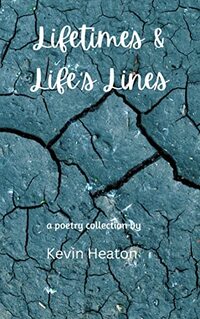
What inspired you to write “Lifetimes & Life's Lines”?The inspiration to write "Lifetimes & Life's Lines" came about simply from the desire I had to gather what I hope are the better examples of my work into a central compilation that aptly presents the life and times of my life to their fullest.
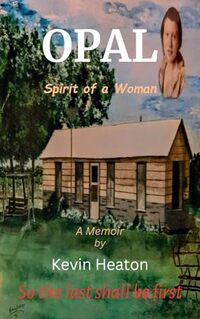
What was the most challenging part of writing a true story about someone else’s life, especially one that includes such sensitive topics as abuse and survival?Not becoming too emotionally attached was the most challenging aspect of writing a true story about someone else's life, particularly when that story included aspects of abuse and survival, and is one filled with deep, personal feelings for me.
Opal's life was one of such meaning and service to others that those topics proved to be the low-hanging fruit as far as the ebb and flow rhythms of writing were concerned. During the part of her lifetime that I had the privilege to interact with her in family settings, as well as the rare occasions when we actually were able to sit and just chat one-on-one, the topics were about family life and living, along with pleasant and humorous happenings from the past. One could always sense that the parameters of her forgiveness had grown boundless through the years as a result of her giving up most of her personal pursuits to aid and fulfill those of others.
The true challenge was not in the telling of her survival. No, those factual, eyewitness accounts were and are legion. It was the abuse that secreted itself in, out, and around me from the cracks, crevasses, and alleyways of time. It's only natural that that be the case given the secretive nature of that awful beast, especially during the earliest decades of the 20th Century when the perceived modesty of the time forbade discussing it; in any forum. That notwithstanding, as the weeks and months of research continued, bits and pieces began to give up their ghosts to the written word of light. This pursuit, without a doubt, was the most mentally and emotionally exhausting task I have ever faced as a writer.
How did you balance historical accuracy with storytelling, especially when recounting events from the Great Depression era?When writing about historically documented facts, one must be careful to give proper credit, as well as maintain the integrity of those facts. Otherwise, and for good reason, your readers are more than happy to serve up your lying reputation to the literary woodchipper.
At the same time, the storyteller is sworn to do just that - tell stories. Compare it to one of your grandparents telling you factual accounts from their own childhoods which include, shall we say; expanded boundaries?
Opal’s story spans Kansas and Oklahoma—two states with a deep and complex history. What role does the landscape play in her story?Against the backdrop of "The Great Depression," both Kansas and Oklahoma were still bound by the underpinnings of racial prejudice, and the physical and mental abuses that it embodied. That mindset also allowed for the abuse and servitude of young children to be socially frowned on and, at the same time, tolerated.
Did you conduct interviews or gather family stories to piece together Opal’s experiences?Without the personal recollections of family members and acquaintances, as well as newspaper accounts of the times and historical documentation, the book would never have been. The love and respect for Opal herself made everyone's participation feel like a rare honor; an opportunity to give something back to her in the form of much deserved recognition. Naturally, as a lifelong history buff, I found that part of the project to be an absolute joy!
What do you hope readers will take away from Opal’s journey of faith and survival?I hope my readers will glean from Opal's story a sense of hope for their own lives. That no matter how cruel and dire the circumstances, barring death, we harbor safe inside ourselves the resolve to ultimately control our own destinies.
How do you think Opal’s story resonates with modern readers, particularly in terms of resilience and faith?I think that both faith, and the resilience to remain true to it, are two of the time-tested keys to unlocking the real meaning of happiness. Recent generations have come to replace such highly sought after qualities with the expediency of achieving immediate satisfaction at any cost. Perhaps it will take another "Great Depression" type calamity to once again restore the swerving pendulum of human tendencies back to a more sustainable middle.
What role do you believe storytelling plays in giving voice to those who have survived trauma and adversity?I honestly believe that many of the greatest works ever written are the true to life accounts of the abused and down-trodden. Books like: "I Know Why the Caged Bird Sings" by Maya Angelou, and "The Diary of Anne Frank" come to mind.
When you stop and relate this topic to your own life, you quickly grasp the need inside each of us to be heard. That need finds its roots deep within us, and cries-out to share its disappointments, heartaches, and abuses. It is almost like a salve of healing that enables us to continue to the conclusion of all this.
After completing OPAL, do you plan to continue writing true stories, or will you return to poetry or other genres?Having completed the two Memoirs, I have come to feel more fulfilled now as an author, and am grateful for those opportunities to expand my writing. If and when that challenge presents itself again, I would be tempted to give it another try. In the meantime, I'll probably be content to just dabble in verse.
How were you introduced to AllAuthor, and would you say that this website has been helpful?I have come to love and greatly benefit from the AllAuthor website which I became familiar with while promoting one of my poetry chapbooks.
There, authors will be able to benefit from a buffet of opportunities to take their work to the next level. Tools like: The Author Page, and Author Program. There is a Tweet Scheduling feature, Featured Book Tweets, Review GIF Maker, and on and on. Given the competition the modern author faces, AllAuthor is one of the very affordable tools one can simply not afford to overlook.