Jane V. Blanchard Interview Published on: 09, Apr 2026
 What inspired you to begin long-distance hiking, and what motivated your first major walk on the Camino de Santiago in 2011?
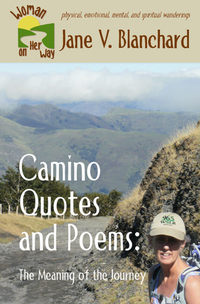
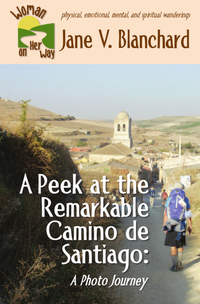
My husband, who had completed the Appalachian Trail, and I attended a meeting of the local hiking club. One of the speakers enthusiastically described his wondrous pilgrimage to Santiago. Thinking this would be an excellent way to celebrate my 60th birthday, I began planning and training for the arduous trip.
Women of the Way blends your personal journey with stories from other female pilgrims. What was the most surprising insight you learned from those women?I learned so many things from these women as I witnessed kindness, integrity, joy, and saw how women from all nations bonded together to achieve a goal--reaching Santiago. This sisterhood or camaraderie was unexpected.
How did walking 500 miles on the Camino change your outlook on life, purpose, and aging?Walking allows one to experience life at a slower pace and provides time for inner reflection, but it was only a small part of my Camino experience. Seeing new places, speaking with people from many countries, learning to trust myself, and reconnecting with my husband were more integral to changing my outlook on life, purpose, and aging. I learned the importance of living in the moment, the value of having people in my life, and that, with determination, one can achieve one's goals, regardless of age. Fifteen years later, I continue to live in the moment, connect with people, and walk six or more miles daily with occasional mountain climbs or other long trails. The wonder of experiencing the world has not left me.
You’ve hiked internationally and across the United States. What makes the Camino experience unique compared to other trails?The Camino attracts thousands of people from around the world for its religious, cultural, and physical experiences. The majority of hikers (pilgrims) are there to experience the Camino, not just to complete another trail. As a result, camaraderie develops, people help each other, and everyone is kind and joyful. This pleasure of being with others is unique to the Camino.
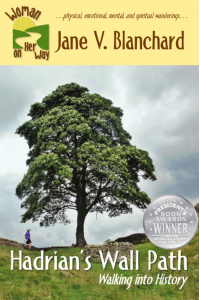
Hadrian’s Wall Path became more meaningful than you initially expected. Can you share what emotional or historical discoveries made that journey special?The many placards and interpretation boards along Hadrian's Wall Path help visualize the wall's initial construction and describe Roman life 1900 years ago. The cold, the terrain, and the mizzle (misty rain) helped transport me back in time and let me experience life as the Roman soldiers did.
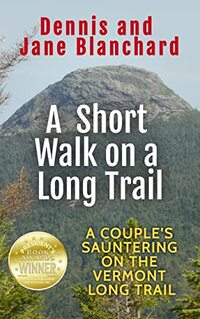
What were some of the biggest challenges you and your husband faced while hiking the Vermont Long Trail during such extreme weather conditions?The cold, the rain, the terrain, and my recently developed allergy to New England grass made hiking the Vermont Long Trail challenging. Without humor, the ability to lean on each other, and a shared desire to experience both the good and bad, hiking the VLT would have been impossible.
Many readers say your books inspire them to take on adventures they once thought impossible. What advice do you have for someone who feels they are “too old,” “too busy,” or “not athletic enough” to start?If one's health is good, age should not be a deterrent to taking on adventures. At seventy-three years old, we walked the Southwest Coast Path in England. It was difficult, and we had to adjust the distance walked each day because of our age. Even so, we met other older hikers who seemed to have no difficulty walking the path. Because we lived in Florida, we had no hills to practice on. As we progressed, we increased our daily distance. For those who feel they are not athletic enough to start, I recommend starting slowly. As the body adjusts, add more distance or challenges. For those who are too busy to go on adventures, I also recommend starting slowly. Sneak in a few hours to experience something locally, and continue so until the desire to experience new adventures changes your “busy” priorities. I had to wait until I was 60 years old to go on a long adventure; before then, I scheduled a day here, a weekend there. Adventure has always been an integral part of my life.
While co-authoring “A Short Walk on a Long Trail,” how did writing together affect your relationship, and what did you learn about each other?Our writing styles are very different. Because of this, I wrote the first part of the book. Dennis, who completed the VLT, finished the story.
You’ve climbed twenty of the forty 4,000-foot New England mountains. Do you have a favorite peak or hike there, and why?Turning 30 was difficult for me, and I did not want to share that experience or celebrate the decade. Instead, I climbed four mountains with my husband: Flume, Liberty, Lincoln, and Lafayette, on a strenuous 14-mile loop on the Franconia Ridge.
What is your process for recording and transforming a hiking experience into a compelling travel memoir?Keeping a journal, my daily blog, and the photos we took were instrumental in writing my travel memoir.
You have won multiple literary awards. How has that recognition influenced your writing journey?My main purpose in writing was to share my experiences with readers, not to win awards. Receiving the awards was personally satisfying and may have helped readers choose my books over others.
What role does community—both on the trail and among readers—play in your work?It was the community of pilgrims that convinced me to write my first book. It was the readers who reviewed my books, came to lectures and book fairs, and sought to speak with me that prodded me to continue writing. Without this feedback, I don't think I would have been as good a writer or would have continued writing.
You’ve traveled to sixteen countries by foot and bicycle. Which destination still holds a special place in your heart, and what place is next on your wishlist?My first long-distance hike remains my favorite and is very dear to me. Now, in 2026, my husband and I plan to visit France, Spain, Italy, Greece, Montenegro, Croatia, and Slovenia. This time we are taking cruise ships, trains, buses, and planes to travel between countries.
After seven books and countless miles, what future projects or adventures are you currently planning or dreaming about?There are many places in the US that I still want to visit. I would like to tour the National Parks, the Hawaiian Islands, and much more.
You’ve been using our services for 7-8 years now. How has your publishing process improved or changed during this time, and what advice would you give new authors just starting their journey with us?AllAuthor's Tweet Scheduler has been my best tool for sales, especially in the past couple of years. As an author starting out, AllAuthor's tools are most helpful for book promotion.




Jane V. Blanchard Interview Published on: 25, May 2017
 What has your life been like up till this point?
I have had an exciting life. After college, I lived in Madrid, Spain, for a year working as a tour guide. I married in 1974 and then moved to Winchendon, Massachusetts. There my husband and I lived in a tent until December while we hand built a log cabin. Several years later, we purchased a five-acre "gentleman's" farm and learned to live off the land. Those first five years of our marriage proved that we could overcome hardships and that we could depend on each other. Since retiring in 2010, we have hiked and biked throughout Europe. Some of the more famous trails that we walked include The Camino de Santiago in Spain; The Camino Portugués in Portugal; and Hadrian's Wall Path, The Ridgeway, and parts of the South West Coast Path in England. In my mind, there is no better way to see a country and learn about its people than on foot.
Does writing energize or exhaust you?Writing helps me relive my adventures. It is a delight for me to write about what I have seen and done and I enthusiastically enjoy sharing theses experiences with my readers. While traveling, it takes effort to blog after a long's days hike, but I never begrudge the time I put into my writing.
How has your traveling experiences been an inspiration for your books?I was so inspired by the women I met on the Camino de Santiago that I wrote my first book about them. Without my travels, there would be no books.
Do you view writing as a kind of spiritual practice?Though writing is calming and centering, I do not see it as a kind of spiritual practice.
Do you plan your stories or go with the flow?My books are about my journeys so I use the trip as my outline. However, I do plan the content I use to augment the story and the underlying themes.
Which book has had the most impact on you?Writing my first book, Women of the Way: Embracing the Camino, started me on the path of "authorpreneurship" and, therefore, had the greatest impact on me. It taught me not only about writing but also about all that being an author encompasses: editing, publishing, marketing, promotion, web page design, etc. The learning curve is immense!
How do you break through writer's block?I don't have trouble writing. The hard part is the long and tedious process of editing. What works best for me is setting the book aside for several months, a process my writer friend calls "baking." Once I revisit the book, my enthusiasm for completing it returns.
Do you have a "reader" in mind while writing?Yes. I have two ideal readers. The first is someone who loves adventures but cannot have them. The second is a seasoned hiker who is looking for the next adventure. I picture them sitting across the table for me as I relate my story and I try to answer their questions as I go along.
What is the best review you have received?It is difficult for me to pick one favorite review. The ones that I like best are from readers who tell me how the book has affected them.
What is the most difficult part of the writing process?Finding my voice. I started my first book several times before becoming somewhat comfortable with my style. In each subsequent book, my voice is more pronounced. I find it scary to let people see the real me in print and I have to fight to overcome that fear.
If you could tell your younger writer self anything, what would it be?I would tell my younger writer self to not publish a book before having it professionally edited and the cover professionally designed. Rushing the release can be very embarrassing.
What helps you grow as an author?Reading books by different authors and in different genres helps me grow as a writer. It not only helps me improve my craft but it also helps me see the world and how I relate to it in different ways.
How will AllAuthor help you in your book promotion? Would you recommend this to your friends?AllAuthor has a beautiful website that nicely displays my books. They make it easy to create an author's profile and to schedule tweets. I am surprised by how much promoting they do. They have several service plans and a Cover of the Month contest for books published within that month. If you haven't checked it out yet, do so.
Do you have a message for your readers?There is no better way to thank an author than to write an honest review. It does not have to be lengthy; say what you liked or didn't about the book and why.
What message would you like to convey to aspiring writers?Don't stop writing and don't forget that there is more to being an author than writing.