Mae Interview Published on: 28, Nov 2025
 What first drew you to the post–Civil War period as the backdrop for your mystery series — and what about summer 1865 felt like the right moment to begin Katie Harris’s story?
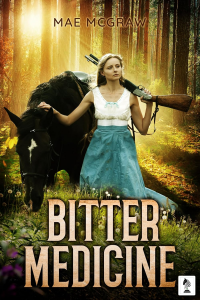
It was a time of great change for women. During this war, like all wars, women took on many tasks previously done by men. Katie Harris is smart and independent. The idea of working as a doctor appealed to her personality. She also wanted women to have a choice of a male or female doctor. By nursing at a Union hospital, she found working in the field of medicine satisfying. So much was learned about healing and medicine during that time, and Katie Harris wanted to be a part of that.
As a retired high school teacher, did your experience in the classroom shape the way you structure suspense, character revelations, or historical detail in your novels?I taught creative writing. As with all teachers, I learned much while teaching my students. The textbooks I used to teach that class shaped my knowledge of what makes a good story. I also taught historical literature and found it to be a fascinating means of understanding the thinking and culture of different periods of time. It gave me and my students a much better understanding of a historical period, which is so much more than presidents, events, and dates.
Why did you choose a female protagonist in this specific era — and what freedoms and limitations of 1865 womanhood do you most enjoy exploring through Katie Harris?Women had limited rights and opportunities in the nineteenth century. A few women stepped outside those limitations, such as Dr. Mary Walker, a Civil War surgeon, Florence Nightengale, a nurse and a Union Army hospital advisor, and Clara Barton, who started the Red Cross due to her work during the Civil War. These women inspired Katie Harris to do more with her life.
Medina, Ohio becomes “Liberty” in your book — what liberties did you take with the real history versus what you insisted on keeping absolutely accurate?I used much of Medina’s history because Medina has a rich history, but I wanted the freedom to change people and places to better tell my story.
Was there a specific true historical incident or document that sparked the core mystery in Bitter Medicine?I was inspired by visit to Gettysburg. I felt a connection with the soldiers and townspeople who experienced that battle. It was a turning point in the war and a turning point for me. I wanted to learn more about the people and culture of the period.
How does being a docent for the Medina County Historical Society affect the depth and direction of your research — does your fiction ever loop back and influence your museum work?I enjoy all history, especially when I learned how Medina, Ohio, grew to be the city it is today. I admit I am drawn more to the history of our Medina during the Civil War and tend to take a keener interest in the period’s household products, events, and the people who lived during that period.
What’s one surprising or unsettling medical practice from the 1860s you encountered in your research that readers might have trouble believing is real?The medical treatment for women was substandard, due to the doctors’ Victorian attitude to women’s health when they’re pregnant or suffering from any feminine issue. One of the reasons Katie wanted to give women a choice. I also am exploring the use of laudanum (a combination of opium and alcohol) to ease many women and children’s ailments. The addiction to opium was also a problem for soldiers. I talk more about opium as dangerous medicine in my next book in the series, which I’m working on now.
How do you balance the responsibility of historical accuracy with the demands of mystery pacing and reader entertainment?I use the Internet a lot. AI is great for checking on the use of a word during the Civil War period or a household and medical practice. I’m sure I’ve probably made the occasional anachronistic mistake, but I sure do my best to be accurate. When I read an historical fiction, I want historical accuracy in its telling. I strive to always do that in my writing.
Do you plot your mysteries from the ending backward, or do the historical facts lead you forward to a crime that demands solving?I have a basic outline before I begin my draft, but I’m more of a discovery writer. I’ll go down one rabbit hole or another as I research and that may lead me in another direction. I know the murderer at the onset.
You’ve planned a six-book arc — do you already know where Katie Harris ends up at the end of book six?Yes, she will be a successful doctor and married to a man who appreciates and loves her intelligence and spunk.
What, in your view, is the most challenging part of writing historical mystery — the “historical” or the “mystery”?All the research takes time. I love to research history and can spend too much time reading about things I’ll never use, but enjoy learning.
As president of the Northeast Ohio chapter of Sisters in Crime, what are the most common challenges you see newer mystery writers struggle with today?It is so difficult to have a book published. A new writer must be tenacious and willing to continue to improve their writing with workshops, networking, and editing. Sometimes it’s just luck and having the right story at the right time.
Has being part of organizations like Sisters in Crime and Great Lakes Fiction Writers changed your writing in any measurable way?Yes, the networking is so important to a writer. We learn so much from each other during presentations, book talks, and just socializing.
What do you most hope today’s readers — especially younger ones — understand differently about women’s roles after reading your work set in 1865?How far we’ve come. Young women and men need to understand the sacrifices and bravery that makes our world a better place today.
When did you join AllAuthor? What has your experience been like?Great! I recommend it to other authors. Marketing is time consuming (most writers would prefer to be writing) and AllAuthor makes that part of a writer’s job easier.