P G Badzey Interview Published on: 27, Nov 2025
 You had a remarkable career as an aerospace engineer. How did your experiences with projects like the International Space Station and James Webb Space Telescope influence your storytelling?
I learned several things from my career that influenced me in one way or another. First, my experiences gave me a sense of wonder about the universe and an appreciation for cause and effect (something integral to a good story). My primary genres, for now, are fantasy and science fiction, which are steeped in a sense of wonder. Second, I gained a sense of realism and I thought long and hard about how magic would affect (and be affected by) the physics and chemistry of the real world. This has played out in the Grey Riders series, where one of my goals was to describe a magic system based on science. Lastly, through my relationships with my colleagues and friends, I found many fascinating characters (and character traits) and learned a lot about the value of friendship, loyalty and sacrifice.
Growing up as the son of an English teacher, how did your early exposure to books and writing shape your creative journey?Some of my earliest memories are of reading; my mother actually has a picture of me at age 5 reading a picture book to prove to my dad that I could actually sit still! Kidding aside, I learned to appreciate the skills of the authors of classic literature. I was also encouraged to think about what I read and to discuss it - as well as to not be afraid of criticism if it was constructive and respectful. I learned the art of crafting a story with meaning and purpose by studying those classic works and hearing about them at home.
Do you remember the very first story you wrote back in high school, and how has your writing evolved since then?My goodness. That's going back a ways! I think the first memorable story in high school was for an assignment to write short fiction in the style of Edgar Allen Poe. I struggled with it, but by reading several of his works in class, I think I got the hang of it. To my surprise, the teacher gave me high marks and said that I had grasped the essence of Poe's style. That was a revelation that maybe I had some skill. Since then, of course, I have read and enjoyed many authors in various genres from Westerns to Sci-Fi to Romance to Fantasy and absorbed a little of each author's style, taking something I liked from each and developing it into something of my own.
What inspired you to create the Grey Riders epic fantasy series?Ironically enough, it was my friendships with other young engineers on the Space Station program. We would meet outside of work for sports and social events and eventually got around to playing Dungeons and Dragons, of all things, once a week. As the game referee, I had to craft the world and story environment for the game and this became the world of Damora. The personalities my friends adopted, the way they played, and the true friendships they gained through all of it were inspiring. Gradually, the game campaign became an epic tale in the "lives" of the characters. The story of the characters, with their faults and friendships and hardships and loyalty and love, was so compelling, I felt I should share it with the world. I based the heroes in the Grey Riders series on those real-life people and the characters they imagined.
How do you balance the technical precision of engineering with the imaginative freedom of fantasy writing?Technical precision demands that all reasonable angles of a question are thought out and addressed. Fantasy writing involves creating a world that doesn't exist in such a way that it is believable so that the audience is engaged. Because I chose to do a science-based epic fantasy in the Grey Riders, I drew on both skillsets, making sure that when I had a fantastical/magical aspect, I had thought it through from a logical and scientific standpoint. It wasn't always easy and I had to do additional research (of both kinds!) but I think it worked out.
For readers new to the Grey Riders, how would you describe the heart of the series in a few sentences?Doing the right thing isn't always easy, especially when the odds are daunting. The Grey Riders don't aspire to be heroes. They become heroes by making the right choices when their people and their world depend on them. Their love, selflessness, loyalty, courage and faith are their most powerful tools against evil.
What do you enjoy most about worldbuilding in epic fantasy, and what’s been the biggest challenge?That's another loaded question. I'd have to say that the best part of worldbuilding is creating a history of an imaginary place and setting it in an environment in which the characters can come alive and seem real. The biggest challenge is consistency, making sure that things make sense, in a similar manner that things in the real world make sense. While it's okay to leave a sense of mystery and the unknown, those things that are definitely known have to work together, and that requires a lot of checking, rechecking and background work. It's all worth it in the end.
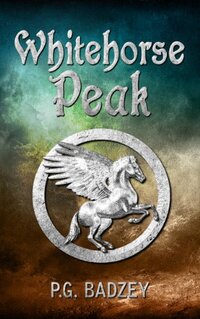
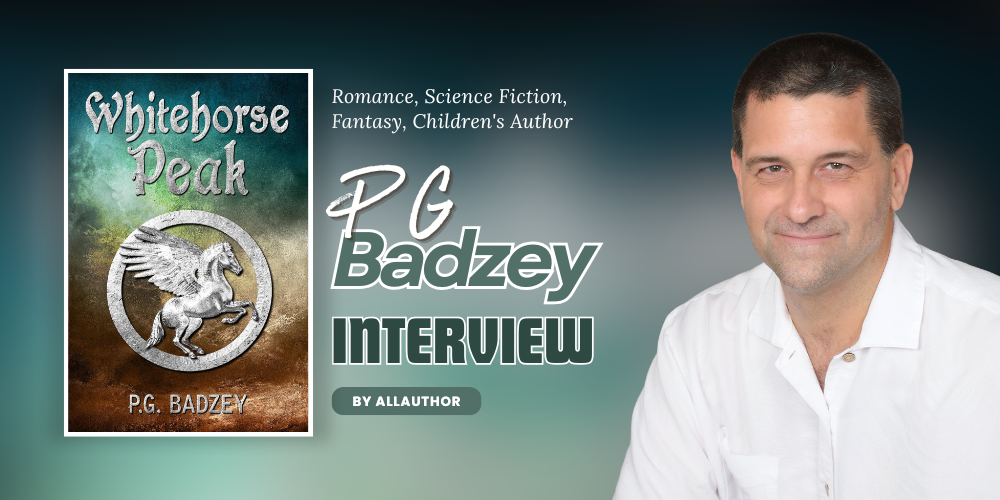
Are there any characters in Grey Riders who hold a special personal connection to you?Well, I'm very fond of them all, but I really have a soft spot for Brandawyn Alenar, the older of the orphaned Alenar sisters who the other characters meet early in Book 1 (Whitehorse Peak). She is trying so hard to be the responsible older sister and to do the right thing. When the forces of evil deal her a terrible blow, she fights through all the hardship to emerge victorious in the end. Her faith and love sustain her. I'm also partial to Eric Indidarc's half-sister, Saren, who has had to overcome significant obstacles of her own including a Daemonic bloodline, and Gorlak, the reformed Goblin warrior who turns from evil to become a hero.
As a member of Realm Makers and the Orange County Writers Guild, how has community influenced your growth as an author?Community support is critical. Honest input is like gold to an author and groups like Realms and the OCWG provide that network of like-minded people who can encourage and support while also providing constructive criticism. I wouldn't be half the writer I am today without them, and they continue to help me improve. I thank God for them.
You’ve taught classes on fantasy fiction writing—what’s the number one piece of advice you give aspiring writers?As far as fantasy, I advise all writers to do the background development of their world. It's a lot of work that often doesn't show up in the actual books, but it's critical to maintaining the consistency I mentioned earlier. It's well known that JRR Tolkien had reams of paper describing Middle Earth that never made it into any novel, but he needed to lay it all out so that it was consistent in his mind when he did put pen to paper. Inconsistency is something readers catch quickly, and I believe fantasy writers do themselves a favor when they ensure that everything meshes well.
You’ve mentioned plans to branch out into children’s books, action/adventure, romance, and historical fiction. Which genre are you most excited to tackle next, and why?Getting small children into reading is a great step in their future development and something I want to be part of, so I am working on a children's picture book (Prince Michael and the Unicorn). It's the first in a series based on bedtime stories I used to tell my kids when they were small. I'm excited to try it a new genre and a new craft. After that, I think romance, since it is essentially an optimistic genre and I think our society needs a dose of optimism these days.
How do you approach shifting between such different genres while keeping your own voice as an author?I try to keep to my principles. I portray evil as evil and good as good while holding out the possibility that people can change their lives for the better. I also try to maintain a sense of faith, a conviction that this life isn't the only thing that matters and that there are some principles that are eternal and transcendent, no matter how trends may change. I hope to keep those threads running through all my novels.
Who are some of your favorite authors or biggest literary influences?As far as my literary influences, they are many and I've probably forgotten a lot of them. A "short" list would include names like Shakespeare, Poe, Scott, Fenimore Cooper, Aquinas, Bronte, Hawthorne, Austen, Terry Brooks, Tolstoy, Tolkien and Lewis. I also read a lot of Louis L'Amour Westerns, a lot of Sherlock Holmes and Agatha Cristie mysteries, a bunch of Hardy Boys and Nancy Drew as a kid, and later, authors Stephen Lawhead, C. Dale Brittain, Christopher Stasheff and Katherine Kurtz. These last four showed me how to integrate Christianity into a fantasy setting.
Looking ahead, what do you hope readers ultimately take away from your stories—whether fantasy, romance, or historical fiction?First of all, I hope they enjoy the journey! Other than that, I hope they take away a sense that doing the right thing, no matter how hard, is always the way to what we truly need rather than just something we want. I also hope that they learn to have faith in Someone who will guide them through life's difficulties.
How were you introduced to AllAuthor, and would you say that this website has been helpful?I actually found AllAuthor through a web search. I researched it and many reviewers spoke highly of the service. It has been helpful in providing me an outlet for getting my name out and in providing methods and opportunities in reaching readers. It's become a fun and helpful resource.