PM Mahoney Interview Published on: 02, Jun 2026
 What inspired you to start writing romantic comedies and mysteries, and how do you balance humor with suspense?
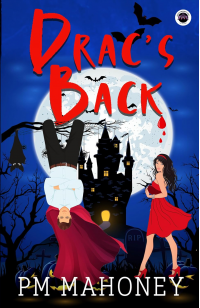
I think we need more laughter and humour in our lives than seeing someone shot or blown up, so I’m automatically drawn to writing things that I find funny or interesting. Having grown up loving Monty Python films, I also enjoy taking a ridiculous perspective on some things. For example: what if Dracula had age‑related diseases such as osteoarthritis, poor eyesight, prostate problems, or one of the many things that plague us as we get older?
You write under the pen name PM Mahoney—how did that come about, and has it influenced your author identity?I did initially plan to use my name, but as fate would have it, I found that another author on Amazon had already published real estate investing books using the name Paul Mahoney, so, not wanting to confuse the situation for readers or publishers, I decided it was safer to use my initials along with my surname for my books.
Your storytelling spans both novels and screenplays—how does your writing process differ between the two formats?Screenplays are what I would consider straight to the point and are usually approximately 20,000–22,000 words for a typical 90‑minute movie. In screenplays, a lot of inner monologues are often cut, whereas in a novel you have more opportunity to explore what the character is thinking. “Will I do this, or will I do that?” You can spend pages on it in a novel, whereas in a screenplay it might be cut down to the character looking one direction, then the other, before making up their mind.
Also, in a novel you aren’t constrained by cost, so you can include things that are expensive to shoot such as pets, young children, water scenes, stunts, large crowds at festivals, etc. It doesn’t cost anything to put this on the page in a book, but to put it on the screen it does.
What was it like seeing your screenplay come to life in Ruby’s Choice (2022), especially with Jane Seymour in the lead?It was a fantastic experience. Jane Seymour is not only a brilliant actress, has led a fascinating life and is also a very intelligent person. I have a lot of respect for her and would love to work with her again.
Did working on Ruby’s Choice change the way you approach storytelling, particularly around sensitive topics like dementia?Yes, it did. It made me more aware of how some areas are under‑represented on screen. It seems to be much easier to get a film with violence, shootings, and explosions made because that is seen as more “exciting”, whereas trying to show a story about a real topic such as dementia that will affect a large percentage of the population was seen as too “boring” unless you could give it some sort of twist.
As a Global Ambassador for the Dementia Foundation’s Spark of Life program, how do you use storytelling to raise awareness and inspire change?The Spark of Life program focuses on connection, emotion, and being there for someone, which fits naturally with how I think about stories. I try to make the abstract tangible: instead of talking about “behaviours”, I tell stories about individuals—their histories, their loves, what makes them the way they are. In talks and writing, I try to shift the conversation from “managing symptoms” to “understanding the person behind them”. When people see themselves or someone they love reflected in a story, they’re more open to changing how they think and care.
Your work has earned international recognition—what did winning awards like the Euroscript Award and Pasadena International Film Festival mean to you?I’m certainly not a big name in screenwriting, but I think winning awards helped to open a few doors for me and enabled me to get some pitches into the hands of readers or producers that I might not have reached otherwise. They also gave me some confidence that I could compete with other screenwriters who had received scholarships or degrees from prestigious film schools. Whereas, I did what we called vegie English classes for the last two years of high school because I was definitely a slacker.
When crafting a romantic comedy, what elements do you think are essential to make readers truly connect with the characters?I am primarily trying to find a character that I find interesting or funny. As a reader myself, I am drawn to characters that are intriguing, funny, or somewhat unpredictable. If we can guess what will happen in a straight line, then any novel or screenplay can become boring. I like to give my characters an unusual backstory, which helps to create a unique outlook on life and influences how they go about solving their current predicament. That can sometimes make their decision making different resulting in either more problems or perhaps a unique solution.
Mystery writing often relies on twists—how do you ensure your plots remain unpredictable yet satisfying?It can be very difficult or time consuming. I like to spend a lot of time walking, or thinking about my books and the twists within them to make sure that they hopefully aren’t predictable, yet still make sense and feel satisfying. To do that, you have to set up some clues beforehand, as well as some options that seem totally logical, but sometimes turn out to be red herrings.
You’ve had several screenplays optioned—what’s the most exciting or surprising moment you’ve experienced in your screenwriting journey?I think the most exciting thing is believing what your film could become—having a list in your head of actors and actresses, who will play each role, what the sets and costumes will look like, where it will be shot, etc. Of course, many times none of that will come to fruition, but it’s certainly nice to dream. I suppose it’s somewhat like imagining what it would be like with win a big Lotto prize or something.
Your quick actions in saving an elderly woman earned recognition from the Premier of Queensland—did that experience influence your perspective on life or storytelling?When the Premier’s recognition came, I felt proud yet oddly embarrassed, because it highlighted something I’d hope most people would do. But it did reinforce themes I sometimes include in my writing: the fragility of life, the importance of paying attention, and the idea that ordinary people can be quietly heroic. Every person we talk to or meet probably has a wealth of information and backstory that could be used as the basis for a character in a book or movie.
How do you stay focused and productive as a writer, especially when, as you say, “shiny things” tend to distract you?I only discovered in the past year or two that I have ADHD, so I am often thinking of new storylines and story worlds on a frequent—sometimes daily—basis. My biggest issue is usually finishing what I’ve started before starting another “shiny thing”, such as a new book, series, or world. I try to do lists of what I am going to achieve on my writing days or during the week. Sometimes I stick to them, other times, I don’t, so I certainly haven’t mastered it.
How important has your partner Solange been in your creative journey, and does she influence your work in any way?If it weren’t for Solange and her support, I wouldn’t have accomplished much in the way of writing. She encourages me to be not only a better writer but also a better person. I am very blessed to have her in my life.
Looking ahead, what kinds of stories or projects are you most excited to explore next—more books, films, or something entirely new?If the opportunity to get another movie made presents itself, I will definitely take it. But to be honest, I am hoping to one day make a full-time income from writing books.
With books I feel I am more in control than with a screenplay. With a book I decide the plot, the ending, what the characters can say/can’t say, everything. I don’t have to cut scenes because someone thinks they are too expensive to shoot, or they don’t like a particular joke. I also don’t have to cut inner monologue. I’m also more in control of how the work will be marketed.
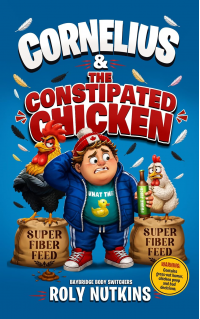
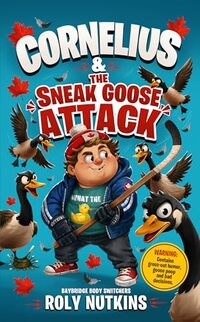
I plan to write more cozy mysteries, rom‑coms, and dark comedies. I’m very excited to write and release some middle‑grade books in the near future under a different pen name for readers who enjoy books such as Diary of a Wimpy Kid.
Would you recommend AllAuthor to fellow authors, and if so, what services or tools on the platform have you found most useful in growing your business?It took me a while before I joined, but I would definitely recommend AllAuthor to fellow authors. Social media and IT skills aren’t my strong point, so I think the mock‑up banners and GIFs are great value. I also enjoy the book cover competitions and voting for other books that have wonderful covers.