Tracy L Markley Interview Published on: 05, May 2026
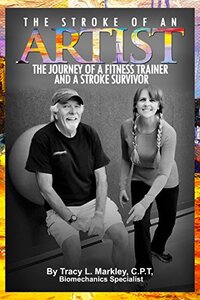
 Your first book, The Stroke of an Artist, is deeply personal—what inspired you to share your stroke recovery journey with the world?
Gary the stroke survivor in the book who say to me “You know stuff others don’t know don’t you?” He was aware of my deep education and experience. He would say often, “We need to share my story to help others.” “If my story just helps one person, then that one person is worth it.” He stopped a few times throughout our time together in session and say, “Don’t ever have a stroke. They suck!”
One time when he said this to me. I said to him “We need to write a book and call it Dear Stroke You Suck. And that was the name of the book planned up until right before I was going to publish it and I changed it to The Stroke of an Artist because he was a professional artist. He had to learn to paint again. Once he was able to paint again he did not like his paintings although others still did. I asked him why. He said, “When I go to paint a long thin line, it ends up being a thick short line.” That bothered him. And at that moment I told him The Stroke of an Artist as the book name.
Then in 2020 and everything was shut down. One day I woke up and thought about bringing the book out in the origan name. So, the story is in two titles. The Stroke of an Artist and Dear Stroke You Suck. Exact book/story but in two titles and in both book the book names are explained. Dear Stroke You Suck, it is in larger print and larger illustrations. And all my book since then I have done the same.
How did your experience as a stroke survivor reshape your perspective on fitness and health?I am not a stroke survivor I just work with them.
What were some of the biggest challenges you faced—both physically and emotionally—during your recovery?I am not a stroke survivor. Just have the passion, experience, and knowledge to help them the best I know how to.
You’ve written fifteen books and received 33 awards—what do you think sets your work apart in the health and fitness space?Throughout my many years in the fitness industry, I never followed trends or fads. I worked from my heart to deeply educate myself and clients. I began my first fitness studio renting a room at a chiropractor’s office. After couple years I moved into an eleven-story medical building and had a big suite on the 10th floor. It had a great view. I did not have to advertise; I was all word of mouth. I know some other fitness professionals really study hard and gain great knowledge, but I find that they are a smaller group of professionals. Many just move on into their work with their basic certification, which is often a one day or two-day program. That is not nearly enough to put a body back together after a stroke. And I feel strongly that a professional with limited knowledge limits a stroke survivor’s recovery. In many cases the stroke survivor will think they are limited due to their brain. But many cases they were limited because the professional was limited and the stroke survivor never even knows. That is how all my stroke recovery books have inspired me. I wanted to educate caregivers and survivors of this and teach them all I know. Knowledge is Power.
It saddened me greatly to know that some may never do thing again, such as driving or work, and it can be because of a professional limitation, not their brain. I find that unfair and unkind.
How do you balance writing with your active career in fitness education and training?It has been easy. I just do it. Once I have a book idea in my head, I just do it and it becomes a priority in every spare moment, until it is done.
What message or impact do you hope readers take away from your stroke recovery books?One: Knowledge is Power. How I explained the lack of experience and advanced knowledge of professionals may be limiting them. Two: for professionals and survivors (if they can) learn muscles and movements. For example, so many are taught to just do squats to help them get stable for walking, while there are specific muscles in the spine, core, and legs that stabilize the hips, and leg bones. They all need to have specific attention and exercises to bring the body back together.
You’ve been in the fitness industry since 1994—how have you seen the industry evolve over the years?When I began we did not have all the franchises as they do now. We did not have the internet. Then when we did people began having websites. But now with social media as it is people want quick answers and fixes even more. Anyone can do it; no one has to show their credentials or even have any and that bothers me. People can buy fake followers and look like they are super professional with many followers, but it’s not real and it deceives people.
Also, most certifications now don’t require a physical testing. I was an Examiner for AFAA years ago. If someone was being tested to get their professional certification, they had to pass a pretty big written test and a practical test. The practical test gave instructions on how to perform exercises correctly and for specific parts of the body. The examiners like me would watch and they could not take instructions or do proper form they did not pass. Now there is now practical exam. This means people are getting certified with no proof they can even perform an exercise properly as well as know what exercise works and what muscles. I was so excited about this job. But it faded away shortly after I got it. But I was honored and proud to have had it.
As a specialist in stroke recovery and senior fitness, what are some common misconceptions people have about rehabilitation and aging?Yes, many treat each the same. Although we do have the same bones and muscles. That won’t change. Often there are “cookie cutter” type programs or sheets of paper given to clients by doctors or therapist etc.. This does not address the client personally for the own needs. This can limit them. The misconceptions I see in this is that one thing works for everyone. And that is just not true. Many muscles and movements play into everyday life and to be physical stable, balanced, and safe walking.
What advice would you give to fitness professionals who want to work with stroke survivors or older adults?One, don’t fake it. I tell them in my courses not to pretend you know something to gain client. Don’t put titles on their business cards and websites that they did not earn in program or school. And mainly, learn your muscles. Know the muscles on the body. Know where they attach and what movements they make. The clients don’t know that one personal trainer may have taken just a one day or an online quick personal training program and another has years of multiple education sources and years of studies. A certified personal trainer can mean the same to a client, but in reality there are extreme differences between them all. Limited knowledge limits the clients’ progress and recovery.
Being named the 2021 IDEA World Personal Trainer of the Year is a huge honor—what did that recognition mean to you personally and professionally?I was honored and so excited. It felt like “Wow!” “I have made differences in people’s lives and the industry sees it.” That is powerful and hard to put the sense of it in me to words.
How did it feel to be recognized by the National Fitness Hall of Fame as one of America’s Top Fitness Educators in 2024?Super honored and proud. With both this and my other awards, it feels surreal and I have to remind myself somethings that I really have made a difference and my work really matters.
What inspired you to create the Advanced Education CEC Stroke Recovery Specialist Course and Functional Anatomy 101 and Beyond Course?The Stroke Recovery was to help educate the industry. After the Stroke of an Artist came out I got calls from fitness professionals from all over the world asking for my advice from clients. Along with what Gary from that book said often. “You Know Stuff others don’t know, don’t you?” The few trainers around where I trained him did not have the kind of knowledge I had and he would look around the gym and say, “Oh my God, I don’t think that client should be doing that with that trainer.” He knew. I got calls from survivors and caregivers asking if I knew anyone in their town/state who knows what I know.
My education and knowledge are from years of deep studies of many advanced programs, and my work is from pieces of all my education and experience made into what I am and know. I could not even direct them to one source of studies. I had to make my own. And the Anatomy course was to teach muscles and where they attach. Most certifications do not go into deep muscle education. Which leaves them with limited knowledge limiting clients. That is why I made that one.
How important is continued education in the fitness industry, especially when working with specialized populations?It is extremely important. And all I shared in other answers shows why I feel that way.
Looking ahead, what are your goals for the future—both as an author and as a leader in the health and fitness industry?I recently, March 2026, wrote a chapter in the new book written by Elaine Lalanne. She is Jack Lalanne’s wife. She turned 100 years old on March 19, 2026, and published a book called Her Legacy. A Tribute to Elaine Lalanne’s Impact on Fitness, Wellness and Empowerment. She wrote a large portion of it and then other others, such as me, wrote chapters in the book too. Right now, I am watching this book begin to be shared on main new streams. I have more books in me, but I don’t have my next on planned yet.
The last couple months I have worked hard on getting my YouTube channel @tracylmarkleyfitnessauthor videos organized and getting monetized. I hit that goal in February. I have a large library of videos there and most of them are on stroke recovery.
Also, this month I will be speaking at the Orthopedic Practitioner Spring Summer Summit. For Practitioners Who Refuse to Be Average.
I am excited for that.
And as for long term, my thoughts have been learning the new things. With the AI, social medias and changes that we have now compared to even just a few years ago. I have been reorganizing my work and embowing what I can with the online access and business is just different now then year ago.
Would you recommend AllAuthor to fellow authors, and if so, what services or tools on the platform have you found most useful in growing your business?Yes I would. I really like the magic tools.