Vu M. Do Interview Published on: 02, Jul 2026
 Your writing often explores paradox and duality. What first drew you to examining life through contrasts like light and shadow?
I think I was first drawn to contrasts because life never seemed to explain itself in a straight line. The kindest people do not always have the easiest roads, and the most dishonest people do not always fall. As this unfolded in real life, I began to realize that light and shadow are not separate worlds. They are often part of the same mystery.
For me, paradox became a doorway, allowing me to look beyond the surface of fairness and ask deeper questions. Why does pain sometimes create wisdom? Why does loss sometimes lead to awakening? Why do blessings often arrive through situations we would never choose? These contrasts forced me to see that life is not always working against us simply because we do not understand it.
How has your daily meditation practice influenced the themes and tone of your books?My daily meditation practice has taught me to listen more deeply and breathe slowly. It has shaped the calm, reflective tone of my books and helped me approach difficult questions with patience instead of judgment.
Meditation also reminds me that life is not only what happens on the surface. Beneath pain, delay, injustice, and confusion, there may be a deeper lesson unfolding. That quiet awareness influences many of my themes: balance, surrender, hidden meaning, and the spiritual growth that can come from suffering.
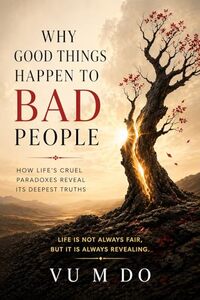
In “Why Good Things Happen to Bad People?”, you challenge the idea of fairness—what inspired you to confront this difficult question?Watching life refuse to follow the rules we expect. Good people suffer. Cruel people succeed. Honest effort does not always bring reward, and wrongdoing does not always bring immediate consequences.
I wrote Why Good Things Happen to Bad People because I wanted to look at that question honestly, without easy answers. I wanted to explore whether fairness is only what we see on the surface, or whether life may be teaching something deeper beneath the contradiction.
You suggest suffering can lead to awakening. Was there a personal experience that shaped this perspective?Yes, but not from a single moment. It came from many quiet experiences in which pain, disappointment, or delay later revealed a deeper purpose.
At the time, suffering often felt unfair and confusing. But looking back, some of those difficult seasons taught me patience, humility, and a different way of seeing life. That experience shaped my belief that suffering is not always punishment. Sometimes it becomes the doorway to awakening.
How do you define the difference between “growth through pain” and unnecessary suffering?Growth through pain as the suffering that teaches, awakens, or transforms us. It may still hurt, but it eventually gives us wisdom, strength, compassion, or clarity.
Unnecessary suffering is the pain we continue to carry when the lesson has already been shown. It often comes from resisting reality or staying attached to what is no longer meant for us.
Pain may enter life without our permission, but growth begins when we ask what it is trying to reveal.
Your work blends philosophy, spirituality, and psychology. How do you balance these elements without overwhelming the reader?The writing must be grounded in human experience first. Philosophy gives the question depth, spirituality gives it meaning, and psychology helps make it practical.
The balance comes from using simple language and real-life reflection rather than heavy theory. I do not want to lecture the reader. I want them to feel like they are walking through the question with me, slowly discovering a calmer way to understand life.
In “When Will God Answer?”, you question traditional religious structures. What motivated you to explore this topic?I was motivated by the feeling that many people sincerely search for God, but sometimes feel trapped between faith and religious expectations. They pray, wait, suffer, and wonder why the answer has not come.
In When Will God Answer? I wanted to explore that struggle honestly. My goal is to explain that God is much greater than the systems, rules, and structures people have built around Him. God does not ask to be worshiped.
The idea that blessings already exist within us is central to your message. How can readers begin to recognize this in their daily lives?Readers can begin by slowing down enough to notice what is already present: breath, life, love, choice, and the ability to begin again. We often look for blessings outside ourselves, yet many of them are already quietly living within us.
Daily gratitude, meditation, forgiveness, and simple awareness can reveal this. When we stop measuring life only by what we lack, we begin to see that the deepest blessing is not always what we receive. Sometimes it is the light, strength, and peace already within the soul.
You often invite readers to pause and reflect rather than accept simple answers. Why is ambiguity important in your writing?Ambiguity matters because life rarely offers us clean, simple answers. Some of the deepest truths reside in the space between what we know and what we cannot yet understand.
I invite readers to pause, for reflection creates room for wisdom. When we rush to explain everything, we often miss what life is trying to reveal. Ambiguity teaches humility. It reminds us that not every mystery needs an immediate solution; some must be lived through before they can be understood.
Silence and simplicity seem to play a role in your creative process. What does a typical writing day look like for you?A typical writing day begins in stillness. I usually need quiet before words come. I sit, breathe, reflect, and let my mind clear. I only write when the ideas flow through me, and the thoughts often arrive when we are not looking for them.
Then I write simply—one idea, one paragraph, one question at a time. I often return to the same sentence, not to make it more complicated, but to make it shorter. My goal is not to impress the reader with heavy language. It is to create space for the reader to pause, feel, and see life differently.
For me, writing is less about forcing ideas and more about listening. Silence gives thoughts room to emerge, and simplicity helps the truth remain clear.
How do your personal rituals—like drinking tea or tending to Japanese maple trees—shape your philosophical outlook?Tea and Japanese maple trees teach me to slow down and notice what life whispers. A cup of tea reminds me that peace is not something we chase; it is something we return to. The simple act of sitting, breathing, and drinking tea helps me see that wisdom often comes through stillness, not noise.
Tending to Japanese maple trees teaches me patience, timing, and surrender. A tree cannot be rushed. It grows in seasons, endures storms, sheds its leaves, and becomes beautiful again in its own time. That has shaped how I see life: not every delay is failure, and not every loss is the end.
These small rituals remind me that life is always teaching through ordinary things. The tea, the tree, the silence, and the seasons all point to the same truth: growth does not always happen loudly. Sometimes it happens quietly, beneath the surface.
Your books encourage readers to rethink labels like “good” and “bad.” Why do you believe these labels are limiting?Labels like “good” and “bad” are limiting because they often freeze life too soon. We judge a moment before we understand what it may become. Good and bad are just 2 sides of the coin.
Life is usually more complex than our first reaction suggests. When we label something only “bad,” we may miss what it is teaching us. When we label something only “good,” we may fail to see its responsibility, consequences, or illusions.
I believe these labels are useful at times, but they simplify and lack depth. My books invite readers to look deeper—not to deny pain or excuse wrongdoing, but to understand that life often moves through mystery, contrast, and hidden purpose.
What kind of reader do you imagine when you write—someone seeking comfort, answers, or transformation?I imagine a reader who may begin quietly, ready for transformation.
Many readers come to these questions because something in life has hurt, confused, or made them wonder why things happen the way they do. They may want answers, but I want them to see life from a different perspective.
Instead, I write for the reader willing to pause and look deeper. I hope the books offer comfort first, understanding next, and transformation last. Comfort helps the heart breathe. Understanding helps the mind open. But transformation is the deeper gift—when the reader no longer sees life the same way.
What has been the most surprising reaction from readers to your ideas about fairness, faith, and inner awakening?The most surprising reaction has been readers telling me they did not feel judged by the book. They expected a book about fairness, faith, and suffering to give them a definitive answer, but instead they felt invited to breathe, question, and see life differently.
Many people are not only seeking an explanation. They are seeking permission to admit that life does not always make sense. When readers say the book helped them feel less alone in their questions, it moves me deeply.
I have also been surprised by how many readers connect with the idea that awakening does not always come through joy. Sometimes it begins with confusion, disappointment, or loss. That tells me people are ready for a deeper conversation—not one that denies pain, but one that helps them discover meaning within it.
Would you recommend AllAuthor to fellow authors, and if so, what services or tools on the platform have you found most useful in growing your business?Yes, I would recommend AllAuthor to fellow authors, especially independent authors seeking simple, professional marketing tools.
I’ve found the author profile, book listing, 3D mockup banners, review GIFs, promotional banners, and tweet scheduler to be the most useful. These tools make it easier to promote a book consistently without spending too much time creating everything from scratch.
For me, the greatest value is simplicity. AllAuthor helps authors stay visible and present their books in a more polished way.