What first inspired you to blend ancient history with espionage and mystery in your novels? Was there a specific moment or discovery that sparked this direction?
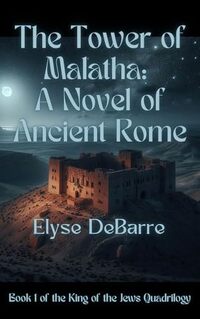
While drafting and researching my debut novel The Tower of Malatha: A Novel of Ancient Rome, the first in my Roman series, I quickly realised how much I enjoyed weaving mystery into the narrative. Almost immediately afterwards I published the opening novel of my second series, The Spy of Delphi: That Which Is Hidden. The Roman project began when I was nineteen, and even then I found myself drawn to adding gothic touches alongside the historical detail.
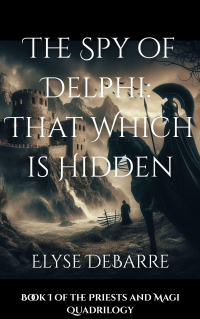
The second series actually grew out of a short poetic prose piece I wrote at seventeen during my first archaeology degree at university. The assignment was to craft a narrative with a twist that wouldn’t be revealed until the end. My professor told me he genuinely couldn’t guess the culprit until the final page, which encouraged me to expand the story. When I later prepared it for publication as a short story, it spontaneously grew into a full novel. That novel became The Spy of Delphi: That Which Is Hidden, and its sequel, Rise of the Magi: Babylon Under Watch, followed soon after.
In both cases, the impulse was the same: to create historical epics that were also mysteries. As I wrote, the idea developed further — I wanted them to be espionage novels too, full of puzzles and twists. I discovered early on that I love writing mystery and political intrigue, and that I enjoy constructing complex plots like riddles.
As an archaeologist, one of my areas of interest is ancient espionage. It is less widely studied, but it certainly existed — we have indications of it from at least the Bronze Age in ancient records and traditions. Women were often involved, precisely because they were less visible in political and military terrain. This research has run concurrently with my fiction, and it is another reason I include espionage elements in my novels.
My favourite genre will always be Roman or ancient historical fiction, but close behind are mystery novels, gothic tales, and intelligent action thrillers with espionage. As an archaeologist now studying medicine, I’ve also taken coursework in sociology, psychology, and criminology, which feeds naturally into this interest. My 750page Master’s thesis, which earned top marks, was archaeologybased but also solved a true crime mystery: a possible assassination in the Roman Empire involving a member of the extended JulioClaudian dynasty. That research became the foundation for The Tower of Malatha: A Novel of Ancient Rome and my remaining main Roman series, so mystery is already embedded in the terrain of my work.
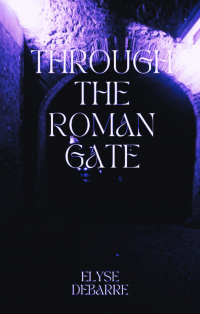
Since then, I’ve continued writing other historical novels set in ancient times with the same blend of genres. A few include minor supernatural elements, and my current project, Through the Roman Gate, is more overtly supernatural — a Roman-era historical gothic mystery and timeslip with science fiction and fantasy elements. My novels never rely on gratuitous violence, though; the protagonists’ own arcs resolve positively after they’ve overcome their particular challenges.
Your stories span from ancient Rome to Babylon and Egypt — how do you approach building suspense and intrigue within such deeply researched historical settings?
As an archaeologist and ancient historian, I’m used to seeing through ancient worldviews in my scholarly research. I began doing this very early — I decided to become an archaeologist at the age of eight, and travelled widely with my mother, visiting countless ancient ruins. The ancient eras feel natural to me to write about, often more so than modern or later periods. Since I’m already very familiar with those eras and with imagining myself within them as the main characters, I find it easy to incorporate suspense and intrigue into the stories. In fact, it often comes more naturally than it would in a modern setting, although my newly published novel The Inheritance, set in 1946 Palestine under the British Mandate, also carries those elements.
Another part of it is that I’m not merely dealing with ancient history in a general sense, but with complex political events. I’ve published scholarly theories on these, and they contain their own mysteries that archaeologists and historians are very familiar with. Being an archaeologist and historian means solving mysteries — in my case, mostly ancient ones. We are constantly piecing fragments together, and the work closely resembles police and detective investigation. Many archaeologists even work directly with the police at crime scenes, while historians use methods for verifying ancient events that resemble those used to piece together witness testimonies after a crime.
We are trained in impartial analysis of data to determine what really took place, and we engage in scholarly discussions about it through publications and presentations, weighing all sides of a matter and examining both the ancient evidence — written and material — and the arguments of fellow scholars over time. With this mindset, writing suspense in historical fiction feels like a natural continuation of what we already do. In my novels, I show accumulating evidence, misleads, and twists, and have my characters work them out just as we do in our careers. I often use the same kinds of forandagainst arguments in my narratives as I do in my research analyses.
I’m also accustomed to writing arguments for and against various theories and proposals in my academic work, and I’ve carried this technique into my fiction. My characters often crossexamine witnesses, and at times deliberately mislead them — whether during interrogations or in legal trials and hearings. This mirrors the way scholars test arguments against one another, and it adds another layer of suspense and complexity to the narrative.
Alongside this, I also hold a biology degree and am currently studying medicine. I often incorporate medical analysis through the eyes of ancientera characters into my novels. I’m used to examining disease development, wound lesions, and their signs and symptoms — another form of analysis that can be applied to crime scenes. A few of my characters are ancient era physicians, and because I’ve studied the history of medicine as part of my coursework, I’m familiar with the kinds of treatments they would have used. Much of this was surprisingly advanced compared to what people sometimes stereotype ancient medicine as being.
How do you balance historical accuracy with the creative freedom needed for a gripping cloak-and-dagger narrative?
I’m already accustomed to writing scholarly papers that demand historical accuracy, so I’ve developed the habit of constantly checking and reverifying historical and archaeological information while I write, to be sure I haven’t made inadvertent mistakes. I also incorporate my own published, peerreviewed theories into the narrative, and in my author’s notes I explain the kinds of information scholars draw on, the theories of other scholars that I may engage with or agree with, and my own theories as an archaeologist and historian.
At the same time, I’m aware that I’m not writing a textbook. I know the historical background of the story and the events that must take place — whether in the wider setting or enacted by the historical characters themselves, often through my own scholarly interpretation of ancient events. But rather than simply repeating those events, I put myself into the minds of my main characters living at that time and allow the story to develop naturally around them.
Historical events, especially in the ancient world, often contain unknowns and missing pieces. This opens the door to many possible cloakanddagger mysteries if we allow ourselves to use imagination. Events were frequently portrayed by the powers that be — or by the victors — as having happened in a certain way, but from alternate points of view they may have unfolded differently, or in several ways at once. They can look very different when told from diverse perspectives.
I demonstrated this in the first two novels of my espionage series Priests and Magi, which is neither mystical nor religious but centres on political espionage. Book one, The Spy of Delphi: That Which Is Hidden, presents one perspective on the developing empire and certain characters’ approaches. Its sequel, Rise of the Magi: Babylon Under Watch, gradually begins to cast doubt on some political events through the eyes of other characters, until the scenario is revealed from the opposite viewpoint — though even that may remain incomplete.
This reflects the reality of ancient sources. Cyrus the Great’s cylinder found at Babylon declares one perspective on his invasion and the city’s fall; Greek historical records present diverse viewpoints; and biblical records, such as the Book of Daniel, offer yet another. While many lay readers dismiss biblical texts as biased, they are in fact valuable ancient documents that often correspond with other records of the same events, though written from the perspectives of their authors. All these diverse perspectives are invaluable, not only for their interpretations of truth and historical details they provide, which are further validated when matched against other ancient documents, but also for the insight they give into the minds, biases, and propaganda of those who wrote them.
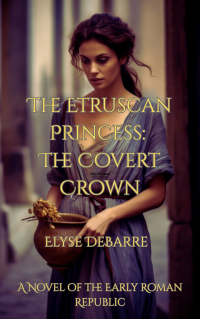
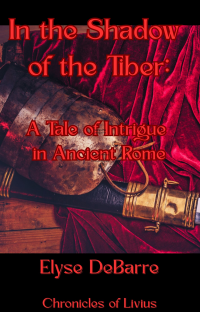
One of my secondary historical novel series, The Chronicles of Livius, set in the Roman Republic, is another example where historical accounts contain their own mysteries. Livy, writing under Augustus, often admits uncertainty about what actually took place. He records semihistorical episodes from the Roman Republic that correspond to real figures, but the mystery lies in the discrepancies between his narratives and what other records reveal. He even acknowledges gaps — for instance, in his account of Appius Claudius Crassus and Verginia, where the centurion Verginius himself was unclear when questioned in the Curia about whether Verginia was truly his daughter. That ambiguity alone creates a historical mystery ready to be explored, and such gaps can easily involve espionage and cloakanddagger intrigue. Readers can see my own account of this particular semihistory in book one of The Chronicles of Livius, The Etruscan Princess: The Covert Crown.
By learning ancient historical events and examining them impartially — consulting opposing records and weighing their contradictions — one can uncover mysteries already embedded in the past. My novels simply continue that process, allowing characters to confront, interpret, and solve those mysteries within the narratives.
What draws you specifically to ancient Rome as a recurring backdrop for your stories? What do you find most misunderstood or underexplored about it?
I am a Roman (classical) archaeologist, but I have been interested in ancient Rome since I was eleven years old, when I first watched Ben Hur and other films set in the Roman era. That was the beginning of my research into the period. I visited Rome for the first time at thirteen, backpacking through Europe with my mother, and we stayed there for a month exploring. I have returned many times since then, and I am now based there as an archaeologist while also studying medicine.
It would take considerable time as an archaeologist to list all the reasons Rome interests me or the areas that require further research. To mention only a few: I admire the Roman sense of strength, resilience, and genius for organisation in all areas involving logical thought — law, government, technology, military science, and medical science (particularly surgery) — and their great talent for innovation by improving upon the technological advances of earlier empires. Rome often managed to reverse the tide against enemies who were more adept in certain areas. For example, when it built its first naval fleet, it surprised and defeated a Carthaginian fleet, despite Carthage as a Phoenician colony being master of the Mediterranean and Rome at that point being skilled only in land warfare.
However, something frequently misunderstanding is the claim that Romans were afraid of water, unable to swim, or perpetually seasick. In fact, swimming was taught from childhood — Roman boys often trained in the Tiber — and Italy is a Mediterranean peninsula surrounded by water. What Romans lacked was not swimming ability but a seafaring tradition. They were in that early stage less comfortable with naval warfare because their strength lay in land battles. That makes their sudden naval victories against Carthage all the more remarkable.
I am also impressed by Rome’s beginnings as a tiny mudhut village on the Palatine Hill beside the Tiber, harassed by neighbouring states more powerful than itself, which it then defeated and in turn conquered. Overnight it became a terrifying killing machine, before settling down, conquering Italy and then the Mediterranean, yet still maintaining the Pax Romanum by allowing its provinces and protectorates to retain their cultures, religions, and often their ruling families, provided they gave loyalty to Rome.
As for other areas often misunderstood, I find that many historical fiction writers and filmmakers, although their stories may be entertaining, have a habit of overly primitivising ancient cultures, including Rome. They make it appear as though Romans knew nothing of hygiene or organisation, so that one could cross borders at will, messages could not be transmitted easily, and criminals could vanish without being tracked. In fact, Roman tracking — and that of other ancient powers — was rapid, and surveillance was effective. Cities, towns, and provinces were extremely well connected, with courier services, detailed maps, frequent horseexchange posts, and even rated courier hostels along the way. Technology included taxi meters, geared computers, glass windows, and even small flying machines using hydraulics. Scientists worked in universities across the empire conducting studies and experiments. Physicians had good knowledge of hygiene. Medical training was not standardised, but when proper education was acquired it was advanced, including practices such as washing and disinfecting hands before and after procedures, disinfecting wounds, using silver and copper sutures to prevent infection, and changing patients’ sheets.
There was also a theory of disease carried through air and water by animals so tiny they could not be seen with the eye — a concept found among the Greeks and Mesopotamians as well. Rome also had surveillance and espionage systems, as did older cultures, with references in both the Bible and Homer.
Another problem is the myth that Rome was morally liberal, derived from misinterpretation of ancient sources. Romans loved to criticise their own society with exaggerations they themselves understood, but which we misread unless we see them through Roman eyes rather than projecting modern Western interpretations. Something shockingly immoral to a Roman would not be the same as what we consider immoral today in our far more liberal Western society. In fact, Roman society was closer to that of the modern Middle East or developing countries such as China. I have lived in many such countries, including in the Middle East, and understand much of the thinking. For example, for a woman to walk around with her hair uncovered and unescorted was considered shameful in ancient Rome — which was often even stricter than most of the modern Middle East. Even doing so once would subject her to harassment, and Roman tabloids would smear her as a loose woman. Modern readers if they did not understand this might then imagine she had done something very extreme, which she had not by today’s standards.
The same applies to Roman writings on the Etruscans, who were more egalitarian than the Roman Republic. Roman authors imagined Etruria rife with immorality, but this was not the case. Etruria was conservative compared to modern society, but it was more egalitarian than the Roman Republic, and just as today someone from a Western egalitarian society visiting a conservative Eastern, or other traditional, culture (except by those who had travelled or were more educated) might be imagined to be “immoral” simply since they believe in gender equality, an Etruscan might have been misunderstood as well by the Romans of the Republic.
One might say Roman life resembled Victorian society in some respects. Yet there were exceptions: while Victorians prevented most women from studying medicine, in ancient Rome women doctors were honoured equally with men, including by their male colleagues. They practised medicine across all social classes and in all areas, not only women’s problems. We know this from historical and archaeological evidence. There were probably more female doctors than we realise, since not all declared themselves on funerary monuments. Some did, and we also have writings — even an encyclopaedia of medicine by one of them, quoted by Galen, who took her work seriously despite his elitism as physician to Marcus Aurelius.
Romans also conducted smear campaigns against political opponents. Since Rome was highly sensitive to morality, one of the major ways to discredit someone was to accuse them of immorality. That is why we read that Julia, daughter of Augustus, participated in orgies, or that the Etruscans did, or that elite Romans held orgies at dinner parties — all false. Many were accused of affairs and immoral behaviour when they did not commit them. For instance, Messalina, wife of Claudius, and Gaius “Caligula”’s sisters were accused of affairs – his sisters begin accused of immorality with his best friend Lepidus and even with Caligula himself — all political. Seneca was accused of an affair with Agrippina the Younger, again political. Such smears were shocking to Romans, far more than they would be today. Women were targeted more often, since many entered politics indirectly through connections, and doubt was cast on them morally. Agrippina the Elder, careful in her conduct, was accused instead of being too vocal and aggressive for her assertiveness — a quality that today might be seen as astute leadership.
Agrippina the Elder believed Tiberius and Sejanus had killed her husband Germanicus, Caesar’s heir, and most probably they were behind his murder. We now largely believe he was murdered, and Piso did not act alone, as it would have been too dangerous and he’d have anyway lacked a motive.
So again, looking at Roman morality through a modern Western lens is mere projection. It is important to try one’s best to see Rome as it actually was when writing either fiction or scholarly nonfiction, not view it based on modern social thinking, rumours, or taking sources at face value. They are meant to be read critically, and in doing so they reveal a great deal about the society of the time — and the motives and thinking of the writers themselves.
Finally, one area that remains underexplored is the Roman and wider ancient use of espionage, including the role of female spies who were often considered more invisible. This is a subject I explore both in my novels — which are ancientera espionage stories — and in my nonfictional research as an archaeologist and historian.
Your nonfiction includes a treatise on ancient Roman true crime — how does researching real historical crimes influence your fiction writing?
In fact, my nonfiction did not directly influence my fiction. The treatise you mention was my 750page Master’s thesis, which earned full marks, but the research for it was originally drawn from the work I had already undertaken for my first novel, The Tower of Malatha: A Novel of Ancient Rome. Rather than one shaping the other, they were parallel, interconnected developments, both relying on the same body of research that I later expanded and formalised for the thesis. For that project I consulted more than 200 scholarly and ancient sources.
My background in medicine — as a medical student with a biology degree — and in archaeology also contributed significantly. I was able to apply medical science to some of the arguments in the thesis, particularly in analysing symptoms, signs, and the use of ancient poisons. This forensic approach sharpened the historical investigation, but it also reinforced the accuracy of my fiction. Both strands of my work therefore share the same foundation: rigorous research, critical analysis, and the integration of medical and archaeological perspectives.
Having lived on four continents and travelled to over 65 countries, how have those global experiences shaped your worldview — and how do they surface in your storytelling?
Spending extensive time in traditional and developing countries, especially in the Middle East, has shaped my worldview far more than my Commonwealth identity. Ancient Roman and other ancient societies often resembled these cultures in their values, structures, and moral sensitivities. Because I have lived in such societies and immersed myself deeply, I was sometimes even told by locals that I seemed like them and not like a foreigner. That acceptance came from looking through their eyes, understanding why they did things the way they did, and adapting so naturally that I was welcomed into their communities.
At the same time, I have also witnessed the reverse: locals misjudging Westerners through stereotypes, assuming us all to hold behaviours or attitudes that were not mine. Experiencing both acceptance and misinterpretation has given me a sharper sense of how cultural misunderstandings arise, and this dynamic often surfaces in my novels. My characters encounter similar tensions — being welcomed in some contexts, misjudged in others — and I use those experiences to portray the complexity of living across cultures.
This lived immersion means I can depict ancient identities and cultural intersections with authenticity, rather than through stereotypes or modern projections. Many historical fiction writers project their own Western assumptions onto the ancient world, but I have experienced what it is like both to be embraced as part of a society and to be misunderstood as an outsider. That perspective allows me to write Rome and other ancient powers as they truly were: societies with moral codes and traditions closer to the Middle East, Asia, and other traditional societies, than to modern liberal Western culture.
My characters reflect this as well. Several of my main protagonists are multicultural or accustomed to immersing themselves in diverse societies, just as I have done. Many are spies who must adapt, blend in, and be welcomed into cultures not their own. Having had the experience myself — not of espionage, but of adapting to and being accepted within diverse societies, while also facing misjudgement — I am better able to understand how my characters think and act. I often model them on those aspects of my own life, which gives their perspectives and strategies a lived authenticity.
If you would like more detail, this question overlaps with several of my other answers in this interview — particularly those on Rome’s moral sensitivities, cultural comparisons, and my global experiences. Please refer to those as well, since together they give a fuller picture of how my travels and immersion in diverse societies shape my storytelling.
Italy is a rich place to live for someone writing about ancient Rome. How has living there transformed your relationship with your material?
Since most of my main novels take place in ancient Rome, living in Rome itself and in other parts of Italy has been invaluable. Travelling widely across the country, viewing Roman ruins in diverse regions, and learning the ancient histories of each area has deepened my relationship with the material. Even knowing the vegetation, geography, geology, climate, traditional architecture, farm appearance, and food — much of which has not changed greatly — and the cultural thinking in more traditional and remote parts of Italy has helped me to write with authenticity.
I have incorporated this lived experience directly into my novels. In The Tower of Malatha, for example, the main characters explore Rome and then travel through the Apennines to Bari. Having lived both in Rome and in Bari, as well as in the Apennines themselves, I was able to describe the route and the feeling of travelling through those same towns and villages with precision.
The same applies to my GrecoPersian series. I have lived in Greece and Turkey, travelled through Iran, and even journeyed overland and by ferry between all these places. That immersion allowed me to portray the landscapes, cultures, and routes with accuracy and depth. Living in Italy, and travelling across the wider Mediterranean and Middle East, has therefore transformed my relationship with ancient material: it is no longer abstract history, but lived terrain that I can draw upon directly in both my fiction and my research.
As someone who is part Australian, Canadian, and English, do you find your multicultural identity influences the way you depict ancient identities and cultural intersections?
Being part Australian, Canadian, and English doesn’t influence me as much as one might expect, since these are all Englishspeaking Commonwealth nations with similar majority cultures. What it does give me is an understanding of how some characters might feel when they are born into one culture, raised in another, and have a parent from a third. I do have a few characters with multicultural backgrounds, but what shapes me far more is that I feel like a citizen of the world rather than of any one country. That outlook makes me more open to diverse cultures, and I reflect it in my novels — including one historical figure who admitted to feeling the same way, identifying both as Roman and as part of his own provincial people, which was often useful for negotiations and keeping peace in the region since he could look at events through multiple perspectives.
More influential than my Commonwealth identity is the fact that I’ve lived on four continents, including in Asia, the Middle East, and Europe. I’ve often felt most at home in the Middle East, and I enjoyed living in parts of Asia even more than Europe, although I also love the Mediterranean and west Scotland. These experiences have given me a deeper understanding of multicultural thinking and a more natural grasp of ancient Mediterranean and Middle Eastern cultures. Ancient societies, including Rome, were in many ways similar to the modern Middle East and to traditional cultures in Asia, such as China.
Some authors write about the ancient world using stereotypes or exaggerations, but I find I write about it more naturally because I’ve lived in cultures that resemble it. That lived experience helps me depict ancient identities and cultural intersections with authenticity, rather than through modern projections.
How has your background in classical archaeology and medical studies informed your writing, especially in terms of forensic accuracy or ancient medical practices?
Alongside archaeology and medicine, I have also studied psychology, sociology, anthropology, and criminology, and I find all of these disciplines invaluable in understanding the complexities of the human psyche. They help me explore how a person can appear one way from one perspective, another way to others, and yet hold a third, private self — or even modify their thinking over time. They also illuminate the motivations behind committing crimes, and how a deed might be judged criminal from one perspective but heroic from another. A freedom fighter leading a revolt, for example, may be celebrated as a liberator by one side while condemned as a traitor and rebel by the other. These intersections between individual psychology, social dynamics, political structures, and government ideologies are central to the way I build my narratives.
My background in classical archaeology and medical studies provides a strong foundation for writing with forensic accuracy. Archaeology trained me to examine material evidence, weigh different interpretations, and remain alert to gaps or biases in the record. That discipline carries directly into my novels, where I reconstruct ancient settings with precision and ensure that the details of daily life are authentic. Medical studies add another dimension. They allow me to portray ancient medical practices, injuries, and treatments with realism, and to understand how disease, wounds, and healing shaped people’s lives. This knowledge also sharpens the suspense in cloakanddagger narratives, because I can depict forensic investigation, poisoning, or surgical intervention in ways that feel true to the ancient world.
Characters shaped by this interdisciplinary lens are not only emotionally rich but also strategically intelligent. A protagonist with psychological insight can deliberately mislead, exploit prejudices, and run rings around an opponent. In Rise of the Magi: Babylon Under Watch, my freedomfighting heroine does exactly this. As she says: “The other side creates techniques to control, but two can play at this game. I see what they are doing, since I do it too. Those who know the game, rewrite the rules.” She prepares traps more complex than those of her adversaries, thinking through every contingency and ensuring she has multiple choices for every eventuality.
She also creates gothicstyle illusions to intimidate her enemies. Very few ever see what she is truly like underneath. To her opponents, she appears as something frightening and uncanny; to her allies, she reveals a closer version of the truth — yet even that is only partial, because the person beneath remains different still. This layered identity reflects the way psychology, sociology, and criminology inform my writing: characters are not just reacting to events, they are actively manipulating perceptions, exploiting biases, and rewriting the rules of conflict.
Together, these backgrounds mean that my novels are not only historically grounded but also attentive to the human body, the forensic realities of the past, and the psychological strategies of resistance. Readers encounter characters who live, suffer, heal, and fight in ways that reflect both the archaeological record and the medical knowledge of their time, while also dramatizing the shifting, often contradictory frameworks through which history and politics define crime, justice, and identity.
What’s your process when starting a new book — do you begin with the historical framework, the plot, or the mystery?
Because I am already deeply aware of the historical background as an archaeologist, I can usually begin writing immediately without needing to build the framework from scratch. Yet my process often starts not with the history or the mystery, but with the romance. Although my novels do not focus on romance — it is always subtle and blended into the wider narrative of history and politics — I find that beginning with the interpersonal relationships gives me a natural entry point into the story. From there, I develop the mystery and intrigue around it, weaving the romance into the larger historical and political terrain.
I used to begin my stories by watching them in my mind as “movies” and then reworking those movies until I was satisfied. Since my early teens I have created numerous stories in this way. My first novel, The Tower of Malatha, began at age nineteen as one of these “movies” which I loved more than the others. That inspired me to begin deeper research to understand the material, as I had only recently started my first archaeology degree. These “movies” have come to me in many ways: from learning a piece of ancient history in class, from family members who are also knowledgeable, during lectures, while researching or reading a book, while examining artefacts, or while visiting ancient sites in my travels.
The only exception with the romantic entry point was The Inheritance, which I began when I decided to write about the Palestinian problem under the British Mandate while observing the current crisis, so as to highlight the continuity of the situation. I’d read Exodus by Uris as a teen and I created this as a counter-narrative although it follows its own arc and is not modelled after the former book. In this case, I began with the history and politics, and then developed the romance alongside them, again as a lowkey thread within the wider narrative.
I prefer the approach of beginning with the romantic plot because I like to connect with the interpersonal relations that drive the story, especially the romantic arcs. I always give happy endings — not necessarily for the overall historical situation, which may remain challenging and unresolved, but for the lives of the main characters and their relationships. Even though readers are glimpsing only a segment of their lives, I want those arcs to resolve positively. I am a positive person, and I believe stories should uplift, even while acknowledging the difficulties surrounding the characters and the ongoing problems they will still face afterwards.
As for the history, I do not think it is possible — even as an archaeologist and historian — to know every single detail, perspective, or theory regarding the past or the political situations that shaped it. There are always multiple viewpoints. While writing, I am constantly researching to ensure I have not overlooked something significant or made a mistake, even in my interpretation. As both archaeologist and historian, I am also an interpreter and theorist, and I explain these aspects in my author’s notes at the end of each book. In practice, I develop everything interwoven together — romance, mystery, politics, and history — and continue researching as I write.
Have there been any particularly surprising or emotional discoveries during your historical research that deeply influenced your work?
Much of my historical research has involved living in diverse countries related to my research and other traditional or developing countries, so I have encountered numerous surprises and a great many things to learn, some of which I have already mentioned in my other answers. While living in Jordan as an archaeologist researching for both my thesis and my Romanera historical novel series, which draw upon the same body of research, and also as a biologist familiar with genetics, I realised that the Palestinians are descended from the ancient Judaeans. I had already become sympathetic to Palestine from living in several Middle Eastern countries, and I recall discussing this realisation with my Jordanian archaeologist colleagues. Although it does not influence the majority of my writing, I have mentioned it in two of my books where it was directly relevant to the narrative. I’d like to emphasize here that my books are historical and archaeological in focus, and apart from two book titles where this discovery was directly relevant, they are not written with any political agenda in mind. My primary concern is ancient history, not modern politics.
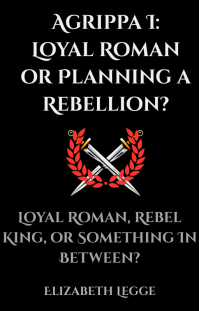
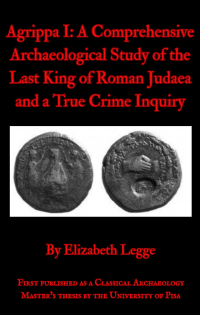
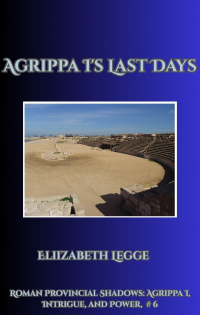
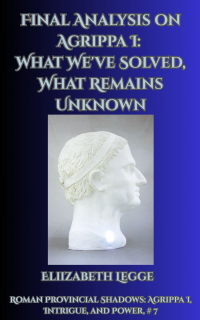
I was also interested to learn, through my research into the Herods, the strong possibility — both from his symptoms and the complex political setting — that Agrippa I, the last king of Roman Judaea, had been assassinated. I am not the first to recognise this, but it was nonetheless significant to develop the idea, which led to my 750page Master’s thesis, the only fulllength archaeological biography of him in book form. It achieved full grades at the University of Pisa, one of Italy’s leading universities, and is written in English and published not only on academic sites but also as one of my books on AllAuthor (Agrippa I: The Comprehensive Archaeological Biography of the Last King of Roman Judaea). It is based on the same research as my main Romanera historical epic series beginning with The Tower of Malatha.
One of my most exciting discoveries, although not uncommon for archaeologists, was my first find when working on a team excavating a Yorkshire Roman fortress and possible naval base associated with a Roman road: a coin of Constantine. I was so excited that I screamed, and many others came running, saying they thought I had seen a spider. The coin helped, among other material remains, to demonstrate that the site continued much later than had first been proposed. I incorporated the experience into my historical novel The Inheritance, set in Mandate Palestine, where the female protagonist discovers a coin on Tel Malhata during preliminary excavations, and others remark, “When you screamed we thought you had seen a scorpion.”
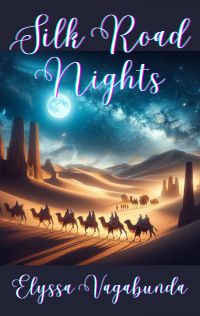
While living abroad for my research I also once helped supervise a resort hotel chain that became overrun with red scorpions, so I am no stranger to that creature. I had to arrange for a pest control company to spray the site. This episode is mentioned in Silk Road Nights, book one of The Vagabunda: Journeys Without Borders, published under my pen name Elyssa Vagabunda. I have had all kinds of experiences during my research, which has also involved extensive solo travels and living in diverse locations. You can read of some of them in this travel memoir series.
Can you tell us more about your upcoming travel memoirs as Elyssa Vagabunda — how will they differ from your historical fiction?
I have been considering, when I have the chance between other projects, making my next volume a travel memoir I’ve had in mind for some time: Around the World with Mother. The title was suggested ironically by a fellow traveller my mother and I encountered during one of our extended journeys, who said I would one day write this book.
I began travelling with my parents at the age of two, and then with my widowed mother from the age of ten through my teens. These were not short trips but very extended backpacking excursions lasting several months across multiple continents, sometimes even working abroad together along the way as a team. One such journey lasted a year and a half and circled the globe entirely. I made extensive notes and sketches during these travels with full intent at the time to publish a book on the journeys one day, and with those plus my detailed memory, I will be writing the book soon.
I also have in mind another more recent excursion: from the UAE to Egypt, then by ferry to Italy, and overland through Europe to northern England, continuing across Canada. The Canadian part was the only section I did not enjoy, no offense to Canadians, but it was still an exciting adventure I would love to share. I deliberately chose the Egypt–Italy ferry to gain a sense, however modern, of the Roman route between Alexandria and Italy, including the grain ships that sailed to Rome and carried passengers. This journey connects directly to my main Roman series beginning with The Tower of Malatha, where the protagonists take the same route.
Beyond these, I have many more memoirs in mind, since I have travelled extensively to every continent and lived on four. I plan to publish them as “living books,” so readers can continually reupload until I announce the books are complete, ensuring they always have the latest material. Another volume will draw on my experiences living in Japan and travelling the entire country — my first nonWestern country to live in, though I had visited earlier with my mother at age ten. This book will include my visits to two haunted mountains and to an Ainu village in traditional parts of the country. I also envision separate volumes on my travels and living in Thailand (Thailand for my first Master’s degree in medical science) and China (where I also did my first medical elective internship and taught medical English, among numerous other experiences), including journeys back and forth by land through Laos. China is one of my favourite countries to live in, especially the northwest and southwest regions for their deep culture and history.
My memoirs differ from my historical fiction in tone. I write them with humour and in a friendly, approachable way, as though confiding my journeys to friends, interspersed with numerous anecdotes — usually humorous, but occasionally more serious, with insights in them, and one being a live action thriller which was later described with my permission on the Lonely Planet’s website. I fit in well to almost all cultures I’ve spent time in, and being highly sensitive, I am good at looking at cultures through more local eyes and blending in. I usually make local friends rather than expat friends, although sometimes expat friendships are welcome too, especially with expats who love the local cultures as I do. While the tone differs from my historical novels, the novels themselves derive their insights and information from my living in diverse cultures.
You’re preserving your late family member Iola Ballard’s poetry and teachings — what does this collection mean to you personally, and how do you feel it complements your other work?
It is very important to me to publish her work. My late family member, Iola Ballard, was a talented and prolific writer who produced a great deal, some published and other works with the intent to publish — poetry, prose, and writings on her own extensive travels. As soon as I can access her other manuscripts, which are not currently in the country where I live, I will publish those as well. It feels it’s the least I can do to honour her.
Her writings complement my own in that, although her style is a little different and she’s a little more traditional than me, she also wrote about historical eras and events through lived experience — in her case, modern history, including during and just after the Second World War. In addition, she wrote a book with the intent to publish on ancient Greek medicine, which connects directly to my own academic background, research, and writing. I hope I can honour her by bringing her work into the world, and I like to imagine her reading her books from Heaven enjoying the sight of others reading them.
She was originally from Tasmania, which also keeps our home culture alive, since Tasmania is on my mother’s side our family hometown. We go back to the earliest settlers there — not convicts, but free settlers. We have some interesting ancestors, including one, James Ballard, who was the owner and captain of a fleet of merchant ships that resembled the ones in Pirates of the Caribbean. We’ve always called him “Sinbad.”
What do you hope readers take away from your stories — both the thrill of the mystery and the echoes of the ancient world?
I hope readers enjoy the mystery, lowlevel romance, characterisations, and puzzles I like to weave into my epics and other novels. At the same time, I hope they feel transported to ancient times and can appreciate that these worlds were often more developed — and also more conservative — than stereotypes, projections, or temporal ethnocentrism have led us to believe.
My books are not written to preach about the ancient world, but to help readers enjoy it through narrative. I want them to experience the past in a fun and engaging way, so that the echoes of history come alive naturally within the story.
How has been your experience with AllAuthor?
Overall, I’ve been impressed with AllAuthor. As a new author who has been publishing for only around two years, I’ve found that the platform has helped me boost sales and also connect with many fellow authors, where we can learn from each other. I appreciate the creative tools they provide, such as the ability to design banners and gifs, which are both fun to make and effective in attracting notice. The themed quotes from our books are another feature I enjoy, since they encourage us to think about our work in different ways while also helping with visibility and sales.
I’ve even recommended AllAuthor to other writers, because I’ve found it both affordable and very helpful for increasing sales and building connections. I also appreciate the intelligently worded interview questions, which are so specific to my books and give me the chance to share my work, thinking, background, and creativity in depth.








 4
4