You’ve had a long career as a professional advertising writer. How did that experience shape your approach to writing novels?
For many years, I wrote advertising copy. Ads, radio, brochures, television and direct mail. I think this experience allowed me to say a lot in a few words. My writing is simple, but my books all carry some heavy themes throughout. In short, I think being an advertising writer made me a better communicator in all my writing.
What first sparked your desire to move from advertising into storytelling through fiction?
Even in my early years of writing, I was taking screenplay writing classes, etc... Somehow I always knew I’d be an author. Then, one day at the beach in Galveston, I came up with an idea inspired by the Great Galveston Hurricane of 1900. Literally, I was looking out over the ocean from the seawall and thinking to myself how frightening the hurricane must’ve been for the people that lived on the island. On our way home, I told my husband, mother-in-law and son my thoughts for a novel. My husband said, “That’s really good. You should write that up.” And I did. And then I rewrote it eleven times. I also went to a Writers Camp at West Texas A&M where I learned a lot about writing novels, not only from the camp instructors, but also the other writers taking the classes. In fact, even though that was years ago. I communicate with many of these writers on a regular basis—critiquing each other and inspiring each other to keep going.
As a Texan, how does your home state influence the themes, characters, or settings in your books?
I didn’t plan it, but all eight of my books are set in Texas. Perhaps it’s because Texas is the place I know best.
Do you remember the very first story you ever wrote, and how it compares to your work today?
Yes, I wrote a screenplay about a mother that had fraternal twins that looked nothing alike. In fact, they had two different fathers. I got the idea from reading a newspaper article about a woman having two eggs fertilized by two different men and giving birth to both babies. One of the underlying themes of the story was how people tried to stereotype the twins into being just alike when this couldn’t be further from the truth. However, I think another person must’ve read the same newspaper article because the movie “Twins” came out. So, I dropped the story, and moved on to another, but it did make me realize I really enjoyed writing long form. And like my writing today, I tried to convey what motivates people to do the things they do.
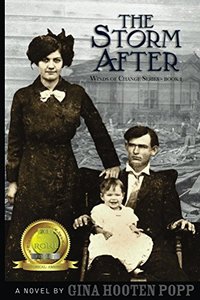
The Storm After was a finalist in the 2014 RONE Awards. What did that recognition mean for you as a debut novelist?
Being a RONE (Reward of Novel Excellence) Award finalist validated me to keep going in my author journey. And, of course, it gave me a lot of exposure. I remember going to LasVegas to the awards ceremony. But it wasn’t what happened there, it was what happened the next day outside the casino where the awards ceremony was being held. While waiting for the shuttle to take us to the airport, two young ladies started talking to me and they said my name. I asked how they knew my name. And one of them turned me around and pointed to a jumbotron where authors’ faces and their books were circulating. “See,” she said pointing to my name on the cover of my book. I was stunned. And, so honored. Never in my wildest dreams did I imagine being on the jumbotron in Las Vegas. I almost feel over on the sidewalk looking up at it.
Chico Boy went on to win a 2016 New Apple Annual Book Award. How did reader feedback differ between your first and second novels?
Chico Boy was actually my fourth novel, and it was the first one about a young boy. All the rest of my novels at this point had centered around adults and the trials in life they faced. I wouldn’t say the feedback was different, but it did bring in a younger audience along with the same adult audience. I think young and old alike related to some of the things that Chico Boy had to go through in junior high.
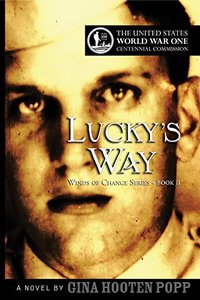
Lucky’s Way was endorsed by the United States World War One Centennial Commission. How did that endorsement come about, and what impact did it have on you as an author?
One of my relatives had a friend of a friend that was associated with the World War One Centennial Commission. He told this friend about Lucky’s Way and the friend connected me to the right people to get the paperwork started to try and see if I could get it endorsed. It was a big deal to get the endorsement as I had spent many hours researching World War One and that era. I felt very blessed to be a part of their effort.
Do you see a common thread or message that ties your novels together despite their different stories?
Yes, as I mentioned above, they all have different underlying themes woven through the stories. But one reoccurring theme is that no one is all good or all bad.
What part of the writing process excites you the most—research, drafting, or revision?
Researching. I love delving into the past and often find it leads my stories.
Do you write with a strict outline, or do you allow your characters to guide the story as you go?
I allow the characters (and research) to guide my story as I go.
How do you balance historical accuracy with the creative freedom of fiction in books like Lucky’s Way?
Even though my characters are fictional, they are usually composed of six to eight real people I may know or have read about. Basically, I stick to the facts of real history and have my characters perform as real people might’ve in that time period. For example, when doing research for Lucky’s Way, I read excerpts from several soldier’s diaries which gave me a good idea of not only their surroundings, but their thoughts and feelings about daily life in the war.
Which authors or books have had the greatest influence on your writing style?
Louise Erdrich has definitely influenced my writing style. I love how she spins the story from different characters’ viewpoints and I integrated that into some of my books.
When you hit a creative block, what helps you find your way back to writing?
This goes back to me being an advertising copywriter for so many years. When you have ad deadlines, you do not get to be blocked. You keep writing so you have something to work with atleast. Through the years I’ve learned to just start,and the story will come. Sometimes I start a piece of work and I’ll write the opening paragraph three different ways. One will usually stand out as the winner and I’ll get going with that one.
Outside of writing, what activities or hobbies bring you inspiration and joy?
I like plants. At various times in my life I’ve had gardens, but I have always had houseplants. They make me happy.
What has your AllAuthor experience been like so far? What are some highlights?
I’ve really enjoyed my AllAuthor experience. I’m so happy with the exposure AllAuthor has given my books on social media. Your visuals/designs are fantastic. Very eye-catching. And the messages are right on target. I also like the cover contests. It’s a lot of fun to see what’s happening with other authors. And, of course, thank you so much for this interview. I feel very fortunate and am so thankful for the opportunity.