You’ve published fiction, poetry, photography, and creative nonfiction—how do you decide which medium best serves a particular story or idea?
For writing, the story decides for me. Just get the story on paper, finish, then edit. Since I write ‘scenes’ anyway, I think of how the story would be seen on the screen.
How did your background in Political Science and Sociology influence your voice and themes as a writer?
Politics and sociology are about power and people. Just as there is ‘slice of life’ writing, so our lives are a slice of history. The combination always produces and plays out amid conflict, so I’m never at a loss for stories and dialog.
What first inspired you to pursue creative writing seriously?
I always wanted to be a writer, but I was always told “write what you know.” Since I didn’t know much as a kid, knowing general “stuff” was necessary but not sufficient. I needed experience and imagination --- and I got both through living.
Your how-to book, Writing Beyond the Self focuses on creative nonfiction—what do writers most often misunderstand about the genre?
Creative non-fiction writers too often navel gaze. I believe the genre requires the ability to look up and out, and interacting with the world as well. Like my book asks: Everyone has a sob story, why should I read [or care] about yours? The important part of CNF writing is making the story interesting.
What advice would you give aspiring writers who want to get published in literary journals?
Writers have to know their target audience. Literary readers are all about feelings and immersion, hence detail and depth are more important than events and interaction. Also, literary readers like to think they’re smarter than commercial fiction readers, so they like to read about themselves: smart people wrapped up in important, deeply emotional circumstances. I like to say literary readers prefer estrogen over testosterone.
You’ve been published in over three hundred journals—what helped you develop the dicipline and resilience to submit consistently?
Time and circumstances. When I was raising two kids, I didn’t have the time to write, edit, submit, re-submit, and there were no computers or e-mail. I never learned to type, and couldn’t afford postage and envelopes. Technology and time changed everything. The discipline I learned from attending Catholic school where Sister Torquemada insisted that, in addition to cleanliness, punctuality and self-discipline was next to Godliness.
Winning the Eastern Kentucky English Department Award and the Silver Pen Award are notable achievements—how did those recognitions impact your writing journey?
Recognition and praise gave me the gift of confidence, and at the time, I needed confidence to take that first confident step: submitting.
Your noir short story Red’s Not Your Color earned a Silver Pen Award. What draws you to the noir genre?
Experience. I grew up surrounded by noir people, those who were financially desperate and found themselves in circumstances over which they had almost no control, like urban life, hasty marriages that ended in divorce, unwanted kids whose role-models were celebrities instead of their parents, and, of course, the acceleration of change itself.
How does living in Kentucky shape your creative work, if at all?
Writing is my escape.
As someone who writes full time, what does your typical writing day look like?
I write stories in longhand by night, ride my stationary bike in the morning while catching up on the news, and transfer/edit my stories on the computer during the day. Friday is submission day. I study the open calls for submissions, check Duotrope, note deadline dates, etc. For entertainment, I read history books, and other non-fiction ---right now, I’m learning about AI.
How do you balance the analytical mindset of academia with the emotional depth required for creative writing?
I don’t think those thought processes are mutually exclusive. Writing, especially a novel, requires analyzing people and situations if they’re going to reflect real emotions and personality types to get to that depth. Stories require conflict, and conflict, especially in war-time environments, means problem solving. Problems are best solved through analysis not feeling.
For example, my MFA novel, The General’s Lady, takes place in 1938. When two main characters begin their escape to Vienna, they travel by car and make a pit-stop. One question I got from a committee member was, why doesn’t the guy rape the woman when he has the chance in Chapter 2 instead of Chapter 14? Anwer: Because it’s 1938, he’s a piano teacher at a music conservatory, and he’s apolitical and a victim who overthinks things, not the man he’s becomes by Chapter 14. Chapter 2 is too early. The story is about his transformation ---and hers for that matter. But, I had to analyze the personalities of these two people within the culture and mores of the time frame. My academic study of WWII, the age/class/and politics of the people living in that time and place allows me to display the emotional depth as well as historical accuracy of the characters.
What role does photography play in your storytelling process?
I write all my stories as if they were accompanied by pictures, moving or still shots. I find still shots of what I imagine the characters look like. As I write, I’m watching them act out their movements and listen to them speak, too. The movie plays out in my head. Next stop? Making an AI film.
What challenges did you face transitioning from teaching to writing full time?
No challenges. Retirement meant pure joy. Teaching became parenting as education became primary socialization rather than instruction and less creative for me. I like class participation. One semester I taught a State & Local Politics class that had the class operate as a city government. The Public Works Director had to research, visit, interview the current director in the job, investigate the current problems and report to the City Council and develop/make recommendations. Same with Parks & Recreation Director … now, it’s barely possible to keep the students off their cell phones. I could write a book …
What projects are you currently working on, and what can readers look forward to next?
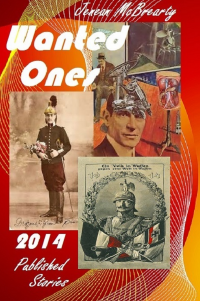
Currently, I’m writing Book 2 of 4 different novels. One is a YA time travel story, another is a noir, another a mystery, as well as the sequel to The General’s Lady. I’ve also audio-ized The General’s Lady, and will be releasing the novel in both formats in a few weeks on Amazon. Also, I’m putting together a collection of short ‘war but not war’ stories entitled Before and Aftermath: War stories about those who wait also serve.
What has your AllAuthor experience been like so far? What are some highlights?
I’m exploring the possibilities, and will be providing more information about the different genres I write. I’m gong to develop my author page more, and make it better reflect my work. I love the banners. What impresses me most is the number of people who have taken the time to visit my work. I have a difficult name --- perhaps I should change it to Jane Smith? --- and I never expected to get it in front of so many people given that I haven’t given advertising the attention I need to give it. AllAuthor has tools I haven’t maximized and just being interviewed has inspired me!