Genre:
Biographies & Memoirs History- Country: United States
- Books: 1
- Profession: Healthcare
- Born: 8 November
- Member Since: Apr 2025
- Profile Views: 3,332
- Followers: 67
Webmaster and author of the world-famous The Judy Room website, including the most detailed Garland discography ever compiled. He is also the author and webmaster of the Judy Garland News & Events blo,g which features the resource “On This Day” series that presents thousands of images and details about Garland’s life and career for each day of the year.
For eight years, Brogan was the designer and webmaster of Liza Minnelli’s (Garland’s daughter) official website. He is world-renowned for the design and content of these sites. For four years, Brogan was a researcher and author for the San Francisco Silent Film Festival. His program essays are cataloged by the Library of Congress and translated into several languages.
He recently co-produced and wrote the liner notes for the successful “Judy at 100 - 26 Classics In Stereo” CD release. He has written several other CD liner notes and has been involved in producing many others. Brogan is a respected expert on Garland’s career, having been a major contributor to books about Garland and/or her films, as well as books about the MGM Studios, podcasts, live stream events, and radio programs. He lives in Kansas City, Missouri.
Scott Brogan's Books
Stay in the loop on books by Scott Brogan. See upcoming and best-selling books by the author here. You'll also find the deals on books by Scott Brogan.
** Please note that the information or price displayed here may not be the updated. Make sure to double-check the latest book price before buying books.
** Also, there might be other books by Scott Brogan not listed on AllAuthor.
| Book |
|---|
Scott Brogan Interview On 07, Nov 2025
 "Scott Brogan is the webmaster and author behind “The Judy Room” and “Judy Garland News & Events”, two of the most respected online resources dedicated to Judy Garland’s life and legacy. A renowned expert on Garland and MGM history, he has contributed to numerous books, podcasts, and documentaries. Based in Kansas City, Missouri, Brogan’s research and web design expertise have earned him international recognition."
The annual TV showings sparked my interest in Garland at a very young age, via the MGM Records LP, which, at that time, was the only "home media" available to a kid like me. I loved her voice and wanted to know more about her. Not long after her death in 1969 (when I was eight years old), several biographies about her were published. I became more fascinated with her life and career. I also have a love of film musicals, especially those made by MGM during the Golden Age. Over the ensuing decades, I learned as much as I could about her. The Judy Room came about originally as a way to show off my Judy "room" to the world. The Internet was just a few years old, and at the urging of some friends, I shared photos. I then became interested in web design. It became my creative outlet, and just grew from there. It's changed a lot over the years, and I'm very proud of what it has become: a resource for fans and those who are curious about her and want to learn more. For free!
You've compiled the most detailed Garland discography ever—what was the most surprising discovery during that process?What surprised me, and in hindsight it shouldn't have, was the generosity of so many fans and collectors. Many, many people have shared items from their collections with me, and that includes records and CDs. The discography wouldn't be as vast without their generosity. I have always collected records, actually, all media formats, because it's all about her performances for me. Still, there have been so many releases and reissues and bootlegs, etc., that there are many I don't personally own. Thanks to the fans and collectors, the discography is able to feature almost everything.
Your “On This Day” series is a remarkable daily archive of Garland’s life. What inspired this concept, and how long did it take to compile?Thank you! I have always had some format or other of a timeline on the website, but they didn't seem to be enough. The late Scott Schechter's 2002 book, "Judy Garland - The Day by Day Chronicle of a Legend," was a welcome addition to my library, as it's basically a giant timeline in book format. But being in book format, it couldn't be updated. As I continued my research, I made handwritten notes in the extra copy of the book that I have. I soon realized that there was a ton of previously unknown information and details about all aspects of Garland's life and career. At first, I thought that it would be great to find a way to publish an updated version of his book. But I realized that would also become outdated. Then, I finally realized that the blog format was the way to go. It gives me the freedom to update, change, and add information all the time. Plus, it gives me the chance to share all manner of media (clippings, audio files, video files, photos, transcripts...). It took a full year to complete. I worked on each day's entry a day or two prior. I am constantly updating it as I learn more information from my ongoing research. It's a lot of fun to work on and, at times, very illuminating.
How do you approach accuracy and verification when documenting events from Garland’s life, especially with so much myth surrounding her legacy?Whenever I find some new information, some new detail about her life or career, I try to verify its accuracy by searching for other sources for the same information. That isn't always easy. Many books and even film documentaries have put out incorrect information. Usually, it's because they didn't have any other information available to them at the time. As more archives become available, it's been possible to map out the sequence of events for many events or milestones that we didn't know about before. For instance, Garland's USO tours in the early 1940s have always been glossed over in most books and documentaries due to a lack of information. But thanks to today's technology and the opening of more and more archives, I was able to piece together the timelines of the tours and thus bring that information to the blog series and include it in the book. I'm thrilled to be able to share those details because, above all, they show just how incredibly popular she was at that time and how together the country was toward the common goal of not allowing fascism to run rampant across the Western World.
As noted, there are a lot of myths around her legacy. Many are just silly and illogical. Others are assumptions that people have made without anything to back them up. There are also events in Garland's life that we'll never know the true story of—for example, her audition at MGM in 1935. There are so many different versions because so many other people remembered the event differently, usually decades later. MGM didn't help matters at all. Their publicity department seemed more interested in furthering a narrative that suited their current needs than the actual truth. Newspapers and fan magazines are filled with conflicting stories about that, provided by MGM. The one I think is the funniest is the story (told several times with varying details) that alleges that 13-year-old Garland simply marched into the studio and demanded (and got) an audition and contract. We know that's not true. In the book, for events like this, I provide various stories and let the reader decide what they think might have happened. It's important to know that memories of events decades prior that no one knew would be so momentous are suspect just by way of human nature. We don't always remember things correctly. I wasn't there, so how could I say, "Yes, this is what actually happened?" when there are so many different versions from the people who were there? Some things we have to be able to say, "Well, we just don't know for sure 100%, but knowing what we know about that time, it's most likely that it happened this way..."
Garland herself wasn't always a lot of help. She remembered things differently at different times. The famous "chicken soup" story, if it ever happened, changed with each of her retellings. She claimed that she was given only chicken soup at MGM's commissary, no matter what she ordered. Some tellings it was chicken broth, or chicken noodle soup with no noodles and/or no chicken, or matzo ball soup... I point that out in the book. Garland was known for telling exaggerated stories for dramatic or comedic effect. The soup story is probably an isolated incident that she turned into a funny story that then turned into a legend.
You also designed and managed Liza Minnelli’s official website for eight years. What was that experience like, and how did it influence your work?It was great! Liza was wonderful. Even before I did the website, meeting her in person was a thrill. She was always down-to-earth and sincere. I usually worked with her publicist. He would contact me about upcoming events (appearances, etc.), and then I would post the information on the site.
How do you balance the roles of historian, designer, and writer when curating such an expansive body of work?It's not easy! I always feel behind on my "to-do" list. I try to focus on one thing at a time and not allow for interruptions or distractions. There seems to be too many distractions coming at us all the time these days. It helps to turn the TV off, ignore social media, and have some nice, quiet focus time. That being said, it's very easy to go down seemingly endless search rabbit holes. And happily so. As a result, I have found all kinds of little nuggets of information. I enjoy the design aspect of the site; it serves as my creative outlet.
What was the creative and technical process like for producing and writing the liner notes for Judy at 100 – 26 Classics in Stereo?The CD's co-producer, Bill Buster, handled the technical side. However, I did get to hear everything the audio engineers did, and I gave feedback. I knew the recordings so well that I was able to catch little things they missed, such as a vocal popping over from one channel to the next. I enjoyed writing the liner notes. Garland's discographical output has always been my main passion and the foundation of my knowledge base. The most challenging thing in writing the liner notes was adhering to a specific word count. On the blog, I can run on (as I often do) without worrying about space limitations. But with CD liner notes, there's a finite amount of space. Self-editing is key - and always tricky. Having a second or third set of eyes helps. Audio engineer John Haley of Haley Restorations, LLC, was a big help in that area.
You've been a contributor to numerous books and podcasts about Garland and MGM. What do you think is the most misunderstood aspect of her career?That would definitely be her image as the always tragic and unhappy person who was abused, chewed up, and spit out by Hollywood. That's too black and white. Too simplistic. There seems to be endless clickbait articles with sensationalistic headlines like "What really happened on the set of The Wizard of Oz." They're always hack copy & paste "articles" that only serve to perpetuate the myth of Garland as the eternal victim. Of course, there were bad times; of course, she had a drug habit that turned into addiction. But it was much more nuanced than "Louis B. Mayer (head of MGM) abused Judy Garland," or the one that I laugh about because it's so preposterous, and that is the rumor that she smoked ten packs a day on the set of "Oz." That's ludicrous. I don't know where people come up with this stuff. Garland had many, many happy times at MGM and after. What I find fascinating is that if you watch her films in chronological order, you see a girl who morphs into a young woman who is discovering what her talents are capable of and enjoying that. Garland always loved to perform. She once said, and I paraphrase, that if she was so tragic and unreliable, "how could I have accomplished what I did?" So many of her peers, like Gene Kelly and June Allyson, always spoke of her genius and what a joy it was to work with her. They always note that she was usually a happy, outgoing person. I hope that readers of my book come away with a better understanding and appreciation of what she was able to accomplish in just fifteen years.
Your essays for the San Francisco Silent Film Festival are now in the Library of Congress. How does it feel to know your research is part of film history?It's an incredible honor. My time with the SFSFF was a unique experience. As a fan of MGM in general, I had a working knowledge of the silent film era, and being part of the research committee helped me learn so much about early film history. We had a research committee (with some wonderful true experts on the silent film era) and were assigned a particular film to research. It was "fun work."
You’ve written for both physical and digital formats—CD liner notes, websites, and blogs. Do you have a preferred medium for storytelling, and why?I honestly don't have a preference. Each medium has its pros and cons.
Preservation is a recurring theme in your work. What challenges do you see in preserving classic Hollywood legacies in the digital age?AI for one. I'm already seeing poorly rendered AI-generated videos of Garland (and other stars) that resemble her less and look more like a Dr. Frankenstein version of her. They look terrible. The AI-generated photos of her are just as bad. The technology will improve, which I fear will create false narratives in a landscape where we already see false narratives and the many myths and untruths that I have already mentioned. The challenge is in preserving her legacy, and the legacies of all the stars, directors (etc) of classic Hollywood in a tasteful and true manner. There's no point in trying to police the Internet, attempting to root out and dispel the falsehoods. That would drive anyone crazy. The best we can do is to present the most accurate and truthful information and media as possible. The media landscape is so fractured now. That's good and bad. Good in the respect that so much is now available with a few mouse clicks, button presses, or taps on mobile devices. The bad is that it can be easy to get caught in the weeds and not know what is high quality and what isn't. I always tell people to research. If they find something they think is fact, find something to back that up.
The Warner Classics division of Warner Bros Entertainment is doing a fantastic job in presenting newly restored and remastered classic films on Blu-ray (and via their hub on HBO Max, or Max, or whatever it's being called now). Turner Classic Movies also maintains a classy and (usually) factual approach. As long as people know there is a reputable outlet, they'll go to that for high-quality media.
Do you have a favorite piece of Garland memorabilia or archival content that stands out as personally meaningful?I have a wonderful 8x10 promotional photo of Garland and Ray Bolger in "The Wizard of Oz" that's autographed by both of them. The most meaningful gifts would be those given to me by people who are or were special in my life. Some are rare items, some are not. The sentiment attached is what makes them meaningful. People are sometimes surprised to find that I don't have a huge "Judy Garland Collection." My focus has always been the media. First records (I still have my MGM Records Oz LP from the late 1960s), then cassette, then VHS, and on and on. The other collectibles are wonderful, such as dolls, items Judy owned, and things like that. But for me, it's the media. Being able to watch her perform and to listen to her sing is enough for me. It's always been about her voice. I never tire of listening to her sing. I have some random items, fun things mostly, but the most precious to me is the media. As long as I can listen to her sing, that's enough for me.
What role do you think fan-driven archives like The Judy Room play in shaping how we remember Hollywood legends?They help keep the star's legacy alive. In Garland's case, she really doesn't need an online archive because she continues to be an enduring and popular legend. But fan sites, if done with taste and respecct, enhance a legend's legacy. For my site, I want people to be able to use it to research her life and career. Maybe they saw a film clip and wanted to learn more. So they Google her name and hopefully find my site. It's been around long enough that now I have people tell me they've been a fan of the site since childhood. It was a part of their discovery of Garland, MGM musicals, and classic Hollywood. That makes me feel very proud.
What’s next for you—any upcoming projects, releases, or additions to your websites that fans should look forward to?There are a few things in the planning stages, but I'm not at liberty to talk about them yet. :)
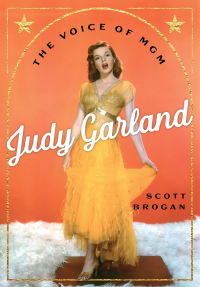
Finally, could you share your experience using AllAuthor’s services and tools and what it’s been like being part of this supportive community?AllAuthor has been a fantastic resource for me in helping me to promote my book, as well as to see (and follow) other authors. I'm delighted that we placed in the top 5 of the recent cover contest for non-fiction books. That's an honor and a thrill. Thanks to everyone who voted!
Ask Scott Brogan a Question
Have brimming questions to ask author Scott Brogan? Ask whatever you like, but keep it appropriate.
** Please note that unanswered questions will not appear on the page. Refrain from posting promotional messages.