What inspired your move from Massachusetts to Tampa Bay, and how did that change spark your writing journey?
There had been a lot of significant changes in my life in a short period of time – divorce (with the accompanying single household and independent finances), early retirement, and a new relationship. With a complete dislike of winter weather, I decided to add one more change to the list – the transition to the warm Gulf coast. I started dabbling with my writing before we moved, but once in Florida, I was able and eager to give it my full attention.
You’ve described writing as a life-long ambition. What finally gave you the push to pursue it seriously?
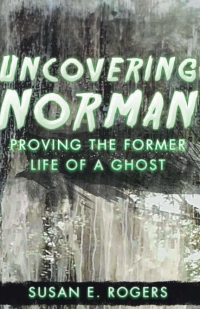
The move to Florida and its resulting freedom, as I described, was an important factor. More than that, however, was actually the first book I wrote. The writing felt natural and gushed forward like a stopped-up well finally released. That first book, Uncovering Norman, was a memoir of sorts, focused on my own personal paranormal experiences. The overwhelming support and acceptance it received from readers gave me the encouragement and motivation to keep writing.
How do your interests in genealogy and psychic spirituality influence the themes and characters in your work?
I write mostly speculative fiction, focused on the supernatural and paranormal, and my psychic ability and experiences enable me to write truthfully and honestly in stories that range from magical realism to psychological horror. My genealogy work has offered me an intimate knowledge about my ancestors, how they lived and worked, and their place in history. I often receive inspiration from them, intuitively and intellectually. So, I feel I can tell my stories with confidence and cognizance about ghosts, witches, possession, hauntings, historical settings, past lives, etc.
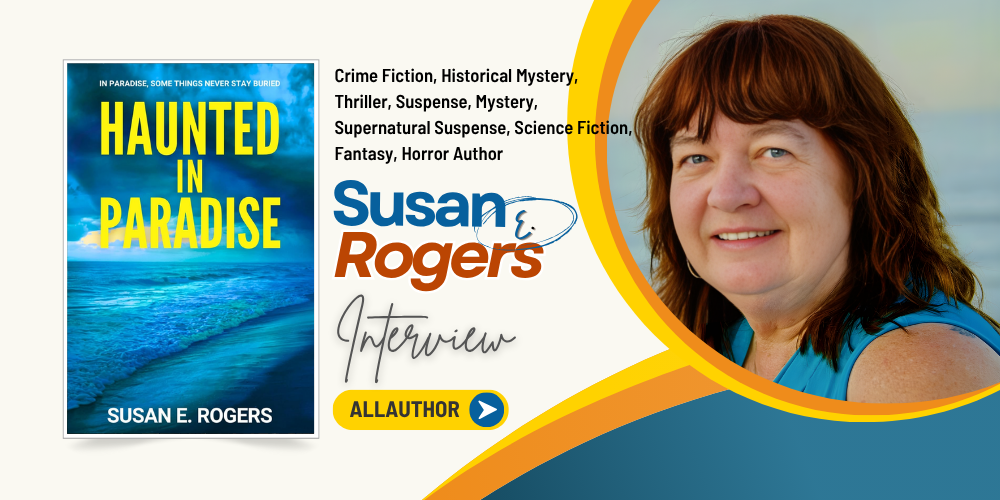
Your book, “Haunted in Paradise” blends horror, thriller, and the supernatural. What draws you most to the darker side of storytelling?
This “darker side” has always been part of my life, and it’s not really dark to me at all. However, I have to give some consideration to the way our culture considers the paranormal – which is, beyond the normal realm of things. It scares people, because they don’t understand the supernatural as part of their lives. I think people want to feel the deep emotions that dark storytelling provides them. It can be cathartic and healing, making everyday problems and “horrors” not seem quite so bad.
You’ve published both paranormal non-fiction and horror/thriller fiction. How does your writing process differ between the two?
My non-fiction work is written from memory and from my research notes, so it flows quickly and more easily. It’s my recollection of real events and the work I’ve done to validate them. My fiction writing is slower and more meticulous. I pay attention to the details of craft, such as how the story and the characters follow their arc.
Your paranormal non-fiction, “Uncovering Norman - Proving the Former Life of a Ghost” explores your own psychic experiences. What was the most challenging part of sharing such personal stories?
My goal for Uncovering Norman was to write an honest, believable story that people could relate to and accept, with a style and tone that was supportive, non-judgmental, and authentic. I wanted my readers to know it was okay to acknowledge paranormal experiences of their own. They weren’t crazy; they weren’t bad. I’ve gotten lots of very positive feedback from readers who’ve told me that, for the very first time, they felt somebody understood them and what they’d been through. That was the challenge I wanted to meet.
Do you ever draw directly from real-life experiences when crafting your fictional horror narratives?
Yes, absolutely, I do use personal experiences. Most often, I have a brief point of inspiration and create a full story around that one thing. I keep a journal where I jot down all kinds of ephemera and observations: sentences or phrases I’ve read and liked, dream segments, a strange building, things in nature, an object I see, interesting people I’ve met, quotes, TV segments, etc. Anything can give me the idea for a story. For example, my boyfriend used to work with a friend cleaning out abandoned houses. One day he found a noose in the attic of an empty house, and brought it home to me, because he knew I would find it fascinating. I did, of course, and it became the basis of my book The One-in-the Noose. When I’m ready to start writing, especially short stories, I flip through the journal pages for inspiration.
Since 2018, you’ve published five books. What have you learned about yourself as a writer during that time?
I never want to stop learning how to write! There is such a difference between my earliest stories and those I write now. The complexity of the characters, the layers of plot, the nuance of setting, and the understatement of backstory – all these have matured as my writing grows. There’s always something new to learn, another way to write better. I’m open to it all.
Your short fiction has appeared in numerous anthologies, podcasts, and literary magazines. How does writing short fiction differ from writing novels for you?
The difference is far more involved than just the length. Being able to condense all the pieces of story from 85,000 words into 5,000 words is an art and a skill unto itself. For me, it’s like breaking that big novel into pieces and writing the short story about one event or experience. There still has to be plot, story line, and character arc, but more focused and on point. Every word has to count and has to work toward the climax. I generally spend as much energy and effort on a short story. It just doesn’t take as much time as a novel to write
Are there particular authors or works that have influenced your style in horror and supernatural fiction?
I started reading horror when I was very young and began with the classics, even though their work was targeted to adults: Edgar Allen Poe, Wilkie Collins, Robert Louis Stevenson. As a teen, I discovered contemporary writers and my favorites were Stephen King, Peter Straub, Ramsey Campbell, Clive Barker, Thomas Ligotti, and Anne Rice. I think my own style is a mix of bits and pieces I’ve taken from all these writers and others, but I don’t think I did so deliberately. Their voices kept me reading their work, and it was only natural that I absorbed pieces of their styles and blended them to develop my own.
Many of your stories involve the occult and psychic elements. How do you balance authenticity with creative imagination?
I generally write atmospheric, slow burn, suspenseful horror stories, often historical and/or Gothic, presenting supernatural elements in a real world setting that readers can relate to. I will do a lot of research into any time period or place to make sure my world-building is based in fact. I want the reader’s experience to be immersive, to make them feel that they are in the middle of the action at the right time in history. This creates the emotion for me when I write, and I try to reproduce that feeling for my readers.
What themes do you find yourself returning to again and again in your writing?
Most of my themes are about psychological fear or dread, with a sense of mystery and suspense that generates and heightens those emotions. I write supernatural and occult themes, like ghosts, possession, shapeshifting, witchcraft, or a combination of them. I don’t write gore or extreme horror, though there can be a bit of blood spilled, and I don’t write about demons in the religious sense.
What has been the most surprising or rewarding response you’ve received from readers?
I would say I was overwhelmed with the positive response to my first book, Uncovering Norman. People are still reading it and sending me messages and emails to say how much of an impact the story had on them. And I’m still surprised and delighted that I have a growing base of true fans, who ask thoughtful questions about my stories and always want to know what’s coming next and how soon.
What can readers look forward to next from you — are there new projects or themes you’re excited to explore?
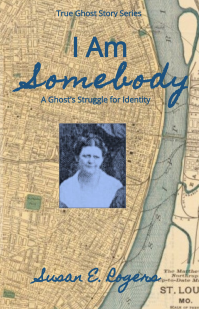
I’ve just finished the draft and started the first round of edits for a new historical Gothic horror novel set aboard a whaling ship in the Atlantic Ocean in 1850. My pitch: If Herman Melville invited H.P. Lovecraft and Homer for a sail on the whaleship Essex, just imagine what a story they could concoct! I plan to release another paranormal non-fiction book in the True Ghost Story series, probably this summer, about my experience and interactions with the ghost of a schoolteacher in St. Louis, Missouri who lived around the turn of the nineteenth to twentieth century.
Would you recommend AllAuthor to fellow authors, and if so, what services or tools on the platform have you found most useful in growing your business?
Absolutely! I love to write, but I’m not a fan of the business end of being an author. Creating advertising memes, banners, and videos on AllAuthor has been incredibly helpful and always attract attention whenever I post them on social media. Analytics is another great tool, and I’m just starting to learn to use the data to help my marketing.