Genre:
Humor Biographies & Memoirs- Country: Canada
- Books: 1
- Profession: Author
- Member Since: Jan 2026
- Profile Views: 1,627
- Followers: 33
W.J. Koczka lives on an acreage at the edge of the Boreal Forest, outside of Prince Albert, Saskatchewan, Canada. This is her first book. Wanita's forty years in Corrections management refined her non-fiction writing skills. Wanita was the primary caregiver for her elderly mother who she planned to spend more time with once she retired. However COVID-19 overtook the world and she was unable do so. Her mother, Mary died in May 2021 and while grieving and lost with out her mother, Wanita decided to write a memoir as a tribute to her mother and a life well-lived.
Like her mother, Wanita cherishes family time, Christmas and family celebrations. She is a results-oriented woman who takes pride in hard work and the value she adds to both her family and work life.
She continues to expand her craft by creating writing projects in other genres.
W.J. Koczka's Books
Stay in the loop on books by W.J. Koczka. See upcoming and best-selling books by the author here. You'll also find the deals on books by W.J. Koczka.
** Please note that the information or price displayed here may not be the updated. Make sure to double-check the latest book price before buying books.
** Also, there might be other books by W.J. Koczka not listed on AllAuthor.
| Book |
|---|
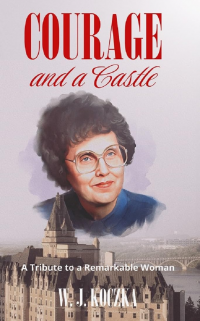
Courage and a Castle: A Tribute to a Remarkable Womanby W.J. KoczkaPublish: Aug 20, 2025General Nonfiction |
W.J. Koczka Interview On 03, Jul 2026
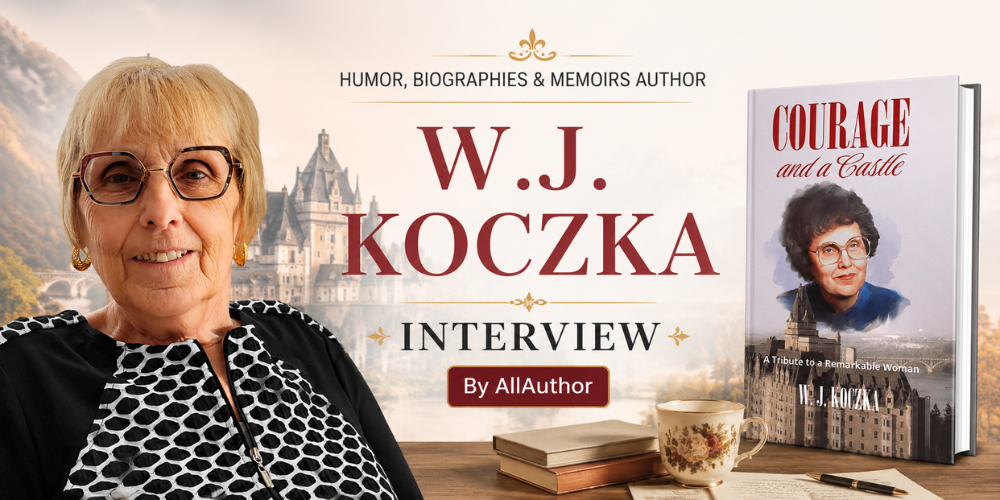 "W.J. Koczka is a Canadian author living on an acreage near the Boreal Forest outside Prince Albert, Saskatchewan. After a 40-year career in Corrections management, she turned to writing to honor her late mother through her debut memoir. Passionate about family, tradition, and meaningful storytelling, she continues to explore new writing projects across multiple genres."
The short answer is that my mother, Mary. She inspired me to write. I retired from corrections in 2020, just as the pandemic was closing in on the world. When I retired, I planned to spend more time with my then 96-year-old mother. However, COVID-19 measures prevented that and my mother passed away on May 5, 2021.
After her death, I felt robbed. I couldn't spend time with her as I had intended and I experienced a deep loss and grief. In my grief, it came to me that I should write — and what I should write about was my mother's life.
I felt very fortunate to have such a mother and I decided to honour her by writing a book that celebrated the qualities that made her a remarkable woman of strength. She might have been surprised that I chose her as the subject. “Courage and a Castle: A Tribute to a Remarkable Woman” reflects my perspective on my mother's life and serves as a tribute to her well-lived life.
Your memoir, “Courage and a Castle: A Tribute to a Remarkable Woman,” is deeply personal—what was the emotional experience of writing it while grieving your mother?I felt the pandemic robbed me of the valuable time I had planned to spend with my mother. At first, my writing was purely emotional. I would recall an event, begin to write about it, and cry. Then I realized I needed a plan for what to write and what kind of book I wanted to write. That meant doing research, which, in one way, was good because it distracted me from my sorrow. On the other hand, I remembered that my daughter had spent one summer with her grandmother (my mother) and videotaped her as she talked about her life. The tapes (which I had converted to CDs) were about 17 hours long. I watched them several times, taking notes on what my mother considered significant in her life and how she wanted to be remembered. Every time I watched them, I felt loss and was overwhelmed with sorrow, but as I wrote about her life, I began to understand it in ways I had not before. Slowly, my grief and anger were replaced by gratitude and greater admiration.
I started to taking writing classes to prepare myself to write more effectively. I joined several writing groups, one of which I am still a member of. I wrote stories about my mother and shared them with my writing circle. They would critique my work and came to love my mother. This was very cathartic for me, like healing in instalments. They read my revised stories and came to know my mother better, and through that I was finally able to accept that, even though my mother was gone, her memory lived on, and others were inspired by her life, as was I.
I also shared my stories with my husband, brother, sisters, and daughter, and we reminisced about what we loved about Mom, how funny she was, and the things we used to do together. Each of us had a special relationship with her, and we all missed her presence in our lives. Remembering the past with family and carrying her into the present helped me through my grief.
I still feel loss, but it is not as painful as the first few years without her. I am emotionally satisfied that I think she would be proud of how I represented her life story as a tribute to her. Though I am sure she would wonder what was so remarkable about her life that made me feel the need to tell her story, as she was a humble woman.
How did your forty years in corrections influence your storytelling style and perspective?My experience with writing in corrections was fact- and outcome-driven. In running operations, it was paramount that we operated within the constitution, laws, regulations, and policies that guided us. I was accustomed to those kinds of documents and to working within frameworks. I also had to present detailed facts about situations, along with supporting evidence. I was required to provide detailed briefings on legal documents and to contribute language in collective bargaining negotiations with unions. My writing style was prescribed and professional. It fit with my results-oriented nature.
As I began writing and researched the genres, it became clear that I would write my mother's story as nonfiction. I wanted to represent the facts of her life with an interpersonal, human-life-condition element. This aligned with my perspective. Though my role in corrections was about confinement and rehabilitation, there was always a human element. Every inmate had a life story, a background, and family or friends who cared about them. Relationships and connections are cornerstones of my work and life. I knew I did not want to write a biography, as that would constrain me from telling the heart story I wanted to tell. After researching the elements of memoir, I realized it was the best fit and chose to write a memoir, but in an unconventional manner.
My book is fact-driven and goal-focused like my previous workplace writing, but it deviates from my corrections writing in that it is rich and emotive, sprinkled with wit.
What was the most challenging part of turning real-life memories into a structured narrative?Shaping key events from my mother’s life into a cohesive narrative proved challenging. That changed when I found revision guidance that helped me identify the manuscript’s scenes and central themes. Once I did, the gaps and overlaps became clear, and the revisions I made helped pull the entire story together. The book is made up of vignettes that can stand on their own, yet together they form a rich tapestry of my mother’s life.
Can you share a particular moment or memory of your mother that shaped the heart of your book?My mom was a giver, a hardworking woman of faith who showed unconditional love. She was grateful for each day. When she was hospitalized in late April 2021 during the pandemic, I could visit with her during the day but was not allowed to stay overnight. Once she was designated palliative care, I was then allowed to stay overnight. Eventually, she would be moving her to my home on my acreage.
When I told Mom I could sleep over in her hospital room, she said she wanted to sleep at my house. I told her the best I could do for now was stay with her at the hospital where I would sleep in the hospital chair. She tried to move over in bed, saying I could sleep with her.
She was always considerate, yet clear about what she needed and wanted. I am grateful that my sisters and I were so blessed to come full circle and care for our dear mother at the acreage, where she wanted to be for the last few days of her life. Her unconditional love and our family's ability to return it are at the heart of my mother’s life story.
How did the COVID-19 pandemic impact both your personal life and your decision to write this memoir?As the pandemic began, I think we all hoped it would be short-lived; however, it grew deadlier, and more restrictions were imposed. I was my mother's primary caregiver for the last 10 years of her life, while my sisters and brother lived in British Columbia and Ontario. During COVID-19, I monitored her daily, even though I was usually not allowed to visit her indoors.
I was consumed with trying to keep track of how she was without seeing her in person. When I was able to visit her through the glass door of the facility, I had a better sense of her physical and mental health. By this point, my Mom could not use the telephone without assistance. To see her, I set up staff-assisted video calls on her tablet.
Her Alzheimer’s was progressing and, like the rest of the people living in the facility, she was confined to her room most of the day. This was very hard on her. She withdrew from conversation and gave only vague responses about how she was doing.
Our family watched the horror unfold for other families as care homes and hospitals became breeding grounds and death sentences for those inside. I initiated discussions with Mom’s family doctor, the care home, and our family about moving her out of the care home to live with my husband and me on our acreage. We were advised that the care home could not accept her back if either my husband or I contracted COVID-19 and could not care for her. She would have to be placed in hospital until other alternatives could be put in place. All things considered, we decided to leave her in the care home and continue to monitor her as best we could.
During COVID-19, my personal life revolved around my Mom. Although it certainly was not the retirement time with Mom I had anticipated, it was wonderful to be able to stay with her in the hospital after she was placed on palliative care and then, with my sisters, to care for her in the last few days of her life at my acreage, a place which she considered her retreat. After her peaceful passing in May 2021, I was emotionally exhausted. Even planning a celebration of life was challenging because attendance was restricted.
In the fall of 2021, I signed up for online writing classes. This was the start of my writing.
In what ways does your book celebrate your mother’s life and legacy?The first chapter of my book is written in my Mom’s voice, as she thought back on her life. She wonders how it is that her family cannot understand the identity of the Man in Red who comes to visit her. This chapter sets the stage for my narration of the vignettes of her life that follow.
Mom’s story begins in another era but is common across time: young love starts full of hopes and dreams, and then life happens. We see my mother starting in marriage with the love of her life, only to have her and my father's dreams destroyed by a tragic accident involving my father. We see how her faith, unconditional love, and hard work kept her positive and supportive of my father through his many surgeries. We see how she takes on challenges and becomes the family's breadwinner through her work at the iconic Hotel Bessborough, her Castle on the River, in an era when it was uncommon for women to work outside the home. The Hotel Bessborough provided Mom with financial stability and hope, serving as an anchor for her and our family, just as it did for Saskatoon when it was built in the Dirty Thirties. The Hotel Bessborough and Mom shared cornerstone status.
My Mom faced many challenges and tragedies throughout her life, including her later years marked by Alzheimer's. Her innate optimism, intuition, and faith guided her, giving her the courage to live a fulfilling life. We see her resilience and ability to adapt and reinvent herself throughout her life, as she faces adversity, overcomes life's challenges, and ages with grace and dignity.
This book celebrates the intimate relationships she shared with family, and the impact she had on those who knew her. In the end, we come full circle. As Mom faced health challenges and Alzheimer’s, she transitioned from caregiver to care recipient. She passed with ease, at peace and with grace, enveloped in the love of her daughters and family. Her unconditional love for family, joy in life, and faith are endearing qualities.
“Courage and a Castle” offers a unique and compassionate look at the human condition through the life of my mother; it is a heartwarming and inspirational book that pays tribute to her life and how she wanted to be remembered as a woman who loved unconditionally. One of her beliefs was, “There is always more love; there is always more than enough love to go around.”
Did writing this memoir help you process grief or bring a sense of closure?Writing this tribute to my mother helped me process her loss. She was the central focus of my life for many years, and suddenly not having her in my daily life was an emotional shock. What was I to do with the time I should have been spending with her? I was not ready to be motherless. She had a way of gently nudging and weaving things together in her life and in the lives of her children. She knew I had always wanted to write, but life took over and I set that dream aside. When I was struggling with her loss and what to do without her as my focus, she showed me a new path: writing about her. It was a win-win. I would finally write, and, bonus, I would write about my Mom. It was a perfect match, and through my grief, I wrote a book to honour my mother. I have closure now that my book is published, with colour photographs that show the world my Mom's remarkable, inspirational life story.
What message or feeling do you hope readers take away after finishing your book?I hope that my mom’s life story will inspire readers and help them appreciate that there is hope, joy and fulfillment in life, even if one’s life plan is altered. I hope readers will experience that “Courage and a Castle” offers a heartfelt and compassionate perspective on the human condition.
Often, a person or a couple, like my mom and dad, have dreams they hope to achieve, and life doesn’t go as planned. As my mother did, one must sometimes reimagine oneself and one's life plan as life unfolds.
The events described in my book reflect the courage, faith, and values my mother upheld. Her unconditional love, acceptance, and openness to change were defining aspects of her life. For readers who share a similar positive relationship with and view of their mothers, it will evoke treasured memories; those who lack a positive, inspiring maternal influence can benefit from hearing my story about my remarkable mother.
I hope readers will understand that despite the challenges my mom faced, through the phases of her life and into her struggle with Alzheimer's, her innate optimism and faith guided her, giving her the courage to live a fulfilling life. I hope her story inspires others to find the courage to do the same.
I also hope people take away a sense of time and place. This book captures a snapshot of life during an earlier era, illustrating small-town Prairie life in Saskatchewan, where many young folks starting out in the 1940s moved to the big city to pursue their dreams together. We see, for example, the history and significance of the iconic Bessborough Hotel, built during what was called the Dirty Thirties, as well as how it later became a cornerstone of our family's life. I trust that readers will see that across different time periods, people still face adversity and overcome life's challenges, aging with grace and dignity.
Readers will experience the nature of my relationship with my mother evolve, which might be also true for them. Initially, my mother confidently fulfilled the roles of wife, mother, family member, and worker. As she aged and faced health conditions, including Alzheimer's, she transitioned from caregiver to care receiver. This is a role most mothers are not comfortable with. One of the themes of the book is that, despite changes in roles between mothers and daughters, there is value, respect, dignity, and fulfillment in the lives and relationships of both. And in my mother's case, unconditional love for family, joy of life and faith are endearing qualities.
People who have read "Courage and a Castle” tell me they are deeply moved and inspired by how my Mom lived her life. Through that, her legacy of faith and unconditional love lives on.
As a first-time author, what surprised you most about the writing and publishing process?I was surprised by the many phases of writing a book and the revisions required to tell the story the way I wanted it told. I was struck by the support I received from my writing circle as I wrote through my grief. They offered condolences and useful critique at the same time. I was pleasantly taken aback by the support from the writing community for a host of processes I knew nothing about, such as book launches.
I was amazed to learn about the many business aspects behind simply writing, as well as the branches and agencies that are part of the publishing and marketing business. I find it perplexing that major publishers are generally closed to unsolicited manuscripts.
How does living near the Boreal Forest influence your creativity or writing routine?While I was working, I appreciated the quiet and seclusion our acreage in the Boreal Forest offered. It is a well-treed, retreat-like setting that brings a peace I love and an uninterrupted opportunity to immerse myself in my project. I am most productive in the late afternoon and into the night. I can look out the windows and feel comforted by the surrounding nature. When I need a break, I can step outside and enjoy the calm of my surroundings. My flow is not interrupted.
On windy days, I can hear my brass-toned chimes clanging together in a rhythm driven by the wind’s will. I find it as comforting as listening to the ocean waves lap against a shore. A benefit of living in the forest is that when I need a reset, music is my go-to, and I can blast the songs I choose without disturbing any neighbours. Then it’s back to writing.
Family and traditions seem central to your story—how have these values shaped your life and your work?My mother and father came from large farm families who worked hard, played hard, and enjoyed family time. As we were being raised, my parents instilled in us a strong work ethic, the values of continuous learning and education, and the importance of family.
As teenagers, my brother and I were fortunate to get part-time jobs at the Bessborough Hotel, where our mother worked. With our mother coaching us to do our best, regardless of the jobs we were given, we did. When she received reports that we were hard workers and well-liked, she was proud, and so were we. The Bessborough was a training ground and foundation for our family’s future work lives, as most of my siblings worked there, coached by Mom. Along with work ethic, the foundations for financial independence were laid. From the values instilled in me, I enjoyed the financial rewards of hard work and the contribution it made to raising our family.
Both my parents valued lifelong learning and higher education, and they encouraged all family members to pursue them. That encouragement sparked my desire to attend university while working full-time and raising young children. It took me ten years of night and summer courses to earn a bachelor’s degree, and I am proud of that accomplishment. My degree opened doors to further career aspirations, including roles in corrections management. My career in corrections was challenging, and I embraced it, taking pride in advancing to higher-level positions. Like my mom, I retired at 68. In retirement, I remain results-oriented and productive, and I continue to learn and grow through my writing.
As I grew up and had a family of my own, we continued to participate in family events and traditions around Christmas and Easter, which my Mom loved. As Mom aged, she could no longer handle all the preparation for Christmas and Easter celebrations by herself. The traditions remained, but the venue changed to the acreage where for the last ten years of Mom’s life, she spent most of those special occasions, my siblings joining in whenever they were able.
At this point in my life, I have three great-grandchildren; only one has known a life that included “Little Gram.” Just last week, one of my granddaughters sent texts and pictures of her, her husband, and their two daughters, ages four and two, visiting “Little Gram's” gravesite, another tradition I learned from my Mom. Her influence continues to shape our family, even in her absence.
What advice would you give to others who want to write a memoir but don’t know where to begin?To begin, I would encourage new memoir writers to research the elements of memoir. Some frameworks can help you put together the kind of work you hope to produce. If you feel the desire to work outside the box, do it. That is why I call my memoir unconventional; it is outside the norm for memoir. It works for me, and I am pleased with the result.
You will make your own path, own your story, and be proud of your accomplishments. I encourage new writers to just write; you will figure out, as you write, whether you are a Plotter (outlining your book before writing) or a Pantser (flying by the seat of your pants) in your approach to writing. Some of us are a combination. Once you become comfortable with your approach, you can reorganize your work for flow and consistency as you revise.
As to where to start, that depends on the kind of memoir you want to produce. For me, I was not interested in a chronology of events with specific dates, I was interested in showing readers the value my mother had for our family and me, and the inspiration she was to me. So I wrote to that, from my heart. Start wherever you are, as the beginning is different for each of us and depends on what you expect your project to look like in the end.
You mentioned exploring other genres—what kinds of stories are you excited to write next?I am currently developing my skills in writing personal essays. I have found the Hermit Crab form of writing (where you compose a creative nonfiction piece borrowing from an existing, non-literary format such as a to-do list, police report, or recipe as a shell to house a personal narrative) to be very impactful. I have taken some classes on metafiction, and to my surprise, though I have generally shied away from writing fiction, I have written stories in this style that I find very compelling. The value of continued learning keeps me exploring other genres.
What has your All Author experience been like so far? What are some highlights?I have found All Authors valuable in that I have assistance with making posts on my “Courage and Castle – A Tribute to a Remarkable Woman” website. It has also been valuable, as I can follow other writers and they can follow me, gaining insight into the world of writing and authors.
It was fun having my book cover in the nonfiction book cover contest.
My highlight is that I am honoured to be featured in the Author Interviews section of the All Authors website.
Ask W.J. Koczka a Question
Have brimming questions to ask author W.J. Koczka? Ask whatever you like, but keep it appropriate.
** Please note that unanswered questions will not appear on the page. Refrain from posting promotional messages.
Contact W.J. Koczka
The author, a good book and you! Contact W.J. Koczka here.
** Please refrain from spamming and don’t bombard the author with promotional mails/messages. Your IP/Email address may be blocked if found doing so.
Contact Author on:
Facebook,