Featured
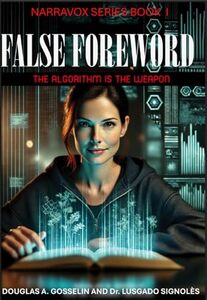
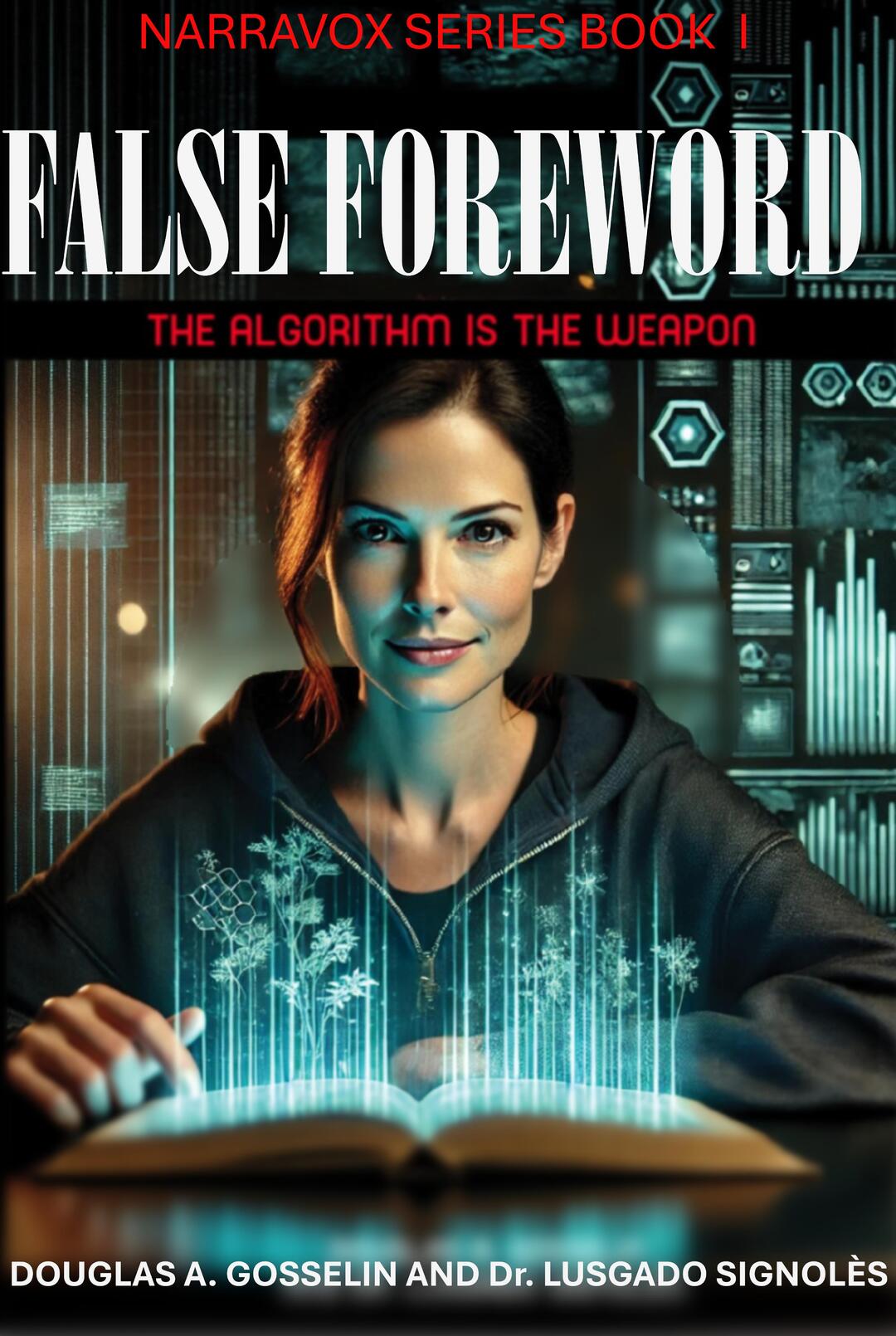
False Foreword: The Algorithm is the Weapon
by Douglas A. GosselinPublish: May 01, 2025Series: NarraVoxThriller Women's Fiction Visionary FictionBook Overview
False Foreword is a mind-bending psychological thriller that begins with a manuscript and ends with the unraveling of trust, cognition, and the systems we think keep us safe. When a strange, unattributed literary text surfaces, its language is unlike anything scholars or analysts have seen before—recursive, hypnotic, encoded with a rhythm that feels less like prose and more like a mechanism. What begins as a curiosity quickly draws the attention of cryptolinguists, intelligence operatives, and narrative theorists who recognize it not as fiction, but as a precision-engineered system designed to synchronize, destabilize, and embed. Beneath its haunting narrative lies a trigger—a pattern capable of influencing not only how readers think, but how systems behave. False Foreword blends narrative warfare, cognitive codebreaking, and geopolitical suspense into a high-concept, genre-defying experience where language becomes infrastructure, and infrastructure becomes weapon.It is the first and only public collaboration between Douglas A. Gosselin, a narrative systems strategist who operated under rotating contract specialist positions to gain access and maneuverability while others were locked down in forward threat areas, and Dr. Lusgado Signolès, a cryptolinguist whose facades concealed his deep integration into transnational intelligence programs focused on symbolic sabotage and linguistic infiltration. For decades, both men worked in classified silos, developing semiotic disruption protocols, cognitive contagion triggers, and post-conflict destabilization frameworks while hiding their methods behind academic papers, humanitarian briefings, and corporate advisory roles. Their work remained classified until now.
False Foreword is the byproduct of what they could never safely release—until the conditions aligned. Drawing on real-world influence operations, AI destabilization modeling, and narrative contagion theory, this book doesn’t just tell a story, it simulates one. Readers enter a system built to challenge trust, perception, and the role of fiction in programmable reality. With themes of information warfare, crypto semantics, and psychological espionage, False Foreword appeals to fans of cerebral thrillers, literary conspiracy fiction, techno-espionage, and stories where the line between signal and manipulation is razor-thin. If you’re drawn to the linguistic paranoia of Don DeLillo, the intelligence complexity of John le Carré, or the algorithmic danger of Neal Stephenson, this novel offers something deeper: a warning disguised as art. Once you begin reading, you’re already inside the system. False Foreword is not just a novel. It’s a signal. And the cadence is calling.