Laurel A. Rockefeller Interview Published on: 10, Apr 2017
 Tell us a bit about your childhood and life growing up. Were you always passionate about writing or was it instilled in you after a particular incident?
As you know from my standard biography, I was born, raised, and educated in Lincoln, Nebraska USA. I graduated high school with honours and went on to the University of Nebraska at Lincoln as the only triple major (writing, psychology, and history) in my graduating class of over 5000 students to attain Phi Beta Kappa. I spent seven semesters on the Dean’s List and made it into the top 3% of my class. But the journey there, to my academic success as a student and professional success as a historian and researcher is the most unlikely story you will ever hear and one whose details I tend to keep private. I was born into a home of extreme violence, things that give most people nightmares to hear about and for a very long time gave me nightmares as well. My novels “Ghosts of the Past” and “Princess Anyu Returns” channel those experiences and are probably the best way to discover and understand my childhood. I dealt with those experiences by singing. I actually started out as a singer-songwriter. Indeed my first national publication is a sonnet called “Why Bilbo?” which appeared in the American Tolkien Society’s “Minas Tirith Evening Star” in January 1992. I made up my own songs, sang songs I knew (I have a lovely voice you can hear on YouTube at https://www.youtube.com/watch?v=e92sXPmEFro), and filked existing songs with my own lyrics. Writing therefore really developed through my music. To this day I love to sing and most of my books feature at least one song or original poem in them. I actively look for period music for the Legendary Women of World History books as I write them. It’s actually a feature to the books that make them unique. That lyrical quality to my work comes out of its origins in song – just like some of the best and most celebrated historical literature, including Shakespeare who of course is a major influence on my stage dramas. When I’m stuck on how to communicate something from history on a live stage I often turn to Shakespeare for help!
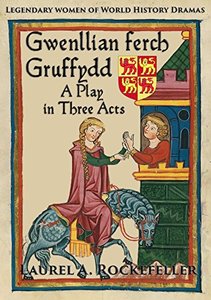
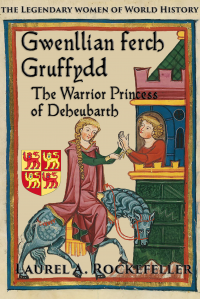
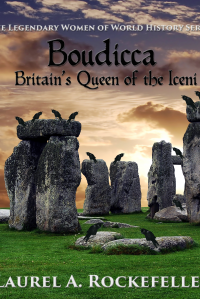
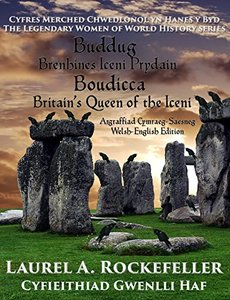
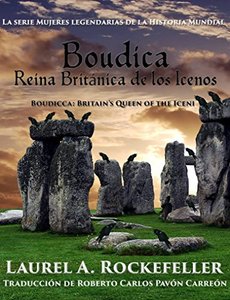
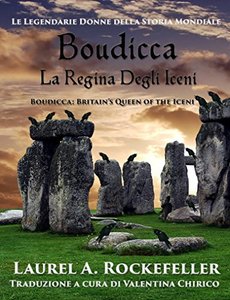
What is it about history that particularly draws you in? What is one of your favourite historical tales?History has always been with me. It’s the one interest I share with my blood relatives, though not in detail. I was raised with blood-thirsty tales of modern warfare, so of course what interested me was medieval history. Tales of Robin Hood, King Arthur, and of course Shakespeare gave me the history bug initially. In the mid-1980s I watched Michael Praed in “Robin of Sherwood” which further drew me in to the middle ages. My freshman year of university I was introduced to the Society for Creative Anachronism which I stayed with for about 20 years. The SCA taught me period music (including the song in the YouTube video I cited earlier) and for a long time I enjoyed being a re-enactor despite being socially shunned by the cliques. The SCA helped me become a hands-on historian. I am a do-er, not a spectator in most areas of life. So I always want to be where history happened. There’s no better teacher than your own hands, eyes, ears, and feet. Favourite historical tales … that is a tough one because there are so many and as a world historian I get to study so many different cultures. Gwenllian ferch Gruffydd’s final battle against the English in February 1136 CE comes to mind, as does Boudicca’s final battle against the Roman legions in 61 CE. Both women died at the end of those battles and in doing so changed the fates of countless billions of people. They are both incredibly inspiring women and the stories of their final days really is the stuff of legends. I don’t think I can tell those stories in a sentence or two here so I’ll defer to “Gwenllian ferch Gruffydd, the Warrior Princess of Deheubarth” and “Boudicca, Britain’s Queen of the Iceni” where I tell those stories with the richness of detail they deserve.
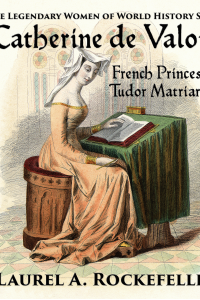
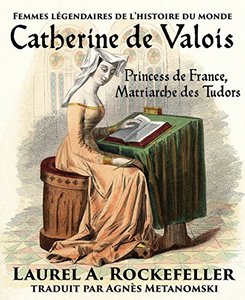
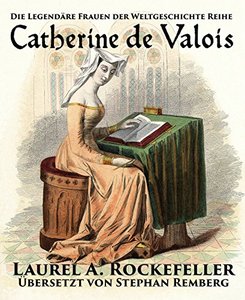
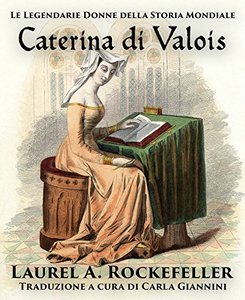
What did you do with your first advance? Do you think your writing process has changed since the publication of your first book?I never received an advance on my writing. Though I am traditional published on about four or five books in Chinese, I was never paid upfront for that work. Indeed my Chinese publisher’s sales threshold for payment to me is so high that I have yet to receive a single royalty payment from them. As for writing process: writing non-fiction is very different from writing fiction. My first book “The Great Succession Crisis” involved a lot of world building which I did from the ground up with math and physics, my work checked by an engineer I knew at the time. I spent a lot of time consulting four different versions of the periodic table of elements, factoring in weather patterns based on norms on both Jupiter and Venus, and designing everything from ecosystems to religions to heraldry for the series – much of that before I finalized a single chapter. As you might guess, history is a different matter altogether. When I start a new narrative history/biography what I do is watch a lot of documentaries exploring the culture and history of whoever my ultimate subject is. I start from as far back in time as I can find data about and then work from there. Cultural context is very important to discovering who someone is so I get as deep as I can in really understand the times each person lived in. Once I have that foundation, I read as much as I can about the person and different specifics of their lives. I build a timeline of events which is published at the end of each book (starting with book two, “Catherine de Valois”). The timeline is an extremely useful tool for readers but it is first and foremost my “story outline” I work from. I never outline my stories when writing fiction, but with history it is critical that the story unfolds exactly as it happened – or as near as I can redact it based on the evidence in front of me.
What made you decide to self-publish? What is the hardest thing about being a self-publisher?You know I don’t honestly know why I went the self-publishing route. It was an instinctive decision. Hardest part of self-publishing is the marketing side. I think that’s pretty normal for most creatives. We would rather create than sell.
What are 5 of your favourite movies?That changes with my mood because I really love classic films in particular and might be about give you 50 favourite better than five. For historical films I like “Let Him Have It” which was Ninth Doctor Christopher Eccleston’s breakout biographical film about Derek Bentley, the last person executed by the UK government. “The Iron Lady” is another great biographical film – this time about Margaret Thatcher. “The King’s Speech” about King George VI is wonderful. I also like “Luther” about reformer Martin Luther. One of the best biographical films of all time is “The Imitation Game” starring Benedict Cumberbatch as Alan Turing. On the fiction side “Holiday Inn” starring Bing Crosby and Fred Astaire, “Gone with the Wind,” Judy Garland’s “A Star Is Born,” Star Trek “First Contact,” and “The Princess Bride.”
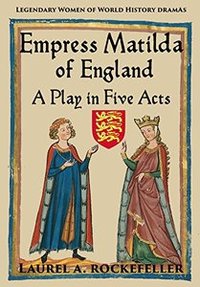
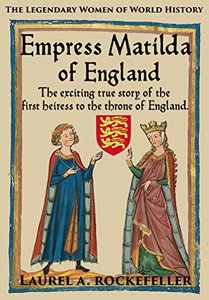
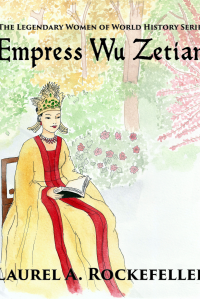
How many unfinished and un-published books do you have?I am currently adapting “Empress Wu Zetian” for the stage as a three act play which I expect to publish sometime this spring. I just published “Empress Matilda of England” as a five act play in February after publishing the original book in January. Once that is done I will begin research on book eight about Abbess Hildegarde von Bingen, the medieval intellectual, healer, and composer who is my first non-royal biography subject. In addition, I am starting a biographical encyclopaedia so I can cover women about whom I do not have enough information to form a full-scale book. Arranged geographically, the book series will feature one to three page biographies of amazing women we all need to learn more about. That’s really my ten year project that I intend to work on between other projects and when I do not feel motivated towards the current biography in progress.
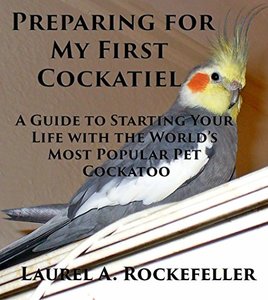
Do you have any peculiar, hidden talents that not a lot of people know about?I communicate with parrots very well. I love birds and they love me. I remember one occasion when I was walking to work from the subway in Manhattan and this Goffin cockatoo just about jumps on me while I walked next to his owner. We stop and the guy asked me if I am a cockatoo person. I say yes, how could he tell. He said his bird doesn’t normally do that—just with people who love and understand cockatoos. If I’m having a bad day and you want to cheer me up, a cockatoo is the quickest way to do it, especially cockatiels! I will almost always forget about whatever is bothering me and engage with that bird.
Is there any particular place in the UK or US that you like to go back to again and again because of its history? Is there any country/place you really want to visit and why?New York City is a gold mine if you are interested in colonial America. I lived in Brooklyn for four and a half years and a suburb of Newark, NJ for years before that and took advantage of the many Revolutionary War and colonial NYC events held every year across the city. Fraunce’s Tavern on Pearl street in lower Manhattan hosts lectures and special touring exhibits (like the Magna Carta) in the museum on a monthly basis. Federal Hall also hosts special events during Battle Week in August. Both Prospect Park and Greenwood Cemetery are preserved battlefield from the “Battle for New York” in August 1776 which was, by the numbers, the largest battle in the entire War for Independence. As rule I’m not particularly interested in US history, but I love the local history side of New York City. Most people don’t think of NYC as history tourism destination and really should! Big Onion Walking Tours are wonderful if you ever want an affordable history tour in NYC. As for where I really want to go right now: two places. Firstly I want to go to Aberffraw, Ynys Môn in Wales which was of course the medieval capital of the kingdom of Gwynedd and birth place to Gwenllian ferch Gruffydd. Secondly, I would love to explore Germany so I can better understand both Empress Matilda of England (she reigned 11 years as Kaiser Heinrich V’s Kaiserin) and Abbess Hildegarde von Bingen. My German translator is Christina Löw and I would love to spend some time with her and see the beautiful places she calls home.
What kind of research do you do for your books and how long does this research usually take?I alluded to this earlier when talking about writing process. For the Legendary Women of World History, it really starts with orienting myself in the culture/nationality of the person I’m writing on. I go as far back in time as I can so I can form an accurate scheme in my mind as to who these people were/are. For example, watching several documentaries on Roman Germany revealed to me that ancient Germanic societies were not fundamentally all that different from their western Celtic neighbours in Gaul, Iberia, and the British Isles. Pre-Roman Germanic religions actually had a great deal in common with Brythonic Druidry insofar that oral tradition, period documents, and archaeology has revealed it. When you start with that foundation, you definitely see the German Salian dynasty in a wholly different light and it’s easier to understand the similarities and differences in how the societies evolved. After I establish the big picture of overall history and culture, I work my way into specifics, getting narrower and narrower as I process. I build the timeline and bibliography and refer back to both to answer specific questions that come up as I write. It’s a very top-down process that can take a few weeks (as was the case for Boudicca and Catherine de Valois) or several months. When there is overlap between two books in process it usually takes longer on a given book because I’m filling in that research data on both at the same time and mentally building the stories simultaneously. The extra time is well worth it because that also empowers me to interlace the stories and better convey the relationships (even if indirect) between contemporaries.
What was your favourite toy as a child? Favourite cartoons?I grew up in great poverty so there were not a lot of toys. Probably my favourite Christmas present was when I was 7 or 8 and I received a toy organ. One of the few surviving childhood photos of me shows me on my birthday in front of the tree with the present containing that organ standing right behind me. That organ was really the only time my family gave me something that really brought me joy. My music is very important to me and I am eager to acquire another keyboard and finally learn how to play it well. Cartoons came a bit later when I was in junior high. All the big 1980s animated hits were on television at the time –ThunderCats, SilverHawks, JEM, Transformers, He-Man, and She-Ra. I loved all of them, especially JEM because of the music. JEM is very dated to the 1980s, but the songs are still solid (if overly simple to adult sensibilities) and I’ll gladly sing along if someone plays them.
Which book did you find particularly difficult to write and why?Emotionally “The Ghosts of the Past” was hardest on me. It literally gave me nightmares because it was stimulating long buried childhood memories. The villains in particular in that book are constructs from the horrors I faced. It was ultimately very therapeutic for me to write Ghosts and communicate some of what I experienced to others, but breaking down those walls and looking at the pure evil behind them made the writing process rather uncomfortable to say the least. At the same time, Ghosts has the most original songs in it of all the books I’ve written so far. So that inner light that is so fundamental to who I am really does shine through. Here’s a lovely example from chapter 7 which you can hear me sing on YouTube: “Love for the beauty of the soul. I shall love you always. When the flower of life has gone, ever I shall find you. When all is lost and winter comes, I shall be your spring time. And memory fades and wilts then, I shall always find you…. I shall always find you….”
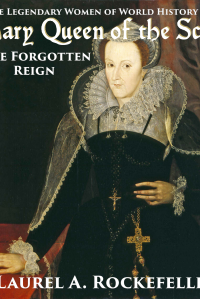
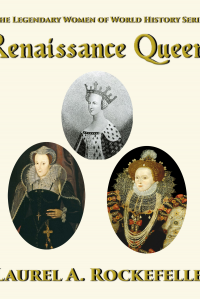
What is the best review you've ever received? What was the worst and how did you deal with it and move on?Worst review: the one star on “Mary Queen of the Scots” where she writes, “Terrible! Definitely not worth the money. Not much content and could have been written by a 5th grader.” Besides the one star (which no one likes) it’s one of my worst because none of what it says is true, evidenced by the four and five star reviews the biography received, some by people who came into the book very knowledgeable about Queen Mary. The bibliographies and timelines alone on these books make them worth the purchase price and a vital resource for students. Mary in particular quotes directly from period sources: I include one of her poems that she wrote when she was grieving the loss of her first husband. I paraphrase the rare transcript made of her first meeting with Scottish Reformer and firebrand John Knox (the original is difficult to understand, even for adults, let alone young readers), bring in the latest data we have concerning specific events in her life. Mary is a very solid book and I am very proud of it. So remarks like that really hit my pride. I deal with it understanding that the reviewer obviously didn’t read the book more than a page or two. Those who have read my narrative biographies love them because they are well-crafted and built on solid research. You may disagree with my conclusions on the data and that is fine. That’s what learning is all about. I welcome sincere debate. Going to the positive, one of my favourite reviews was also on Mary Queen of the Scots –this time from a Scot living in England who knew a great deal about Queen Mary before she read my book and most certainly knows more about Mary’s captivity in England during the last 19 years of her life than I do; my book focuses on her reign and the events leading up to that captivity. Hearing her praise me for my research quality is very validating. That praise tells me that I’m right to focus on young readers and the broader adult population outside of academia. It’s time to bring history out of its ivory tower box and into the mainstream. I’m passionate about doing just that.
If you were stuck forever on a deserted island with one tv and one companion, who would you pick as your companion? And what series would you not mind watching on that TV?My cockatiels must come with me; that’s not negotiable. If however you mean human companion, that’s a hard pick for me. Doctor Who alumni Christopher Eccleston and David Tennant would both be great choices, Eccleston in particular because I love his integrity and he seems like an interesting person I would be able to talk to. As for series: make it Star Trek, please, though the first four series of Doctor Who (Christopher Eccleston and David Tennant seasons) would also be top picks for me. Of the Star Trek series, my favourites are Next Generation and Voyager. The stories and the cast on both are just perfect. For something more historical, I want Downton Abbey on the television please. DA really does deserve all the awards it received.
Do you have anything to say to any aspiring writers or young history fanatics out there?Study everything, even the subjects you don’t feel you do well at. As a writer, you never know what information you will need to know to be successful. When I was in the eighth grade my speech-drama teacher taught us that you have to know something about a subject in order to ask questions about it and that is very true. Your childhood and teen years are about forming foundations so that you can learn and grow as adults in whatever specifics you need. Take advantage of every learning opportunity presented in front of you. When I was designing the Peers of Beinan universe for those books I found myself using what I learned in high school chemistry class. Just being able to read a periodic table of elements (a la high school class) empowered me in countless ways writing those books. With history, you really need a solid world history background, even if American history is your passion. The world has always been far more connected than people realize. For example, events in 17th-18th century China made a huge impact in how the Crown and Parliament ruled over its American colonies—but you wouldn’t know that unless you studied Chinese history. I have a broad history background and as a re-enactor I played late 12th century Jurchen (later called Manchus – the nationality of the ruling family during the Qing dynasty). That makes a world of difference in my understanding of US history. The more you know about the more places and times the better. Take a top-down approach to history and you will succeed.
How do you usually promote your books? Have you found your experience at AllAuthor particularly useful and satisfactory? Would you recommend this platform to your friends?I use social media a great deal, especially twitter. Hootsuite is a very solid tweet scheduling platform. I am learning how to use the tweet scheduler on AllAuthor. Both have different uses. AllAuthor takes you to your AllAuthor page which of course has links to several book retailers. With direct tweeting or using Hootsuite obviously you are tweeting just one link. So the services are complimentary. In March I ran several Amazon giveaway sweepstakes in honour of Women’s History Month and set up the giveaways so that to enter you had to watch a specific video from my YouTube channel. That’s been very successful for me. In 2016 in particular I invested in both purely informative “History Minute” videos and in book trailers thanks to the talents of Rachel Bostwick from Fiverr. I highly suggest her work. Most of the videos you see on my AllAuthor pages were made by her. AllAuthor I think will become increasingly useful to me as I post more books to the site. I am published in not only English, but Chinese, German, French, Spanish, Portuguese, Italian, and Welsh. That’s a lot of books to add and it’s one reason why I decided to go Pro on AllAuthor: I get unlimited book pages with the pro account. There are a few things certainly AllAuthor should add to be more useful to me as an author published in multiple languages, but overall I do like the increased visibility I’m seeing since I went pro.