TK Sheffield Interview Published on: 20, May 2026
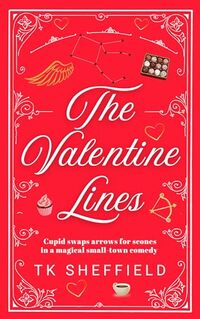
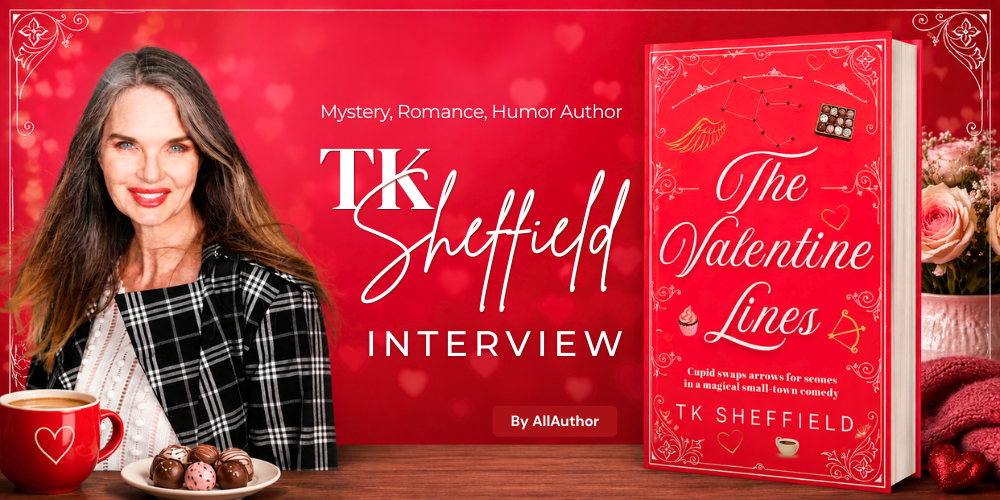 What inspired the idea behind your latest release, The Valentine Lines, where Cupid trades arrows for matchmaking in a small town?
Thank you for asking! This story was years in the making. To other writers, my biggest piece of advice is: don’t give up.
The Valentine Lines began as my master’s degree thesis. At the time, I was also dating—swiping through apps that felt like a nightmare. I wondered: Where’s my Cupid? I need him right now.
So, I wrote a story about a love god who equally fed up with modern dating. Tired of the corporate bureaucracy of Mt. Olympus, Inc., he ditches the divine red tape and starts a matchmaking firm incognito. The only problem? The god falls in love with a mortal himself, to the dismay of his Olympus relatives.
The story is set in Mineral Point, Wisconsin, a place voted as one of the best small towns in the state. The Driftless Area of Wisconsin, a land untouched by glaciers, is one of the most beautiful places in the world, too. There’s a fantastic indie bookstore there—The Republic of Letters—with a Book Kitchen attached! Worth a visit if you’re in the area.
It took awhile to write the full manuscript—more than ten years. But here’s the thing: writers can’t give up. ?
Cupid is a familiar mythological character. What was the most fun part about reinventing him for a modern romantic comedy?The fun part is blending of the immortal and mortal worlds. I love slipping in dilemmas or clever wordplay that contrasts or combine the two. I wrote an accompanying short story titled “The Gods We Meet on Vacation,” where I take Cupid and his Aunt Hera to Door County, Wisconsin, to celebrate the Fourth of July. Hera, naturally, thinks the fireworks and spectacle are for her. Meanwhile, Cupid (a.k.a. “Bart McGee”) does his best to keep the mortals safe and his aunt out of trouble. "Cupid is a mythological character..." just won the flash fiction prize for the 2026 "Writing on the Door Conference," put on by Write On, Door County, on April 24 & 25, 2026, a wonderful writing organization. (Official announcement coming soon!)
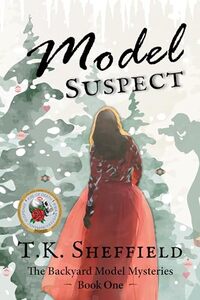
Your The Backyard Model Mysteries blends humor, mystery, and small-town charm. What originally sparked the idea for Mel Tower and her craft mall setting?My husband and I—yes, I found my perfect match, finally—moved into a fixer-upper house with an incredible backyard. The space and beautiful view were the inspiration I needed to write mysteries. At the same time, I began modeling and posting on Instagram as The Backyard Model. It was the moment everything fell into place for me as a novelist. Then, like any good story, came the plot twist: my back went out.
I finished the first book in the series, Model Suspect, writing on my hands and knees over a footstool in my office because I couldn’t sit in a chair for more than few minutes at a time.
Mel Tower is a former fashion model turned craft mall owner. How did you develop her character and personality?I love funny books with distinctive voices, no matter the genre. Writers such as Nelson DeMille, Erma Bombeck, George Plimpton, and James Herriott are inspirations.
So are my surroundings. There’s nothing like Wisconsin with its warm-hearted, quirky people, unpredictable weather, proud bovine legacy, and stunning countryside.
Then there’s the classic “fish out of water” trope. My main character, Mel Tower, felt out of place as a model in New York City. When she returns to her Wisconsin hometown after twenty years away, she’s again a fish out of water—this time having to reconnect with family, old friends, and a life she left behind.
The business she ends up owning was inspired by a real craft mall I visited, This & That at the Mill in Genesee Depot, Wisconsin. Ironically, now I sell my books there, there place that sparked the idea. (The town and The Mill will be featured on the popular Wisconsin Explorer Facebook adventurers in September 2026, too.)
Cozy mysteries often rely on quirky communities. How important is the small-town setting to the humor and mystery in your stories?Small-town settings are essential to the humor and mystery in my stories. My main character, Mel Tower, left her hometown and built a career in New York City. When she returns, she’s an outsider again, which fuels the comedy and intrigue. Bart McGee (a.k.a. Cupid), establishes a matchmaking firm in Mineral Point, a place that inspires twists and turns.
Wisconsin is beautiful, quirky, historic, and genuine. The weather is a mess. Our twist on the proverbial phrase is “if you don’t like the weather, wait ten minutes—it’ll get worse.”
Every clue and plot twist is intimate and personal. Suspects or potential mates aren’t strangers. They’re classmates, neighbors, or the friendly owner of a printing shop. Clues come with layers of history and small-town dynamics. Humor arises naturally from those familiar, sometimes eccentric relationships.
Without the small-town backdrop, the stories would lose some of their heart, humor, and charm.
Your books have received recognition from awards like the Eric Hoffer Award, IBPA, and the IPPY Awards. What did those honors mean to you as an author?As an indie author, winning awards feels like meaningful validation. It tells me impartial judges find my work credible, entertaining, and worth recognizing. I’m especially grateful that my books consistently earn awards in the humor category; they’ve shown real strength there.
These honors reassure me that I’m serving readers who enjoy clean, funny mysteries and romcoms. My stories are free of sex, politics, foul language and graphic violence—the kind of lighthearted escapism many readers are looking for.
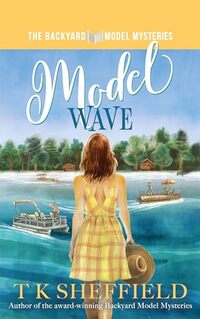
Your mysteries include titles like Model Suspect, Model Wave, and Model Ghost. Do you plan the mysteries far in advance, or do they evolve as you write?The stories evolve as I immersed myself in writing them. I find the inspiration for the next book while I’m deep in the one before it. For example, The Valentine Lines will be followed by Valentine’s in July. Cupid travels to Wisconsin’s Northwoods to solve marriage woes between Santa and Mrs. Claus—Hera is meddling again.
I’m a believer in using seasons and holidays as perfect starting points—those festive flashpoints that spark a story. After all, who doesn’t love a holiday mystery or romcom?
Humor is a big part of your writing. How do you balance comedy with suspense in a cozy mystery?Balancing comedy and suspense is a favorite part of writing for me. It’s a dance, and I’m always doing the twist, in other words. The light moments give readers a chance to breathe. The laughs—the world needs more of it—give readers a break.
The humor comes from the character and the situation. I use comic foils to lighten the mood and act as truth tellers. The foils say things other characters won’t, which is vital to dropping clues, and providing clarity, under the humor. In modern fiction, animals are used as the moral compass. Similarly, I use comic foils. For suspense, I keep the stakes personal and emotional. The mystery is about solving the crime and for characters to rebuild their lives, establish relationships, and reconnect with family.
In the end, I want readers to smile, laugh, and enjoy a great story.
You’ve written across multiple formats, including novels, screenplays, and children’s stories. How does your writing process differ between these forms?This is another great question. My writing process stays consistent: I protect my early morning hours. I write from the pre-dawn darkness until about 11 a.m. That quiet is pure gold.
Storytelling is evolving. From audiobooks to “vertical shorts” designed for mobile phones, writers should expand their skills, be open to new formats. I’ve learned to write for the ear and the page—to imagine the scene and then tell it across multiple formats.
I recently attended the Wisconsin Screenwriters Symposium in Madison, Wisconsin, and it was incredibly inspiring. It’s an exciting time to be a writer as opportunities expand in the Midwest.
I continue sharpening my craft by taking classes like the Screenwriting Lab with Storyfarm. This is my Third Act, as I call it, and my goal remains simple: to entertain readers and viewers, always.
Your romantic comedy screenplays have earned recognition in film festivals and competitions. How has screenwriting influenced the way you structure your novels?Screenwriting taught me to think in a four-act structure, using scenes as building blocks. That framework gives me the discipline necessary for telling a tight story. I shape chapters like mini-episodes, giving it an arc so readers feel satisfying momentum. Note: not every story needs this approach, but for me it provides a roadmap and keeps me from wandering off course.
Writers everywhere know the dreaded “messy middle.” I’m looking at you, page 70. That’s where the frustration always seems to strike!
I begin with a flexible outline built around key beats, a solid logline, and a clear four-act backbone. Characters may change their minds, new suspects may walk onto the page, and the story may twist, but that prewritten framework is my lifeline. It guides me all the way to “The End.”
Readers often turn to your books for a laugh and an escape. What do you think makes humor such a powerful element in storytelling?The quickest way to another’s heart is to share a laugh or a smile, I think. Humor creates bonds, and a well-timed joke makes characters relatable. While my books are about solving mysteries, and the romances include heartache, they provide lighthearted moments. Humor counters the seriousness of life right now; it heals, connects, and entertains. The world could use more of it!
For aspiring writers who want to write cozy mysteries or romantic comedies, what advice would you give them?My best advice is to read good writing, and read books in the genre you wish to write. Not just recent ones, either. Dig into the classics of the genre. Study the opening pages, the structure of the novel, and the characters. Find a critique group that meets regularly with members who provide honest feedback. Don’t take criticism personally. Be willing to revise your work. Write every day.
When creating a mystery plot, do you start with the crime itself or with the characters involved?I begin with the crime and the ending. After that, it’s the opening pages and the inciting incident. I use a Four Act structure and create a rough outline. After that, I create fun, interesting characters who readers connect with and enjoy.
Would you recommend AllAuthor to fellow authors, and if so, what services or tools on the platform have you found most useful in growing your business?Yes, I recommend AllAuthor! I appreciate the graphics, the convenience, and the information. The site provides helpful tools in many ways for career authors.
Thank you for this interview. I appreciate the opportunity to share insight about my books and my writing philosophy.