You describe yourself as an avid reader and coffee drinker—how have those two passions shaped your writing routine?
So before entering into the writing space, I always make sure that my coffee mug is fully stocked and reference materials are near at hand. If the topic is heavy-duty, sometimes I bring a ramekin with fruit or nuts into the same space, near at hand. The point is to signal to yourself that you’re prepared to move forward; there will be no toddler-like objections or whining about lack of energy or fuel for the journey ahead.
I know that if I offer my inner self an inch of distraction, it will happily get distracted without further ado. If I don’t have that one reference book that requires a quote, either I need to be very focused in obtaining that book from the library (and only that book) without getting derailed into making more coffee or refilling the soap dispenser, etc.
Usually, I spend about an hour or two in the morning in a reading or information-processing routine, from Bible to nonfiction. Sometimes I choose a physical book for the evening, and it’s often in the fiction space. (If I read news articles later in the evening, I tend to get angry and that interrupts any helpful REM cycles.) So when I begin writing, my mental CPU has been whirring along, processing what I’ve already read – and incorporating those thoughts into new material.
Your work touches on topics like white-collar crime, fringe cults, and church predators. What draws you to explore these often overlooked subjects?
In a sense, I enjoy all types of engagement in non-traditional spaces. (My early experiences with Barbies was complex – they were often dragged unwillingly into settling personality conflicts via mano a mano combat. It was awkward. They aren’t built for combat.)
In 2007 and 2008, I explored alternative employment avenues beyond the office, trying my hand at ad space sales. (It was awkward.) Some of the fancy spaces I visited included a number of sketchy characters, who seemed to operate in the not-quite-legal space. Some of the cash-based businesses in Phoenix were fly-by-night (aluminum recycling, strip mall restaurants) and some were above-board family-owned establishments that happened to ignore painting and maintenance schedules.
In essence, a lack of care about appearance doesn’t make you a criminal.
So a few years later, when a Las Vegas NALA conference speaker indicated that he had chosen the road less traveled toward legal accomplishment (‘white-collar crime is the Siberia of the prosecutorial world’), this peaked my interest. By then, I was quite aware that many businesses act as fronts for organized criminal activity, or can be dismantled and reassembled with alarming speed. It occurred to me that for all the attention lavished on street crime, those who offer supply-chain management and distribution are usually quite adept at hiding behind semi-legal structures and engaged in money laundering.
Many of your influences range from fantasy and sci-fi to mystery. How do these genres influence the stories you choose to tell?
Truth versus lies is the common denominator.
Words can either open an alternative reality, or they hide reality from view. In fantasy, worlds can be created or destroyed by words. In sci-fi, words are not adequate to describe the fullness of the alien reality offered to the reader’s senses. In a mystery, most of the exploration or fact-finding hinges on words and actions that are proven to be false.
Many detective writers, from British mystery (John Buchan, Dick Francis) to hard-boiled (Dashiell Hammett, Philip Marlowe) tend to emphasize character exploration over accomplishment or plot development. Some fantasy writers (Jim Butcher) follow the same train, as well as light fiction (D. E. Stevenson, Josephine Tey) to classic novel writers (Leo Tolstoy). Sci-fi writers with a bent toward philosophy, such as C.S. Lewis, eventually make the point that light might be affected by darkness, but the darkness cannot overcome the light. This is true across landscape, time zone, and human behavior.
Most of the genres that I choose emphasize the unchanging nature of things over their appearance. A Philip Marlowe character might observe that glamour is merely a smokescreen, while Butcher’s Harry Dresden would describe in detail the difference between the flesh mask of a vampire and the black rotting flesh underneath. Josephine Tey characters might offer more urbanity to those observations, but the essence would remain the same.
Humor and sarcasm seem to be part of your personality. How does that voice show up in your characters or dialogue?
One of my short stories in development is from the first-person perspective of a small-time, unlicensed investigator. She essentially runs around a big city, finding out things from people who would prefer to hide in shadows. She offers a lot of scope for sarcastic commentary about society and the weirdness of human beings.
In my nonfiction books, both sarcasm and humor remain on the backburner. It’s tough to transition from information-sharing and education to barbed wit, so I tend to edit out those inclinations. But if I ever get to debate a cult leader….it will appear.
I’m looking forward to putting the serious Eastern European part of me on ice, in favor of the real me that acts like a Northern Irish gypsy. (Surely others have seen “Snatch”, and loved it?)
You mention enjoying stories like Walt Longmire, The Dresden Files, and Firefly. What storytelling elements from these works inspire you most?
“Firefly” is the best of many worlds, a western set in space. The swear words are in Chinese. The battles can break out in the mess hall on board the spaceship, or on a criminal cattle drive orchestrated by the ship captain to obtain tax-free survival funds. Life is short and gritty, and the characters are all running from something in their past, including the invasive Alliance. It’s a community built by choice and necessity rather than location and blood. (Think “Star Wars” and the Republic versus the Empire.)
“Walt Longmire” and “The Dresden Files” are gritty mystery novels. Walt is more laconic and introspective, whereas Harry is a smart mouth with impulse issues. The plots are highly action-oriented and revolve around conflict resolution, though the regional settings are quite different. (Walt is a sheriff in Wyoming, whereas Harry is a paranormal detective and wizard in Chicago.)
The inspiration comes from the idea that a few determined people can become a thorn in the side of self-interested and overwhelmingly large forces. It’s the same sort of energy found in Louis L’Amour novels. The crooked town politician or cattle baron who thinks he has established power and authority can be undone by the dusty cowpoke who ambles or glides into town and won’t take No for an answer.
None of the characters in these works support bullies. The bullies find them, and then the main characters go to work on them because avoidance is not in their nature or it doesn’t suit their life goals.
White-collar crime often happens in the shadows. What challenges come with writing about crimes that aren’t always obvious or dramatic on the surface?
One, you have to know that what you are portraying is accurate. Just because nefarious activity goes to great lengths to hide in plain sight doesn’t mean that everything hidden should be brought out with fanfare. Some of it needs to surface, and some of it should be left in its grave. Editing is essential.
Two, financial crime is often messy but looks boring; it interacts with people and their livelihood, their reputation, and their family life. It looks like numbers on a page. It means something that people work very hard to protect. But the actual facts are quite complicated, so bringing life and color to a story that looks like everything dull and spiritless is an inherent challenge. You have to focus more on the effect than on the event itself. It’s rather like trying to unpack all of the elements that go into a successful meeting. (Unsuccessful meetings have a drama all their own.)
Three, the criminals don’t look like or act like criminals. They don’t skulk around in corners or offer pills to naiive kids on streetcorners, or wave weapons threateningly at old ladies. It’s nothing that obvious. They spend years calculating how to look good and smell good, while everything they do is designed to pull the rug out from under the people who are pillars of the community. They are in the game of suggestion, seduction, cashflow, and (sometimes) sadomasochism. Jeffrey Epstein would be the extreme and dramatic end of this type of criminal, whereas Bernie Madoff would be a more typical example.
You run the risk of over-psychologizing in some areas, and underselling the effect of the issues on the other.
How do you balance serious themes with the entertaining elements of fantasy, sci-fi, or mystery?
It helps to put current-world issues in an other-worldly context because people have less emotion tied to a fictional world. They can engage their reason without recourse to a lot of historical baggage. Everyone knows that an alien dripping venom and slime should be destroyed. Not everyone is that sensible about a human being who looks and speaks like them, who might have a similar agenda of invading someone’s life and sucking it dry for their own selfish ends. Especially if that person is quite a good actor or actress, and will swear up and down and sideways that they only meant to carve out a decent life for themselves. (Watching some of the characters of “Justified” can really bring this home. Margo Martindale has complete command of her psychopathic character, Mags Bennett.)
Your husband is described as preventing you from “setting the world on fire.” Does he also play a role in your writing process or creative feedback?
Absolutely – he hears about the process of the writing and then offers his editing expertise (poor soul). He’s suggested many items, from title revision to paragraph rearrangement (for a little more continuity and less confusion) to insertion of themes.
If you could share coffee with any fictional character from your favorite stories, who would it be and why?
That is a tough one. There are so many. I’d probably ask for coffee with Captain Mal and Harry Dresden, but it’s likely that they’d dash off halfway through to go save the planet or their aging transportation vehicle.
I’d end up having actual coffee with Walt Longmire (he’d be quite happy for an excuse to not answer his handheld radio), but he’d eventually be called away so the conversation would be completed by Henry Standing Bear, with a whisky. It would be a long conversation because I would have so many questions. Also, Henry Standing Bear would be interrupted by all his patrons at the endless soirée of the Red Pony bar.
You mentioned you’d love a Maine Coon cat—or maybe a team of goats. Do animals ever inspire characters or scenes in your stories?
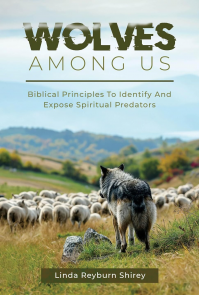
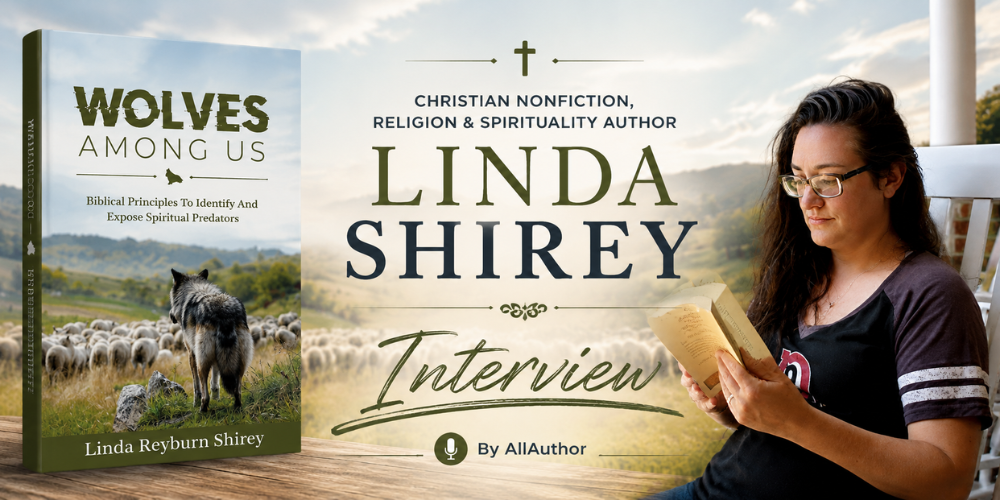
Our family motto is a turtle (‘Slowly but Shirey’). Most of the characters and scenes involve human beings, but occasionally a mouse or a cat will creep in as testimonies to childhood nostalgia. I did choose to base my first book around the character of wolves as epitomized by two-legged predators, but that was more to do with Scripture than sentiment.
What sparked your interest in writing about the darker corners of society, such as corruption or hidden power structures?
As a recovering pessimist, I’d have to say that the interest was sparked by a combination of nature and nurture. If you live in a big city for any length of time, it’s almost impossible to shake the idea that most of the surface calm that you see will not last long – and it will be impacted by forces beyond immediate control. There is a constant movement increasing or quelling illicit behavior, and people are actively encouraged to act out on the worser angels of their natures.
Also, I grew up in the Southwest. The landscape often looks like it was designed for Mars. The people act like they don’t want to be where they are, but they stay – for decades. (This applies to the native tribes as well as the invaders.) It’s difficult to build a sense of community with a bunch of people who have the behavioral traits of those in the Witness Protection program, so if you have any curiosity at all, you tend to ask questions about why people stay where they don’t want to be. It raises any number of interesting conversational trends.
Also, Western America in general does not positively lean toward church life, so you end up defending a position of religious expression from a stance of counter-cultural activity. This leaves you much more open to exploring all walks of counter-culture, what they mean, and their origin. You tend to expect that anything with a chance of success lives slightly outside of normalcy, with an adherence to many (not all) Old World habits. Because New World habits are so easily exposed as a true fantasy of worn-out optimism and built on a foundation of well-intentioned lies.
Mainly, I blame this lifelong interest on the Old Testament. It’s chock-full of human greed, corruption, lawbreaking, preventable tragedy, and failure. You cannot read Genesis or Jeremiah – not to mention Judges - and retain a sunny ignorance about the grim aspects of human life. Most churchgoing people tend to avoid those books as unnecessary and outdated; I believe they are preventing themselves from some much-needed contemplation and insight.
For readers new to your work, what themes or experiences do you hope they take away from your stories?
“For goodness’ sake, pull up your socks and DO something about this” might be a theme running under the surface. I cannot stand people who sit around and theorize about all the ills of society, and then go home and watch a television show while distracted by their over-pampered pets.
The point of my writing is mostly to inform, with the hope that someone will be inspired to walk out their front door and face the thing they have been afraid to face. The thing that others have counseled them against facing, due to their own fears and reticence and useless politeness. It would be greatly encouraging to hear that one of my readers put down “Wolves Among Us”, wrote some notes they’d been contemplating for months, called a church leader, and reamed out an elder or a deacon who’d been lording it over their flock – resulting in his dismissal. This would hearten me to no end.
How do you research topics like white-collar crime or cult dynamics to keep your stories authentic?
Often it’s a patchwork quilt of genres and topics. I’ve read books on narcissism and cult dynamics, then pivoted to geopolitical conflict (the Iraq War) or real-life crime (“No One Would Listen” and “The Billion Dollar Whale” were quite good) and financial recessions. There are too many books on the 2008 financial crisis to count, and I’ve only plowed through a few of them.
Sometimes I dig through theological tomes – Augustine’s “City of God” is really good but needs to be finished before my golden anniversary. I read five pages of his work and think, ‘This man was a genius. The Romans were very clever fools. Now I have to go away and digest what I just read.’
Finally, what projects or stories are you currently working on that readers should look forward to?
“Cults Among Us” is the second in the series – it’s a real-life tale of the sectarian group that broke away from my childhood church, and caused enormous havoc trying to break back in. The leader was a former elder, and developed a bitter grievance against a pastor who didn’t appear to have been disciplined enough for his behavior. Sadly, future events proved that this stance had merit, but it did not prove that the elder had a righteous cause or message.
The main writer was my father, who passed away a number of years ago. I’ve added content and made connections between cult behavior and this decades-long experience. Since so many churches are small groups that never draw headlines, and because a group of two-legged sheep is bound to attract two-legged predators, I believe that there may be many legitimate church organizations struggling quietly against persistent waves of invaders.
How has been your experience with AllAuthor?
Great – although I should probably be more active in my membership! I love the cover competition (even though I didn’t win) and the offer of connections with other authors. The social media promotions and steady stream of mockup banners are an encouragement. It offers good value for the annual price.