What first inspired you to start writing short stories and poetry back in high school?
I wanted to escape my life, and I wanted to create, create new characters, new worlds, and disappear into them. And the poetry was my way of letting out my emotions.
You often write in horror and dystopian genres—what draws you most to these darker themes?
It’s a combination of nightmares that I had when I was younger and watching horror movies with my older brothers.
How does your interest in identity shape the characters and conflicts in your work?
We are not who we think we are. Conflict defines us, trauma, and our scars shape our identities.
What role does fear play in revealing who we truly are in your stories?
We are afraid of everything. We hate to not be in control especially of ourselves, and we fear death. We don’t want to be reminded how fragile we are, and some of us survive things that others wouldn’t, that they would be afraid to even face. But even if you survive those things, it doesn’t mean that you are not afraid.
How do you balance elements of horror, dystopian fiction, and science fiction in your writing?
My stories are either character-driven or world-building. Think Dark City. An ordinary man struggling to regain his memories in a world far from normal, but the further down the rabbit hole he goes, the more he discovers who and what he really is.
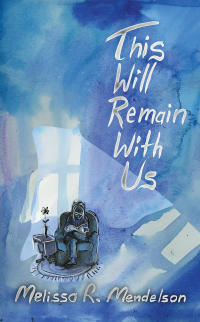
Can you tell us about the personal experiences that led to “This Will Remain With Us”?
Before the pandemic, I went to Manhattan and met with a fertility doctor. She told me that I only had six fertile eggs left, and I had to make a decision. Do I have a baby or not, and then I developed an abnormal cyst on my left ovary toward the end of the year, crossing into 2020. The surgery was in March 2020 when the pandemic really started, and not only was I dealing with all that, I was designated a frontline worker by my employer.
How did the events of 2019/2020 influence your creative voice and storytelling approach?
I was strongly against therapy back then, but looking back now, I needed it. But my release was writing poetry and short stories. I needed to put my emotions somewhere, the poetry, and I needed to escape, handle the world now around me, my short stories.
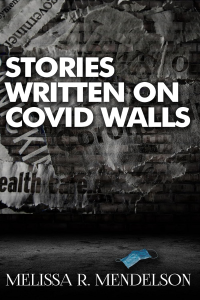
What inspired the concept behind “Stories Written On Covid Walls”?
The website, Medium had provided me a great home to share my writing, my short stories and poetry with the world, but after a long while, I wanted to give my writing another home. So, I took all those poems and created a collection called, This Will Remain With Us, and I did the same with my short stories, creating Stories Written On Covid Walls.
How does prose poetry differ from your short story writing process?
My poetry is my emotions, thoughts sometimes pulled from life and/or inspired by people or events such as watching 2073, which was excellent but really bothered me, leading me to write a poem about it. My short stories are pulled from old nightmares, notebook stories from high school, or new ideas or old ideas that have been left under dust for too long.
Did writing during the pandemic change your perspective on storytelling? How?
With everything that I went through and with the pandemic, it made me feel too human, too aware of the fear and pain surrounding me, of how fragile we are and how close we could come to the end. I take pieces of that, if not all of it, and give it to my characters.
What themes connect your pandemic-era works with your earlier horror and dystopian writing?
Identity. Some of us are forced to live differently now, and others are trying to hold onto the past and keep it with them. But the past is the past, and to push it into the future is to destroy it. You have to let it go, and trust me when I say that I know how hard that is. There are parts of the past that I can’t let go of.
How do you approach writing about deeply personal topics like fertility and motherhood?
I have a lot of trauma. Fertility and motherhood are just additional scars that I carry, and to heal those wounds as best as I can, I write about it, poetry or short stories or both.
What challenges did you face while publishing with Wild Ink Publishing?
Wild Ink Publishing is one of the best publishers that I worked with. I am very happy with them, and everything ran smoothly from production to publication. I hope to work with them again.
What do you hope readers take away from your collections?
Connection and Inspiration.
Finally, how has your experience been with AllAuthor, and how have its tools and services supported your journey as an author?
AllAuthor is great. I’m sorry it took me so long to use it, and I will continue to use it. The site offers authors a lot of great tools, and I especially love the Cover of the Month Contest. And the website feature is also very helpful in providing more information about myself and my writing.