Eva Peck Interview Published on: 22, Jun 2026
 What first inspired you to write about spirituality, Christian theology, and the reflection of spiritual truths in nature?
These themes have been close to my heart since my conversion in my teen years. So with time and study, I received insights that developed and changed over the years. This is what growth in knowledge and understanding is all about. Most of my website and book writing didn’t materialize till after retirement in 2007.
How did your academic background in biological sciences, theology, and literature shape your approach to writing?It taught me how to write in a clear, concise and professional way and gave me information that has influenced the content of my writing.
You mention that many ideas for your books came by inspiration—can you describe what that creative or spiritual process looks like for you?The way this manifests for me is by simply receiving the initial idea for the book subject, and then to a degree, the book “writes itself” – I am just a scribe led to this or that reference and bringing ideas into a coherent whole.
Your trilogy “Divine Reflections” connects nature with spiritual realities. What sparked this concept, and what do you hope readers gain from it?Having been a nature lover from a very young age and then learning theology later, I began to see how certain spiritual realities were portrayed by natural phenomena. Of course, not fully, but to a considerable degree. In some cases, the Bible uses the same analogies, e.g., fire and water to illustrate the nature and working of the Holy Spirit. Some of the analogies came to me by inspiration, for example how God may appear to us like He is camouflaged.
How do you balance theological depth with accessibility for readers who may be new to spiritual topics?I try to write in a clear and easy-to-understand style, and my books seldom go into what could be considered as academic or deeply theological writing, which people new to spiritual topics might struggle with.
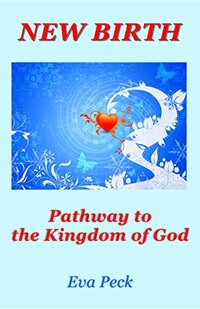
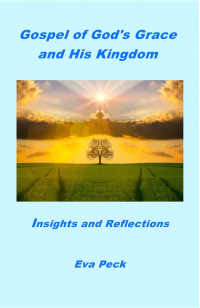
Your books explore themes like salvation, God’s grace, and new birth. Why are these concepts central to your writing?These concepts are not just futuristic but relate to our lives here and now. That being the case, I believe that if people understand these themes and are inspired to apply the steps and principles in their lives, they can be better off both in the here and now as well as the next life.
What role does nature play in helping people understand spiritual growth and divine truths?It depends on each person. Many live inside their homes or in areas where there is not much nature around them, so they are not much exposed to the beauties of nature. Even to those who enjoy time in the outdoors and appreciate the beauty of the natural world, it may not mean much spiritually, while others may see varying degrees of spiritual parallels.
You’ve also written practical books like “Abundant Living on Low Income” and “Spiritual Lessons from a Scam.” What motivated you to explore these real-life topics?Experience – both good and bad. With the finance book, I wanted to share principles that I have learned over the years and found working. The scam book was co-authored with my husband and was the result of a direct traumatic experience of being victims of a bad scam and dealing with the aftermath. It was written for our own healing, but also to help others who had gone or are going through traumatic experiences. The book was finished before the end of the story, but there is a happy ending in that we got all the money scammed from us back.
How did your experience teaching English in the Czech Republic influence your writing journey?Teaching English influenced my writing in the process of working on educational books. The whole Czech Republic experience gave me ideas for stories that materialized later, such as about our cats and special people.
Your conversation book “Let’s Talk” became widely used in schools. What did that success teach you about connecting with readers?This book met the needs of the students and teachers at that time, which was not long after the Velvet Revolution of 1989. It was a unique contribution at a time when British and American books were available but quite expensive. Also I had the students that I was working with at the time at a local grammar school come up with conversation questions and do the assignments that found their way into the book, so much of it was field-tested before being published. It is not as easy to connect with readers in the same way before publishing the kind of books I have written since.
Many readers describe your work as thought-provoking and reflective. What kind of transformation do you hope your readers experience?My hope is that in reflecting and examining the validity of what they had read, readers will make it their own, act on it and benefit. If the information does not resonate with them and they reject it, my hope is that at least some of what they had read will enrich their lives.
How do science and spirituality complement each other in your worldview and in your books?With quantum physics coming more to the forefront (even though it has been understood for 70 years or more), science and spirituality are closer than ever. Other than in the Divine Reflections trilogy, I don’t generally deal with these two intertwining aspects of reality in my books.
What challenges do you face when writing about faith in a way that resonates with a broad audience?I see some aspects of faith in non-traditional ways but focus on where I and the readers can agree. I may gently lead people into where I see things differently without insisting that it is so or that they should change their beliefs. Instead of convincing them to accept my way of seeing things, I let them decide for themselves whether or not my perspective resonates with them. Readers have appreciated this gentle approach and specifically commented on it.
Beyond writing, you enjoy documentaries, natural remedies, and ancient civilizations. Do these interests influence your work? If so, how?No, I haven’t specifically dealt with these subjects in my writings.
How has your experience working with AllAuthor been?It has been good – I have enjoyed and made use of the various tools available and appreciated the promotion of my featured book. Allauthor has been an excellent resource, as well as being affordable.