
Genre:
Crime Fiction Suspense Mystery Romantic Suspense New Adult Romance Science Fiction Teen & Young Adult- Country: United States
- Books: 4
- Profession: Author
- Member Since: Dec 2018
- Profile Views: 16,736
- Followers: 85
I admit it: I wrote ads for a living. Most of my TV spots were crap, but a handful were at least amusing. Like my gargling toilets using what we called breath mints (for Clorox.) Or my cat who had to hire a bloodhound to track down his Fresh Step litter box because the odor control worked too darn well. Or my Clio-nominated spot for SOS in which dirty pots and pans clanged out Morse-code cries for help. As a fiction author, I’ve committed several crime novels, two of which snagged local awards. But I had accomplices: my critique group. Their sharp eyes and sharper wits are an essential part of my writing process. My science fiction novel, Mindclone, is on its way to becoming a cult classic. Two of my short stories, also science fiction, have earned raves. And my literary short, A Game of Scrabble, has captivated many readers. One other thing worth mentioning: Kassel's in Air is a rom-com set in the Mad Men era of the 1980s. This book delves into my personal history in the ad biz, with all its dreaming and back-stabbing.
DAVID T. WOLF's Books
Stay in the loop on books by DAVID T. WOLF. See upcoming and best-selling books by the author here. You'll also find the deals on books by DAVID T. WOLF.
** Please note that the information or price displayed here may not be the updated. Make sure to double-check the latest book price before buying books.
** Also, there might be other books by DAVID T. WOLF not listed on AllAuthor.
| Book |
|---|
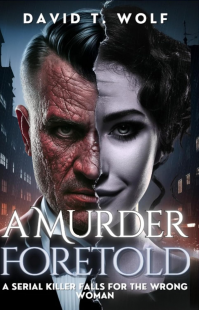
A Murder Foretold: A serial killer falls for the wrong womanby David T. WolfPublish: Nov 02, 2022Crime Fiction |
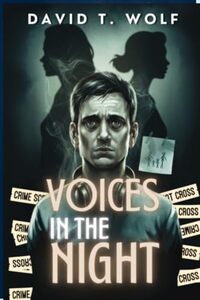 Voices in the Night: They are not your friends. . .by David T. WolfPublish: Nov 02, 2022Crime Fiction |
 |

DAVID T. WOLF Interview On 22, May 2026
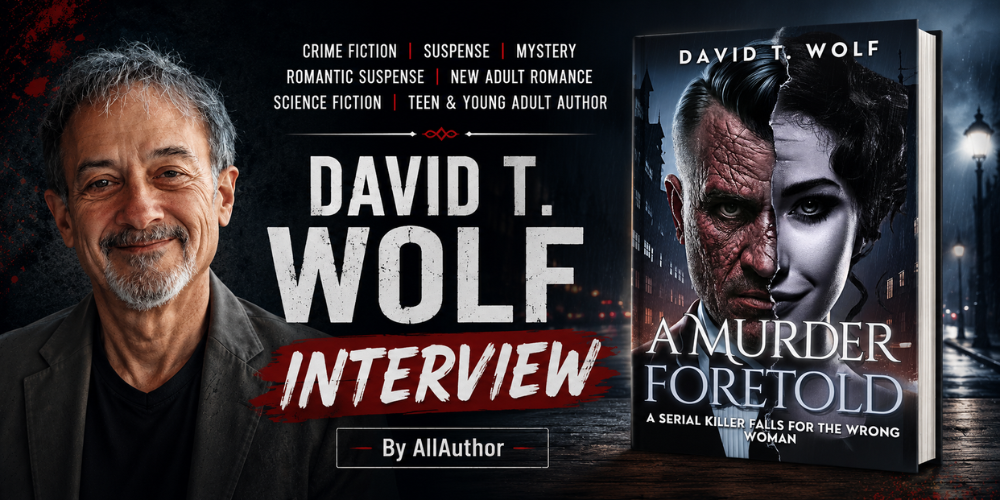 "A former advertising copywriter, DAVID T. WOLF spent years crafting memorable TV commercials. Transitioning from advertising to fiction, David has written award-winning crime novels, acclaimed science fiction stories, and the cult-favorite novel “Mindclone.” His literary work ranges from imaginative sci-fi to compelling short fiction, including “A Game of Scrabble.” Drawing from personal experience in the competitive world of advertising, his rom-com “Kassel's in Air” captures the ambition, humor, and backstabbing of the Mad Men-inspired 1980s ad industry."
In ads, I learned quickly that the single most important thing—even more important than the client’s desired message—is capturing the attention of the target audience. I learned the many ways this can be accomplished: make the benefit of the product seem important, that it solves a problem; use of humor to capture and beguile; use of intrigue and so on. In my fiction, this means finding a hook that captures the attention of the potential reader. Sometimes the hook is so important that you have to find a way to make it valid. In the case of my novel, A Murder Foretold, I had one of those hooks: a wannabe mystery writer writes a chapter in which a beautiful real estate agent is found dead in the cellar of a creepy old Victorian mansion—and then she goes to that mansion to look for her girlfriend, who inspired the idea—and finds her dead in that cellar. I struggled to validate that enigma for over two years until I finally got it right. What that entailed was a complete rewrite, shifting away from the point of view of that writer—to that of a pair of killers.
You’ve described many of your commercials as “crap,” yet some were highly creative and memorable. How do you balance self-criticism with creative confidence?In the world of advertising, you’re working with a creative partner. That keeps you honest as to the worth of an idea. Sometimes the client wants great creative ideas, but some clients are obstacles to that effort. That’s where the crap comes from. In writing fiction, I’ve been a member of a critique group for decades. They are the ones that help me separate the great ideas from the crap. And hopefully, I have learned to do that myself from their many observations and comments!
The humorous concepts behind your ads (like gargling toilets or detective cats) are very imaginative—do those ideas influence your fiction writing as well?Ever since I learned that Shakespeare injected humor into his tragedies, I appreciated the leavening effect it has, and try to use it in even my darkest crime novels, whether it’s in the dialogue or in a surprising event. I even used it in my kids book, Fred’s First Case, in which a doggy detective has to track down a missing cat despite his allergies that make his eyes water and make him sneeze every time he finds the scent of a cat.
What inspired you to transition from advertising copywriting into writing crime novels?Well, first of all, it’s the absence of clients who say no! Why crime in particular? I’m drawn to the problem-solving process in general. In advertising, that usually means finding a clever, surprising way to get the message out to the viewer. In crime fiction, too, there’s a problem that needs to be solved. But in good crime fiction, the problem-solution structure is really just the skeleton. It’s adding the flesh that makes any tale enjoyable and compelling. By flesh, I mean the characters with all their quirks, their histories, their motives, their wants, their flaws. And of course the flesh and blood that may be sacrificed for the good of the plot--and the entertainment of the reader.
Your crime novels have received local awards—what themes or elements do you think resonated most with readers and judges?In Voices in the Night, it was meeting the very flawed main character: a guilt-ridden single dad whose creepy hobby of using a radio scanner to listen in on private cell phone conversations evolves into a plot in which the very people he’s been listening to are being murdered. In A Murder Foretold, it was the way the serial killer learned that his next intended victim was killed by someone else.
You mentioned your critique group as “accomplices”—how important is collaboration in what is often seen as a solitary craft?For me, it’s essential. I too easily fall in love with my own words, and need to submit my writing to skeptical eyes in order to gain some distance. Hopefully, over the years, my eye has grown some skepticism of its own!
Your science fiction novel Mindclone is gaining a cult following—what sparked the idea behind it?I simply wondered what it would be like for a computer that had the contents of a human mind uploaded to it. My first image for that was simply a laptop that thought it was the human whose memories it had. This evolved in the writing into a far more nuanced story. The human “donor” of that upload is still around, and he and his digital twin, his Mindclone, develop into a kind of sibling rivalry, including a rivalry over the young woman the human had met just a few days before his brain was scanned. And the unique technology behind the upload is sought by the US military and also a government contractor.
Science fiction and crime fiction are quite different genres. How do you adapt your writing approach when switching between them?Again, it’s the hook that is the basis for all my writing. My interests have been science-adjacent my whole life. This naturally meant I read a great deal of science fiction growing up. The thing about sci-fi is there’s always an animating idea at its basis. Exploring the ramifications of that idea is always intriguing for me. For my short story, A Disturbance in the Church, the hook is simple, what happens if an android seeks to confess his sins and receive communion? For Do-Over, another sci-fi short story, it’s what happens if a 30ish adult somehow wakes up as a 12-year-old but has all his adult memories—his entire future laid out before him. Can he make little adjustments in that future? Can he prevent the car accident that messed up his brother’s life? Can he change things in the larger world? And again, in Mindclone, it’s what happens when the uploaded contents of a human mind create a digital twin of that human. In my political/military thriller The Final Millennium, the hook is not revealed until later in the book, but the animating question for me was What if a presidential candidate has a secret agenda based on his religious beliefs? That agenda: to bring on The Rapture by launching a nuclear Armageddon.
Your short stories have also received praise—how does writing short fiction differ from working on a full-length novel for you?For me, writing a short story is straightforward. I get an idea, and the whole thing practically writes itself. In novels, by their very nature, many unexpected twists must happen, and working them out takes a lot of effort, trial and error and so forth. I’ve never had that problem in any of the short stories I’ve written.
A Game of Scrabble is described as a literary short—what drew you toward a more literary style in that piece?The truth is, I based this story on true events in the life of someone I knew. When I was told of those events, I just had to turn it into fiction. The names and many details of the story were changed, of course! The situation itself called for a more literary style. There was no crime involved. The drama is how the decision a woman made had a huge effect on her life. As it happens, I’ve sold more copies of this story than anything else I’ve written.
Kassel's in Air explores the advertising world in a rom-com format—how much of the story is inspired by your real-life experiences?the fact is, when I was traveling from my San Francisco base to Los Angeles and staying at the hotel I named in the book, I was told that the star of Flashdance, Jennifer Beals, was staying at that same hotel. That was the spark that led me to the story idea of a copywriter like me falling in love with a young actress (what used to be called a starlet) and being mislead by his own idealized vision of who she was—based entirely on the role she played in a movie. What made this work was that the young actress was insecure enough to play along with Art’s fantasy—but only for a while.
The “Mad Men era of the 1980s” was known for ambition and backstabbing—what was it really like working in that environment?Ambition and backstabbing. But also a great deal of wiseass jabbing at each other, especially among the creatives. That was the fun part of life in that period. The other fun part was actually overcoming all the obstacles and getting a good idea approved by the client and producing it. Like my gargling toilets for Clorox drop-in tablets, or my cat hiring a bloodhound to track down its litterbox because the odor-control was so much better, or my dirty pots and pans clanging out SOS in Morse Code.
Do you find humor plays a role across all your genres, from advertising to crime to science fiction?Absolutely. In crime, here’s one example: (spoiler alert) In Voices in the Night, when my main character fearfully prepares to confront the man he’s certain is the killer of all those women he’s been listening in on—the guy who answers the door is a quadriplegic who can only communicate using an alphabet board and pointer. In Killer in the Mirror, a fearsome high school bully is turned into a devout Christian under the influence of his girlfriend.
Looking back at your journey, what skills from advertising have proven most valuable in your fiction career?I guess it’s the ability to recognize a hook, a compelling idea that will attract readers. I actually have a novel that I’ve been pitching to agents that has a compelling hook, but it was buried by a bland title. The basic idea is a detective is hired by his wife to look for an acquaintance who’s gone missing. He knows his wife had a history with this person, but he chose to look the other way. But now he will have to delve into that history. My new title, Things You Shouldn’t Ask Your Wife: A Nick Patterson Mystery. What I especially like about this title is that it suggests a series. I already have the next title: Things You Shouldn’t Tell your Husband: A Nora and Nick Patterson Mystery. I haven’t written that one yet, but it’s my next project.
Would you recommend AllAuthor to fellow authors, and if so, what services or tools on the platform have you found most useful in growing your business?I would most definitely recommend it! Their many postings of creative banners, the book promotions, the listings of my books by genre and also their audiobook versions, the contests, the way AllAuthor draws attention to all my books, including buy buttons for all of them. Their fast and friendly service, with quick responses to my questions. It’s a great service that is worth far more than the small fees they require for their many services.
Ask DAVID T. WOLF a Question
Have brimming questions to ask author DAVID T. WOLF? Ask whatever you like, but keep it appropriate.
** Please note that unanswered questions will not appear on the page. Refrain from posting promotional messages.
-
-
-
-
-
-
-
-
-
-
- View all 18 comment
Contact DAVID T. WOLF
The author, a good book and you! Contact DAVID T. WOLF here.
** Please refrain from spamming and don’t bombard the author with promotional mails/messages. Your IP/Email address may be blocked if found doing so.
Contact Author on:
Facebook,