Your time in the U.S. Navy clearly shaped your worldview. How has your military experience influenced the emotional depth and darkness in your fiction?
Let’s just say that my time in the Navy was atypical. I spent more time on land, primarily in SE Asia than at sea. I got to meet some of the best people I've ever known as well as some of the darkest souls imaginable. I've seen and experienced some of the worst things you can imagine.
Many of your stories explore the boundary between light and shadow. What draws you to that contrast?
Walking the line between light and shadow has been the story of my life. My parents raised me to be a good person. However, growing up in a not-so-great neighborhood taught me that kindness can be construed as weakness. I had to show them otherwise but the path was neither easy nor painless. It was one of the reasons I ended up doing what I did in the Navy. Those who performed the background investigation for my clearance level talked to a lot of people from my past.
Writing can be a form of healing. How has storytelling helped you process and navigate your past?
Because of the nature of my service, I cannot reveal much of what I've done. However, I can include my experiences in my fiction and no one is the wiser. That is very cathartic.
Your characters are often flawed yet resilient. Do you see parts of yourself reflected in them?
My MCs absolutely reflect my own flaws mixed with those of others. Each is different in some respect but all possess that tough, unyielding core even when riddled by doubt and uncertainty.
You write about demons, extraterrestrial forces, and the supernatural. What fascinates you most about the weird and the unknown?
I found an epiphany when I watched John Carpenter's Prince of Darkness. Near the beginning, a physicist talked about quantum theory and how the uncertainty at the sub atomic level could explain paranormal phenomena and other unexplainable events. Especially since, at the quantum level, everything we know and understand about physics in the macro world is little more than ghosts and shadows.
Early in life, I adopted the idea that everything was possible until proven it wasn't. That way, I could never be surprised. This includes both secular and spiritual aspects of my life.
Despite the darkness in your work, hope remains a recurring theme. Why is it important for you to leave space for hope?
Without hope, there is no future. Even in the darkest of times when on mission in SE Asia, it kept me moving forward. Despite dire circumstances where I grew up, outnumbered and isolated, I always found a path through because of hope. If you lose hope, only then are you are truly lost.
As an unapologetic romantic, how do you balance love stories within worlds filled with danger and chaos?
I consume a lot of audiobooks since I drive a truck for a living. I've been on a LitRPG binge for a while now. The MCs in many of those stories are obsessed with gaining power. That's great and all, but if it's one's only goal, and find overwhelming success, what comes next?
To me, life has no meaning without someone to share it. Absolutely seek power but not for its own sake. Seek it to help those who cannot fight and protect those who matter. Many see relationships as a weakness. I see it as a source of strength; a reason to push forward even when everything seems to be against you. If it weren't for my family, some of the time I spent overseas might have overwhelmed me. However, the thought of them never knowing what happened spurred me on to greater heights than I might have achieved alone.
What was the biggest challenge you faced while writing your debut fiction novel?
The biggest challenge was negotiating with my characters. When I drive, I develop my characters in my mind when I'm not listening to audiobooks. They grow to a point where they seem like real people. So, when I sat down to write and engaged my characters in an activity that didn't fit their personas, they rebelled. And I listened. Most of the time, they're right but others we negotiate something in between.
The second challenge was finding and repairing any plot holes and maintaining character arcs.
How does your approach differ when writing fiction versus nonfiction?
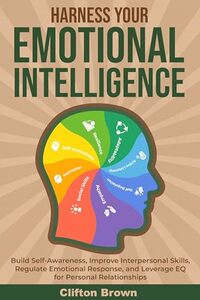
So far, the two fiction books I've written are of subject very dear and personal. Emotional Intelligence helped save my marriage and repair the broken relationships with my adult daughters.
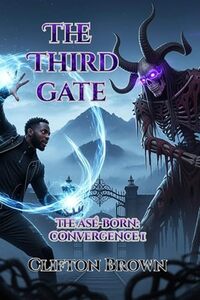
My book about African gods and legends was about finding a link to my genetic roots. I grew tired of hearing about every other culture's cosmologies but nothing of Africa's other than Egyptian. What I found was vast, rich, colorful, inspiring and invigorating. I wanted to share this with the world.
Because of that research, I'm including African Cosmology in most if not all of my newer works.
The nonfiction required many hours of research so I could ensure the facts remained close to my writing.
With fiction? The sky is the limit. I allow my imagination to go wild. Still, I tie almost everything to something that is possible considering extrapolations from current scientific knowledge. I majored in math and physics in my first, failed attempt a college and they remain a major part of my life today. I read books on Quantum theory, mostly by Carlo Rovelli, being one of the most prominent contemporary mathematicians in the field. So, some research is involved but only to remain current with what is possible.
You’ve published short stories, an anthology, and nonfiction works. Which format feels most natural to you, and why?
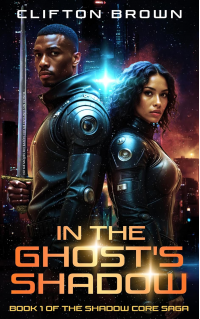
I'm settling into serials slowly but surely. I'm writing book 2 of The Shadow Core Saga and though 2/3 of the way through, I struggled for a time. To expand my audience, I continue to write shorts and send them to anthologies. I also find it easier to write is brief spurts than pour my consciousness into something large. My wife is not well and requires much of my attention, so I don't get a lot of time to write when I'm home and almost none during my driving shifts.
When crafting intense or emotionally heavy scenes, how do you protect your own mental and emotional well-being?
Those heavy scenes are my bread and butter. They are also where I purge much pent-up rage and pain from my past. I also include many joys and success. Depending on what I'm writing, I vary my music choices from smooth jazz, to pop violinists, to neoclassical, to theatrical scores. I write better with instrumental music.
What role does catharsis play in your writing process?
Telling a good tale is my goal. Catharsis is my reward. For me, it's like thumbing my nose at the people who extracted the oath of silence from me. I get to tell my story despite what they say and in a way they cannot hold me accountable for. Basically, I'm giving the Military Industrial Complex the middle finger. That, in and of itself, is cathartic.
Are there particular authors or genres that inspired your love for dark, evocative storytelling?
Yes! Stephen King, Peter White, Stephen R. Donaldson (primarily his Thomas Covenant series), Poe, Tananarive Due, Ray Bradbury, Shirley Jackson, Dean Koontz. I'll stop there, lol.
What do you hope readers feel or discover about themselves after finishing one of your books?
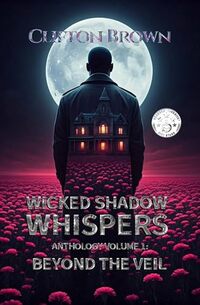
First and foremost, I hope they enjoyed my story; that they connected with the overall plot and theme. Second, I hope my characters inspired them. Third, I hope they feel as though what I wrote just might be possible in this world even if it's 'beyond the veil'.
How were you introduced to AllAuthor, and would you say that this website has been helpful?
One of my readers asked where they could find more of my work and inquired about several different platforms, including AllAuthor. Of course, I had to sign up. I feel as though the site has helped my exposure. I'm still learning how to market myself and I'm positive that once I dig into more of the programs available, It will be even more helpful.